REVISITED
Photography, 360°VR and beyond.
Project Overview
Re-enact Ed
To record my 360° videos of the Sunset Strip, I mounted six GoPro cameras in a 3D-printed rig on a pickup truck — one for each directional axis: up, down, left, right, forward, and backward. This photograph of my team and the pickup truck serves not only as documentation but also as a contextual reference to the work’s performative dimension. It emphasizes the re-enactment aspect by referencing to Ed Ruscha's original performance, updated with a state-of-the-art setup appropriate to 2016.
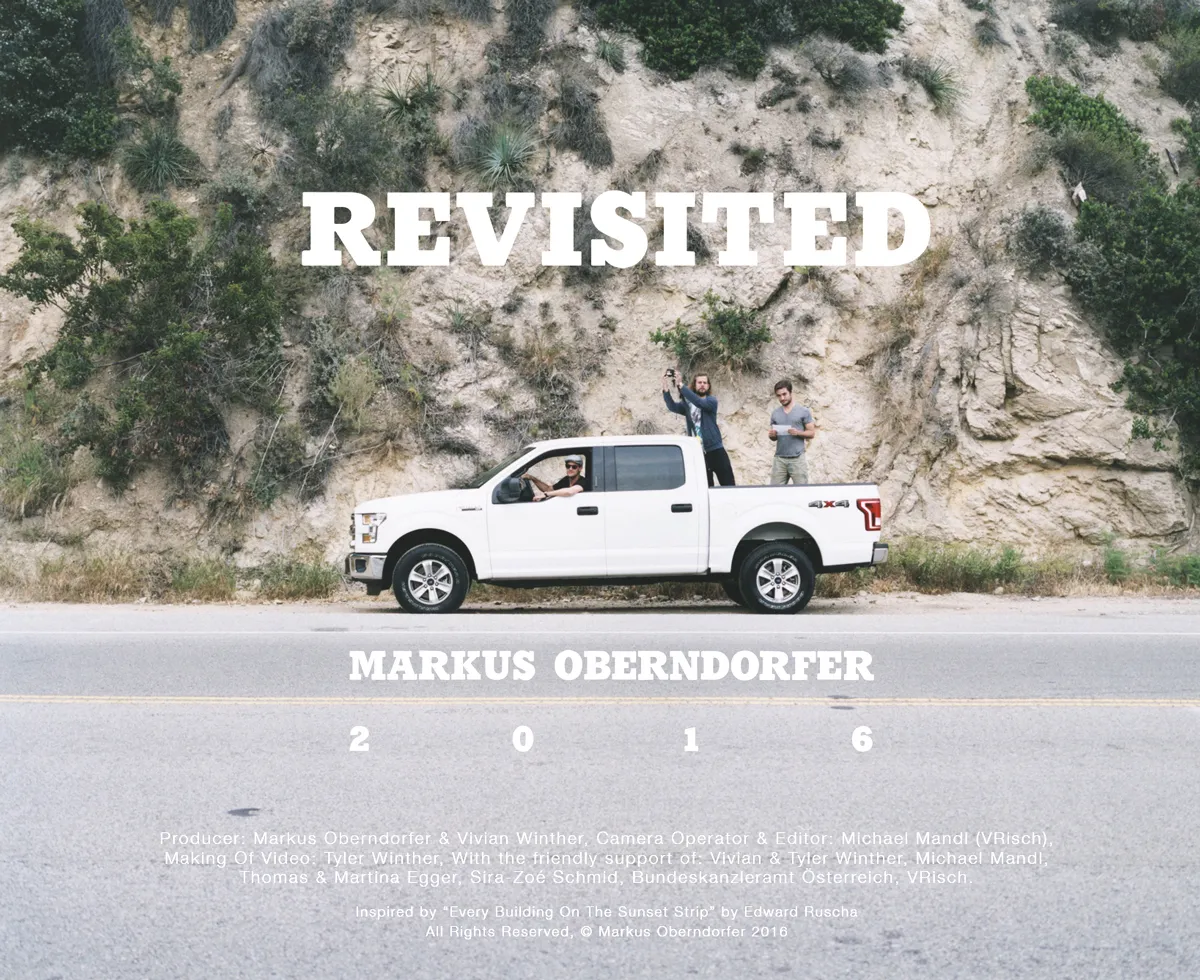
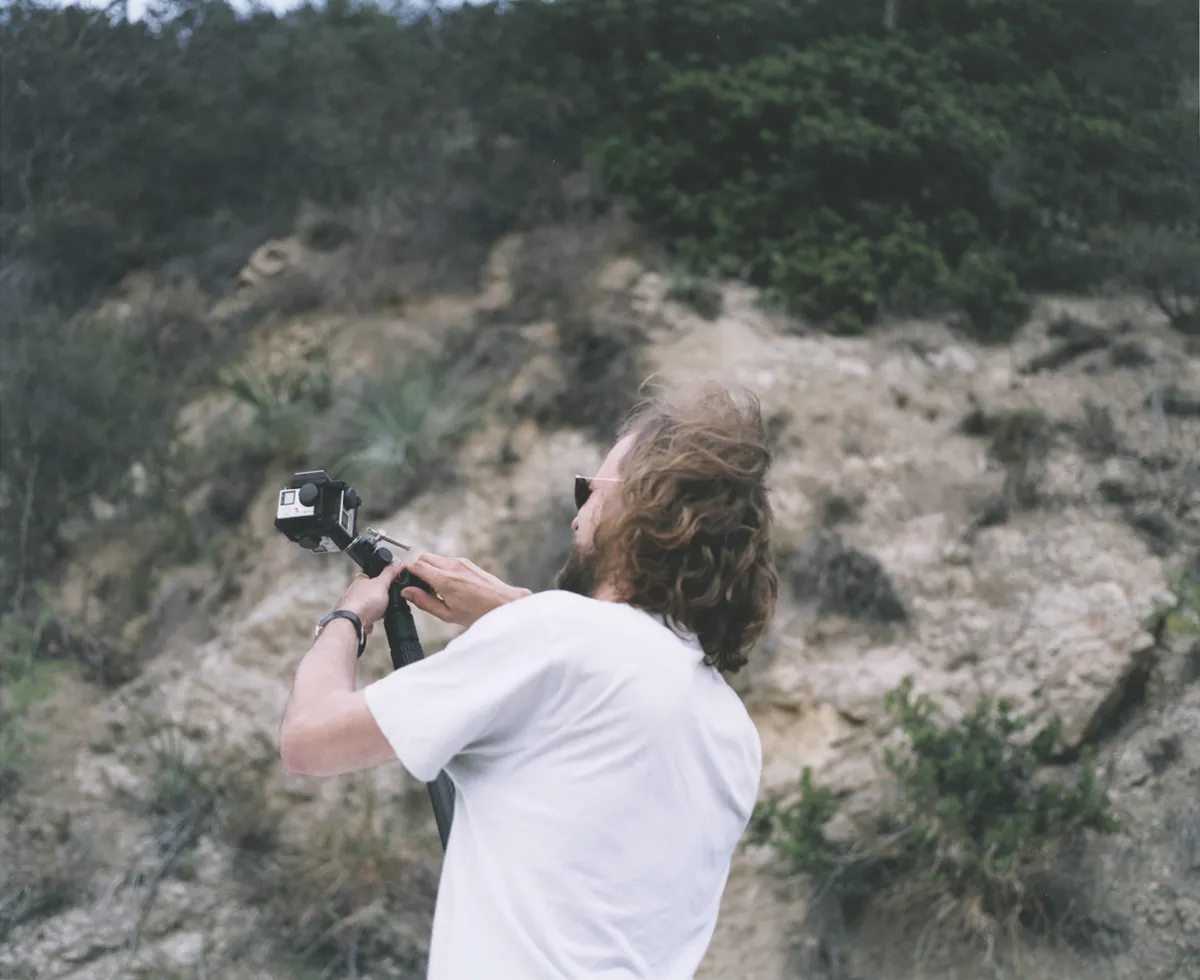
The image is inspired by a production photograph from Ruscha’s 'Hollywood Boulevard' shoot (1975), showing him and his camera assistant, Bryan Heath, with Danny Kwan in his Datsun pick-up truck, carrying a photographic setup first used in 1966 for the making of 'Every Building on the Sunset Strip'. While earlier strip panoramas, like Yoshikazu Suzuki’s Ginza Kaiwai / Ginza Haccho (1954), already existed, Ed Ruscha innovated by mechanizing the approach on how to photograph and document stretches of land by using a vehicle and an automated camera – like a very early predecessor of Google Street View.
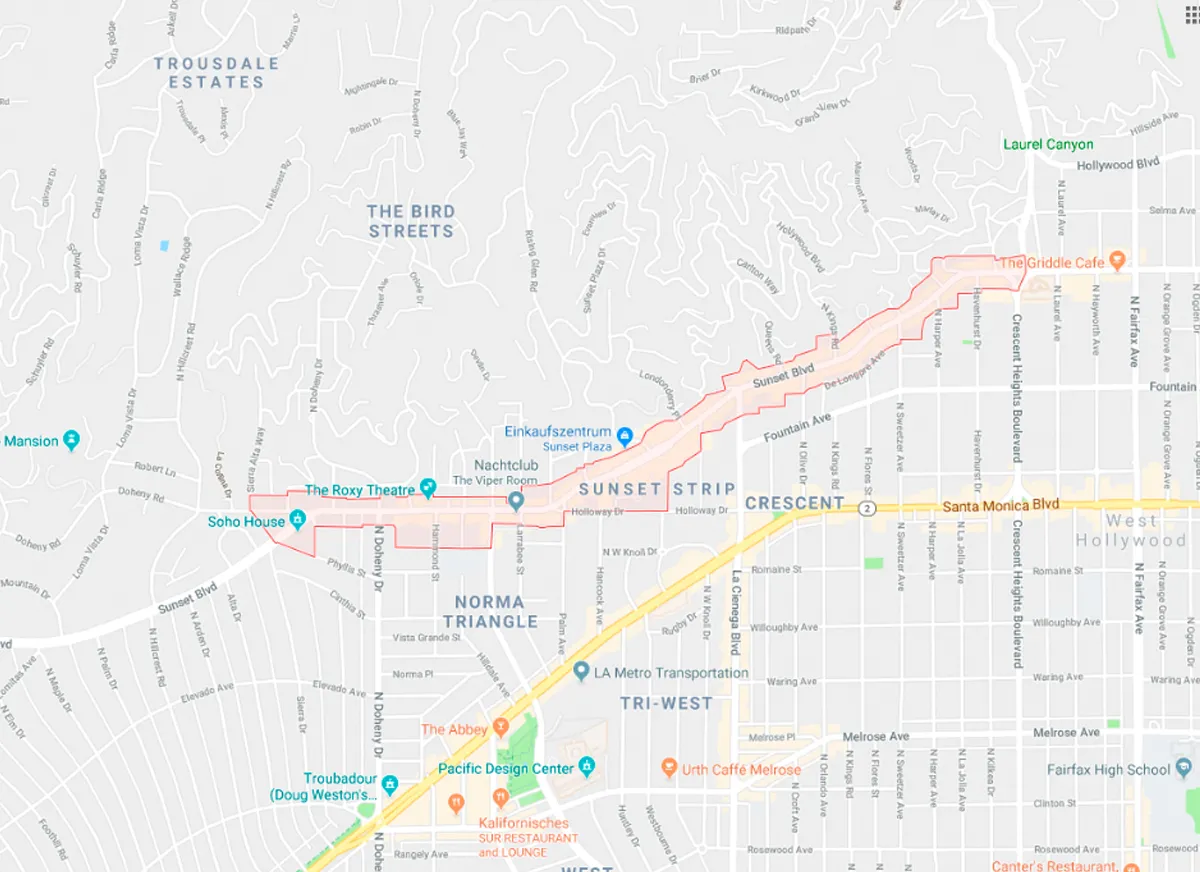
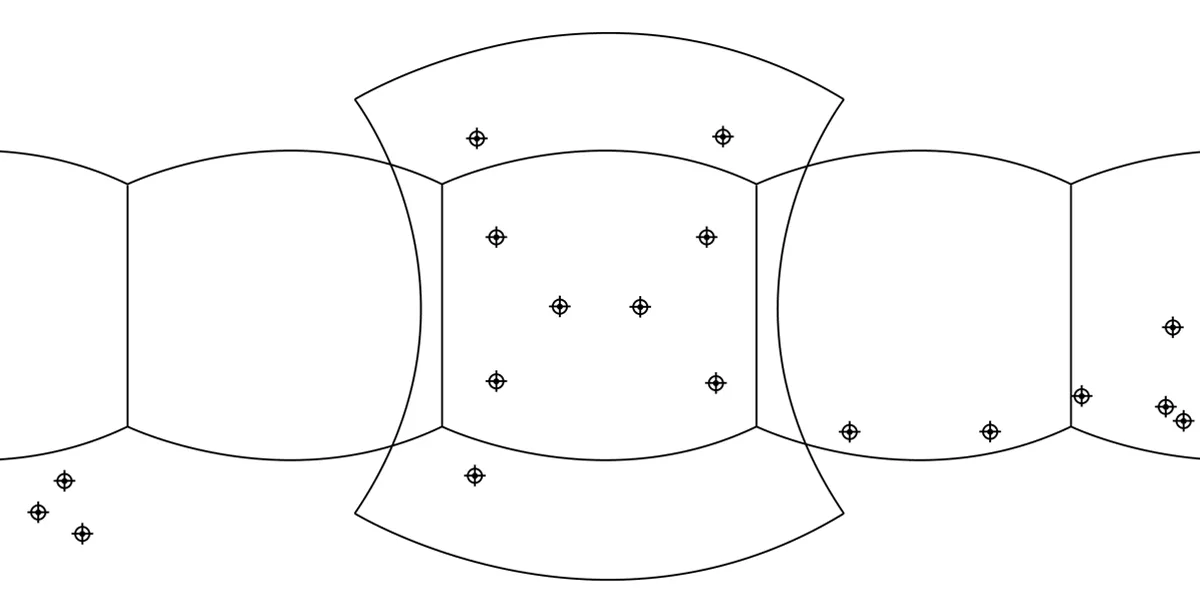
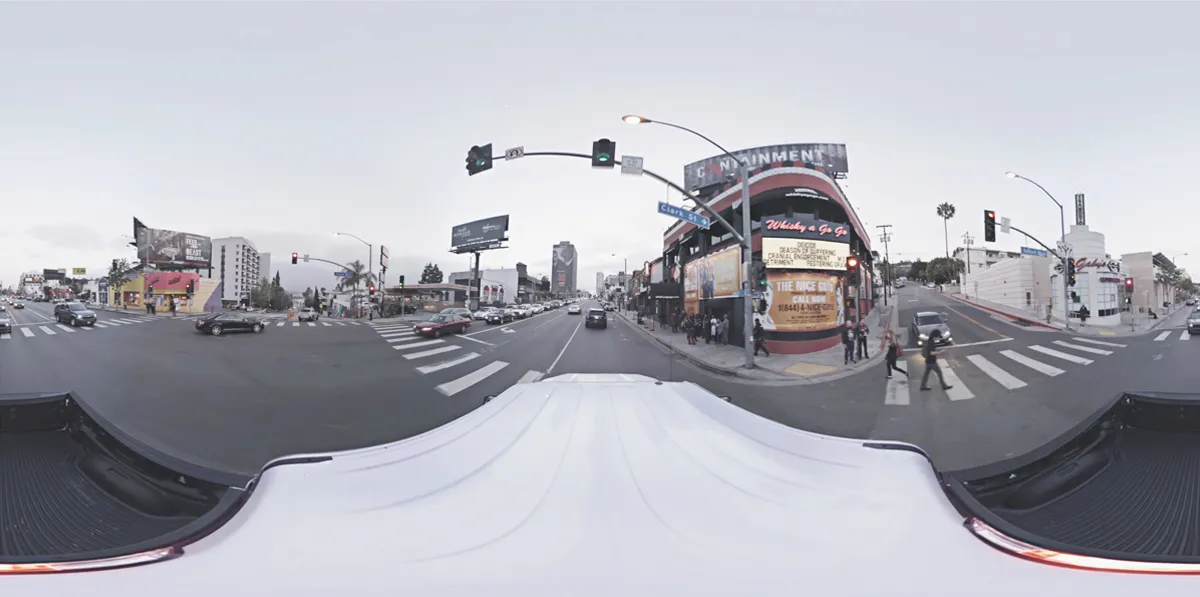
In 2016, when I recorded REVISITED, 360° video technology still required separately recorded clips to be stitched together using a program called AutopanoGiga to create an equirectangular panorama, which could then be projected onto a sphere. The result was a 360° video that allowed viewers to explore any perspective within the documented environment. Unlike today, when 360° video often comes 'ready to use' straight out of the camera, this stitching process highlighted that the environment itself is a construct – a collage of moments and perspectives.
360° Videos
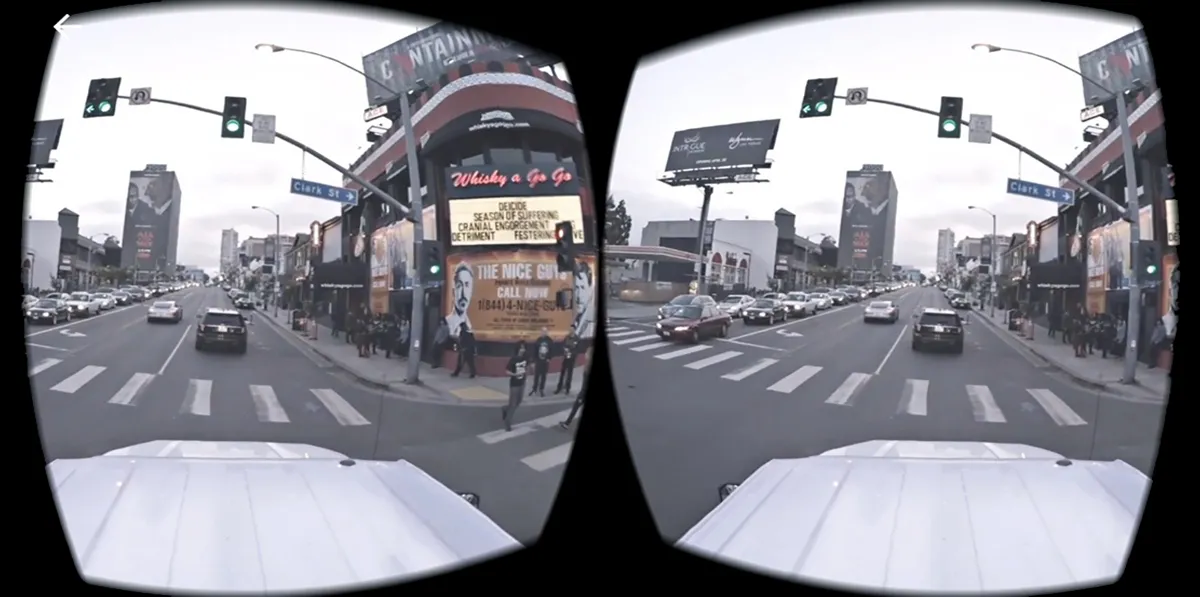
My interest in 360° video emerged as a natural succession of my generally media-reflexive practice. Something that immediately fascinated me when I tried 360 VR, was the ambivalent way this medium made me feel. It blurs the boundary between physical and virtual space and produces sensations of being both present and absent. This ambiguity is bodily felt through experiences such as motion sickness, and a destabilized sense of orientation. Our brain associates with the driving dynamics, but when approaching a red light that tells our brain to stop, there is no force to work against.
360° video fundamentally changed the relationship between creator and spectator because the control over the final image — specifically its composition, which is determined by perspective — shifts from the producer to the viewer. Through the VR headset, the image is no longer fixed but instead continuously generated in real time, responding to the viewer’s head movements. As a result, each encounter with the scene — a revisited documented past — becomes uniquely shaped in the present by individual choices and bodily orientation.
Installation
As part of my three-piece media installation REVISITED, the unique sequences that are defined by the person wearing the headset that decides what to show and what to exclude, can also be witnessed on a TV-monitor by everyone else in real-time. Means, every viewer who is willing to embark on this journey through history and provided media-scapes – starting with an original copy of Ed Ruschas book from 1966 and ending in the virtual 360° video environment of the Sunset Strip from 2016 – also becomes a protagonist and active part of the overall performance, that is the installation.
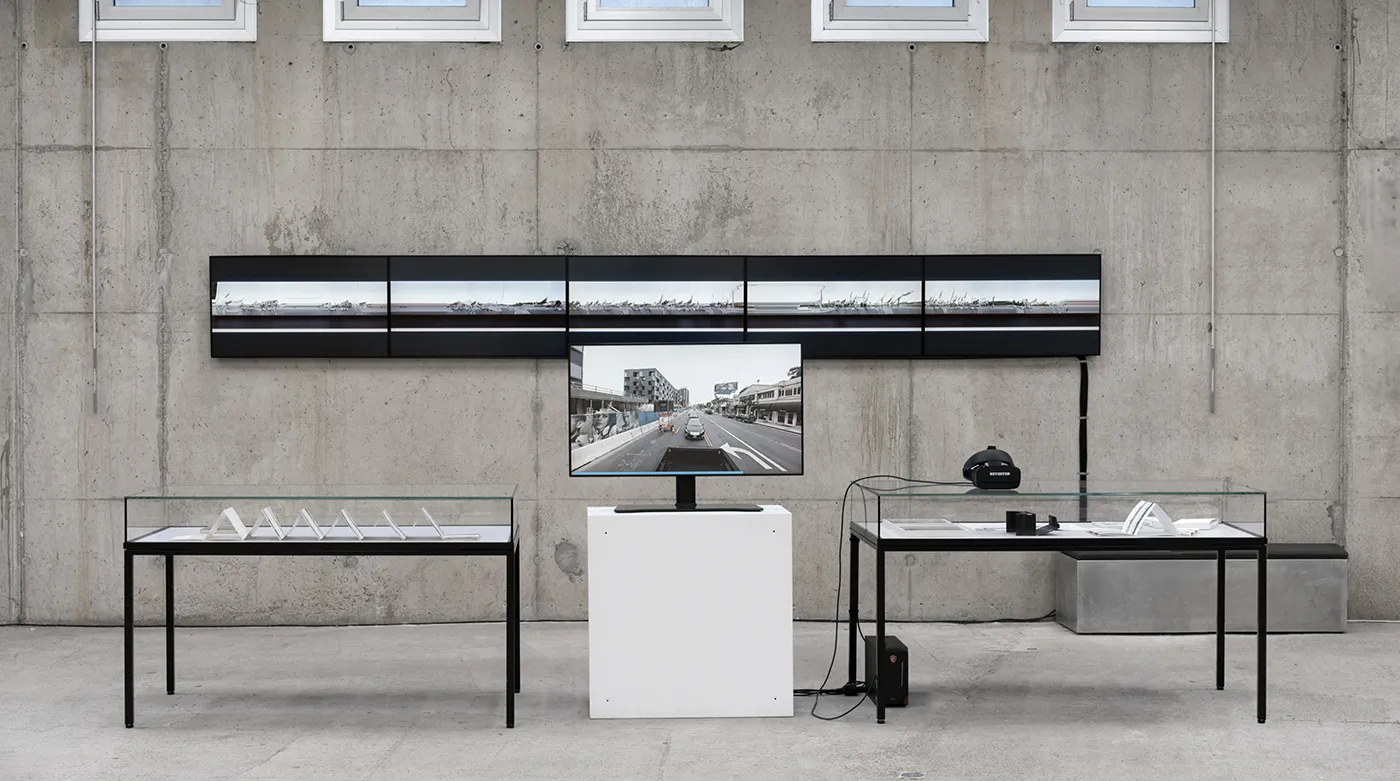
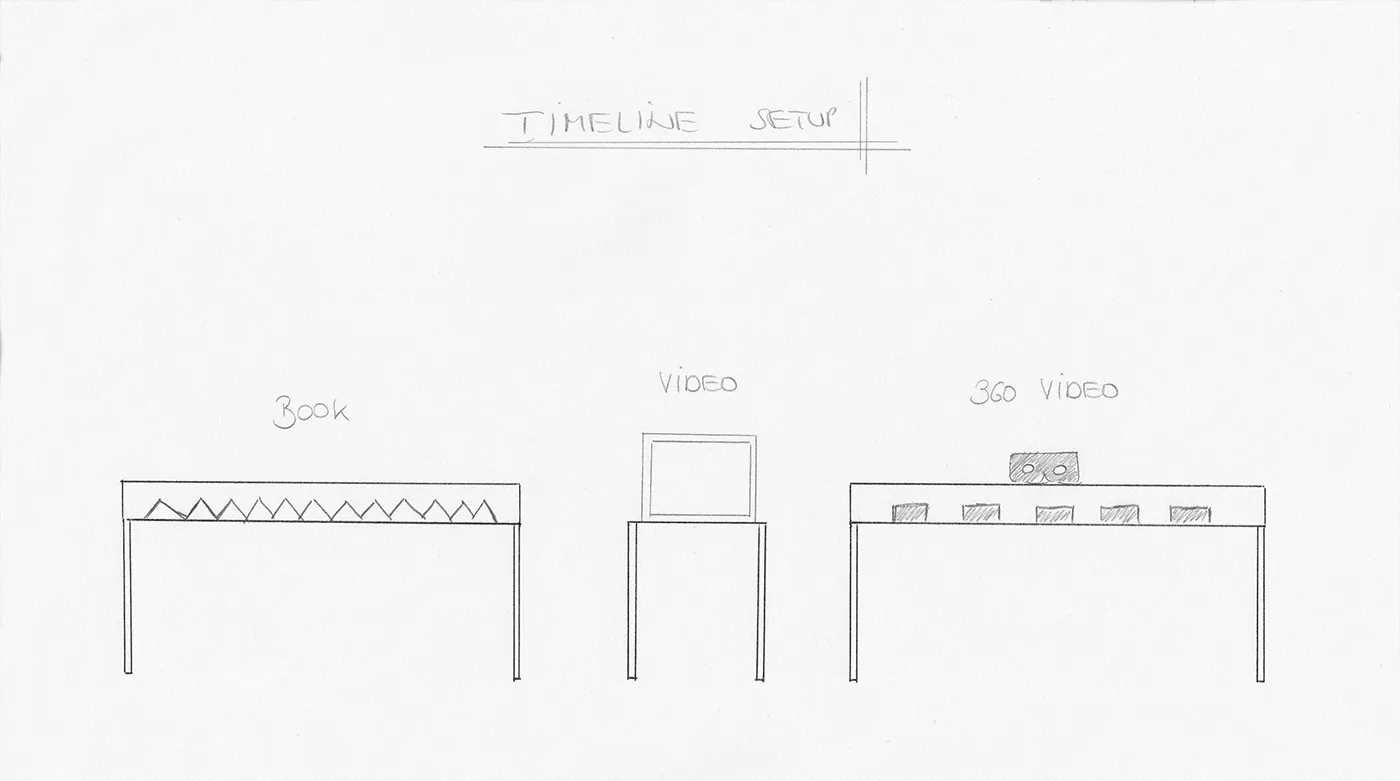
Immersion – in 360 videos, VR or computer games – often (and among other things)emerges through the possibility of interaction. The powers offered to the viewer with the VR headset generate a sense of agency that draws them into the scene. In this space, reality must not interfere with this alternate reality. One has to succumb to what is called 'Suspension of Disbelief'. Immersion, then, is not a matter of factual presence but a felt condition — an ambivalent state in which perception, movement, and choice create the illusion of inhabiting a space that exists only through experiencing its representation. Associating with what is presented.
Anchored on the Sunset Strip with its ever-changing topology and media landscape, the project is designed as an open conversation and evolving timeline, allowing future media and perspectives to be added over time. 1966 - 2016 - 2066 ...

REVISITED Source Footage Collages
• Storefront Plane
• Spacetime Collages (6DoF)
• Spacetime Tunnels
• Traced Attention
• Spacetime Video Panoramas
In particular, this project foregrounds media-specific strategies — scripted, immersive, real-time, automated, and performative — that were (and still are) not central to Ed Ruscha’s practice, positioning the works as an exploration and reflection on contemporary image-making that moves beyond the logic of the photographic archive.
Storefront Plane
Realizing that what I wanted to make accessible – one vs more degrees of freedom – depended on the availability of VR headsets, I investigated ways to translate characteristics into easier accessible media by extracting parameters. I began by creating seamless panoramas of the storefront plane (à la Ruscha) to test whether the continuous video experience could be translated into an equally seamless static representation.
In total, the sequence pool for the four strip panoramas consisted of 156,480 sequence stripes rendered from the videos. 500 were hand-selected for each of the four manually stitched collages, © Markus Oberndorfer 2017.




Revisited Artist Book Box
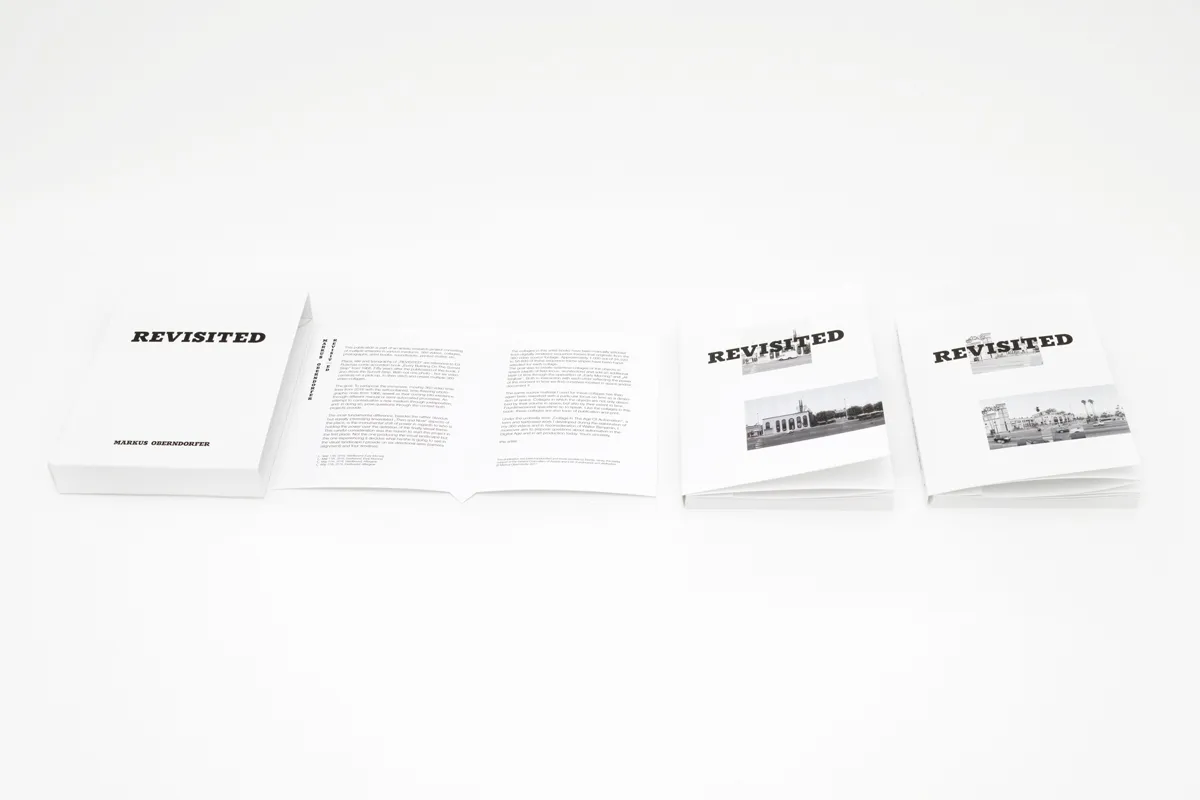
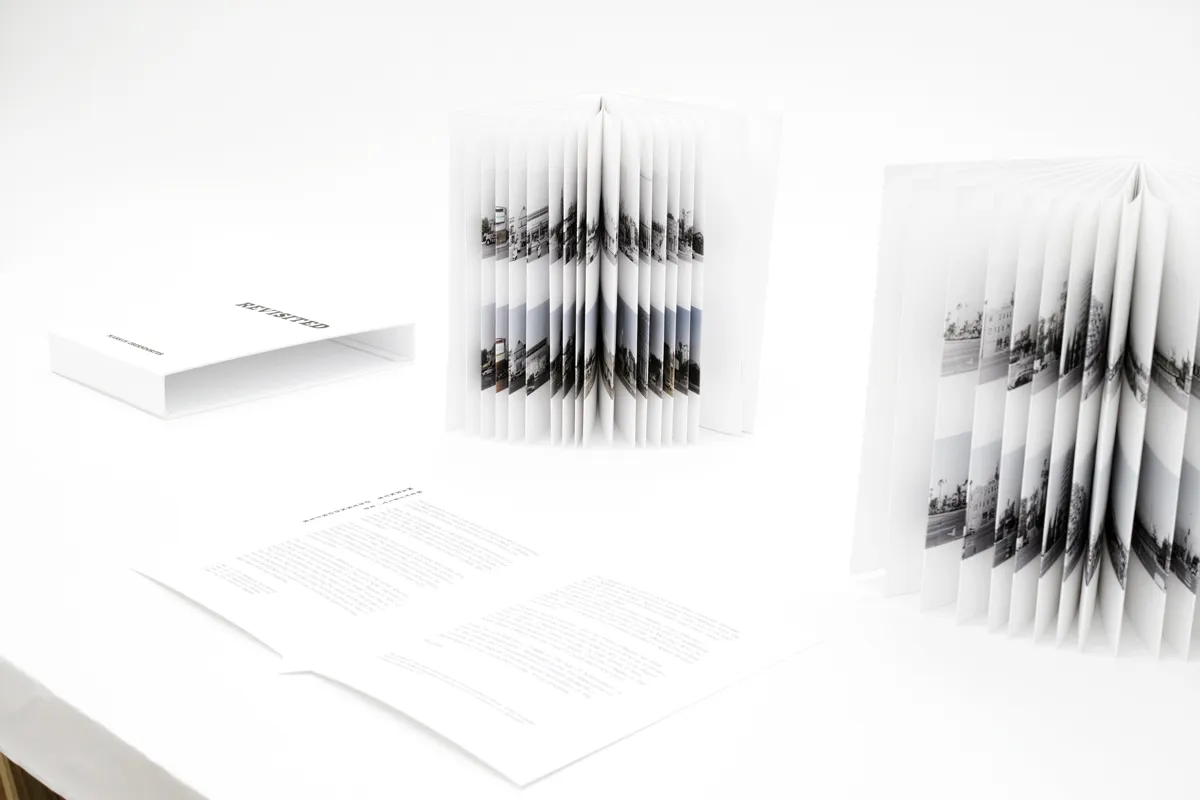
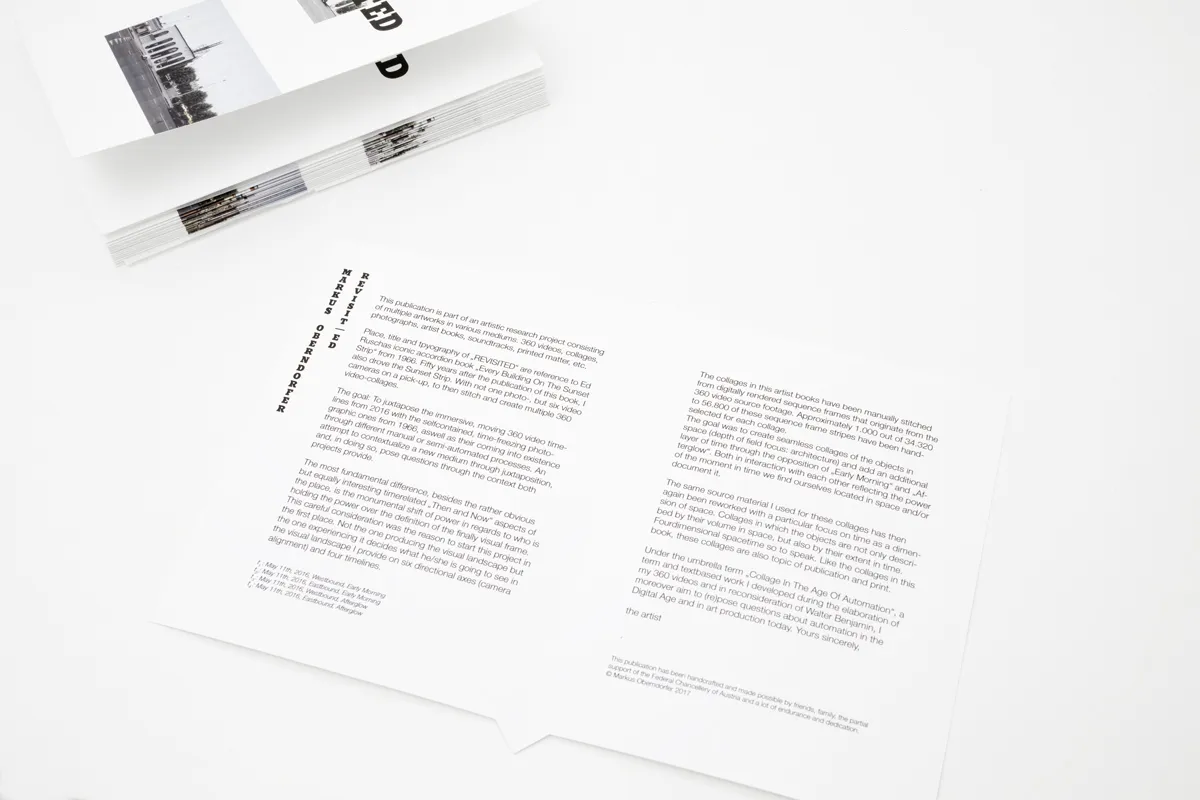
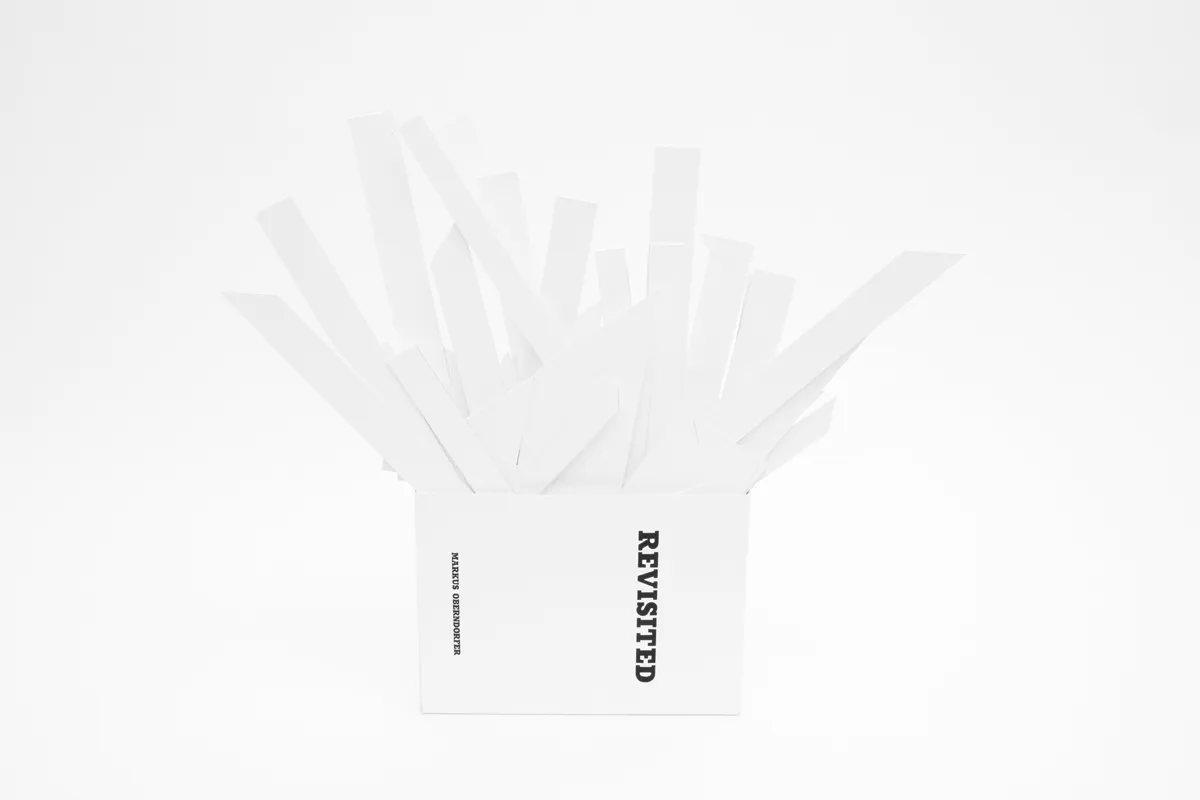
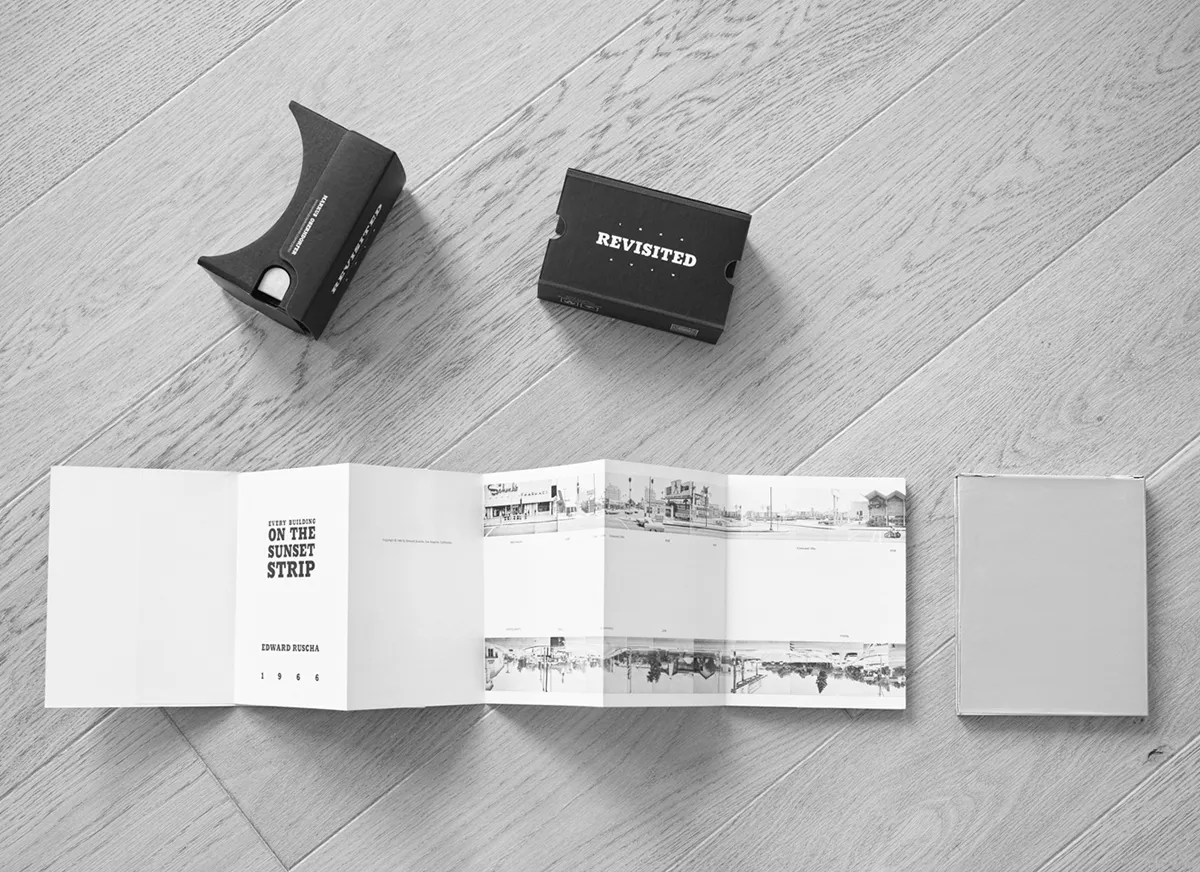
My 'Storefront Planes' were collected in two handmade accordion fold books that come in a handmade box. Box and book spine state which timelines and camera angle is depicted. (Timeline 1-4, Camera Alignment Left, West- and Eastbound). Each book contains two manually stitched collages of the Sunset Strip in 2016. Instead of using Ruscha's approach – which is driving West, flipping the book over and driving back East – each book consciously juxtaposes Early Morning and Afterglow light of the respective rides. By that I wanted to emphasize how the same stretch (The Sunset Strip) presents itself differently due to atmospheres of light. Half-things as Hermann Schmitz would say, that modulate the way in which nature appears. I started printing and folding these accordion fold books and boxes in 2017 and finished the last batch of the edition of 50 in 2024. A few copies of this affordable artwork might still be available here.
Spacetime Collages
The idea of wanting to depict dynamic visual space in a static collage manifested itself during a conversation with a visitor at the Musée des Beaux-Arts de Rennes (2018). While wearing the headset and experiencing the 360°VR of the Sunset Strip, she asked, “Why am I stopping now?” — the simple answer being a red traffic light.
This led me to realize that time is often deliberately excluded from the visual dynamics of collages that claim to show things 'as they are.' But our lived environment is not simply a set of fixed coordinates or geometries; it is shaped by rhythm, perspective, motion, and temporal flow, all of which can be seen in these static representations of dynamic space. Even though all four rides along Sunset Strip start and end at the same points, each differs in duration, rhythm, and the unfolding of experience.

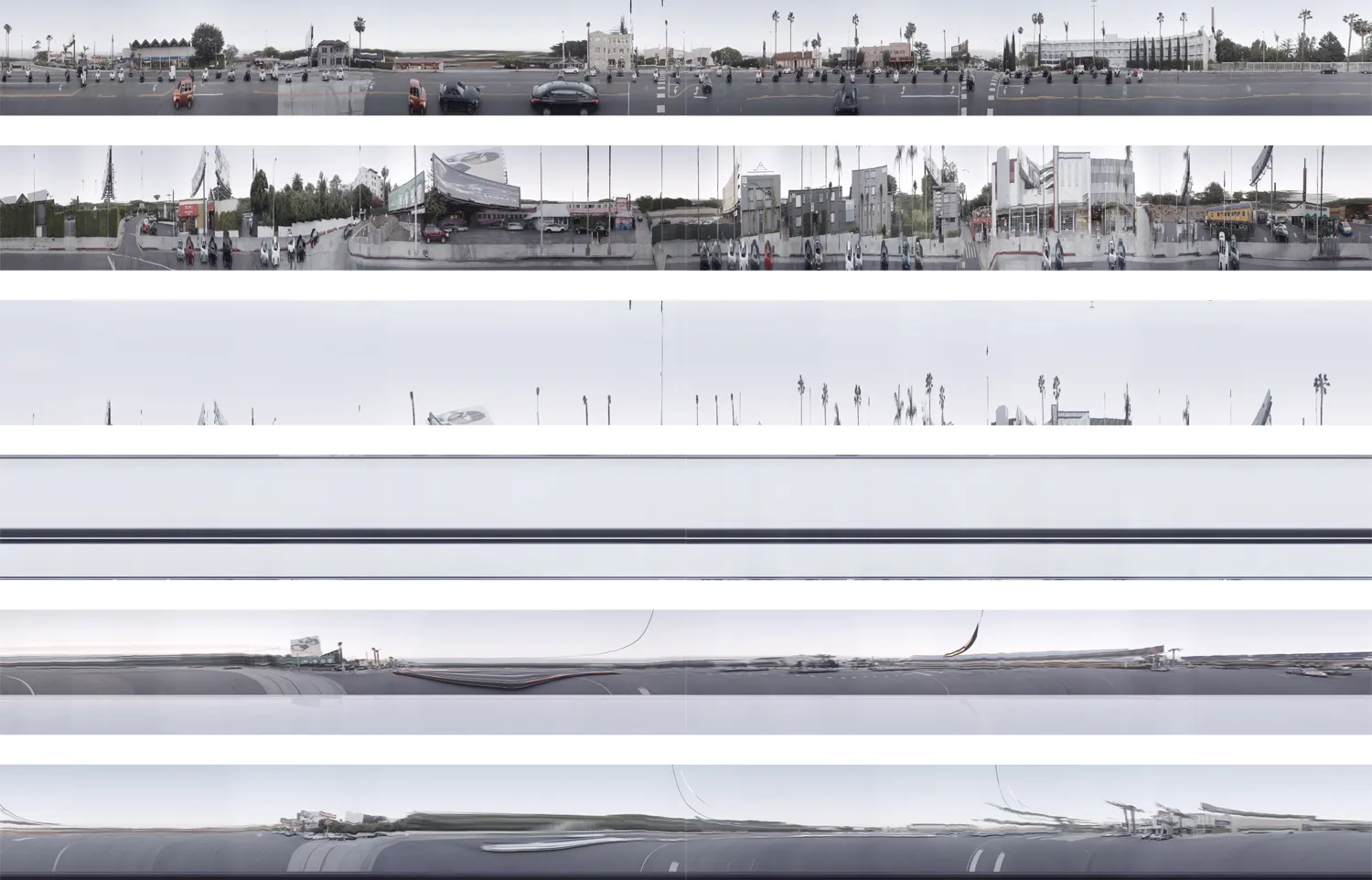
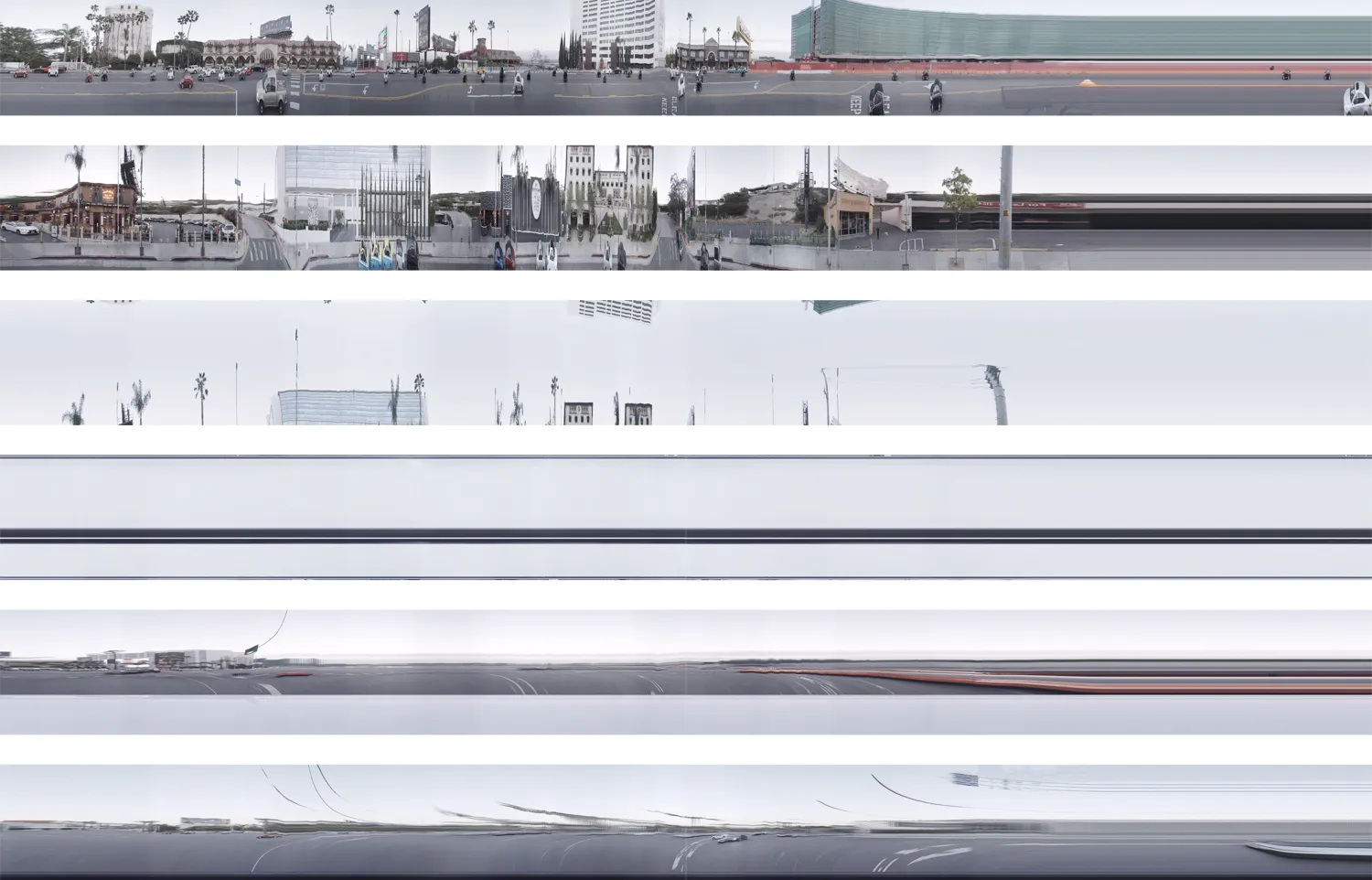
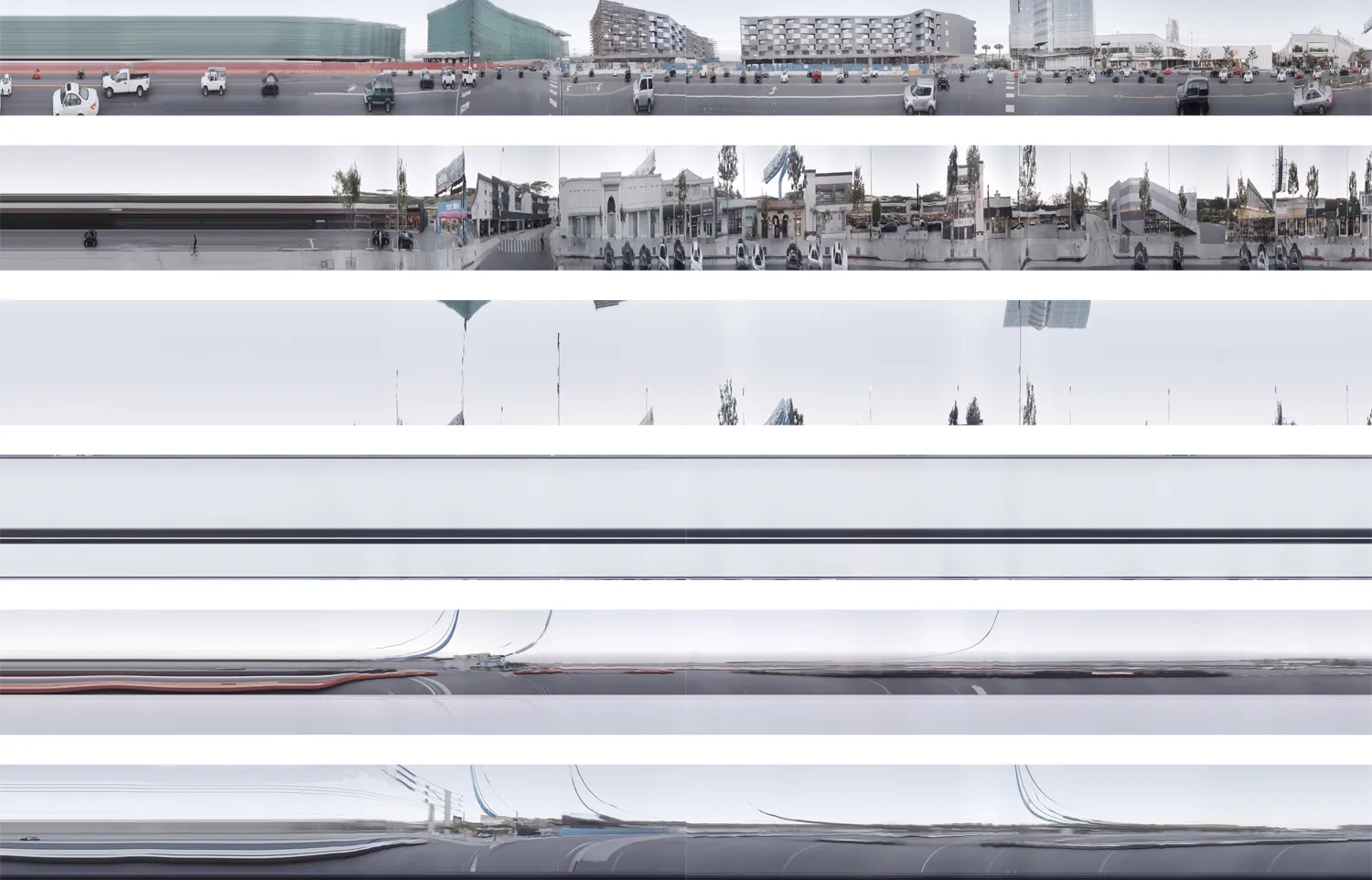
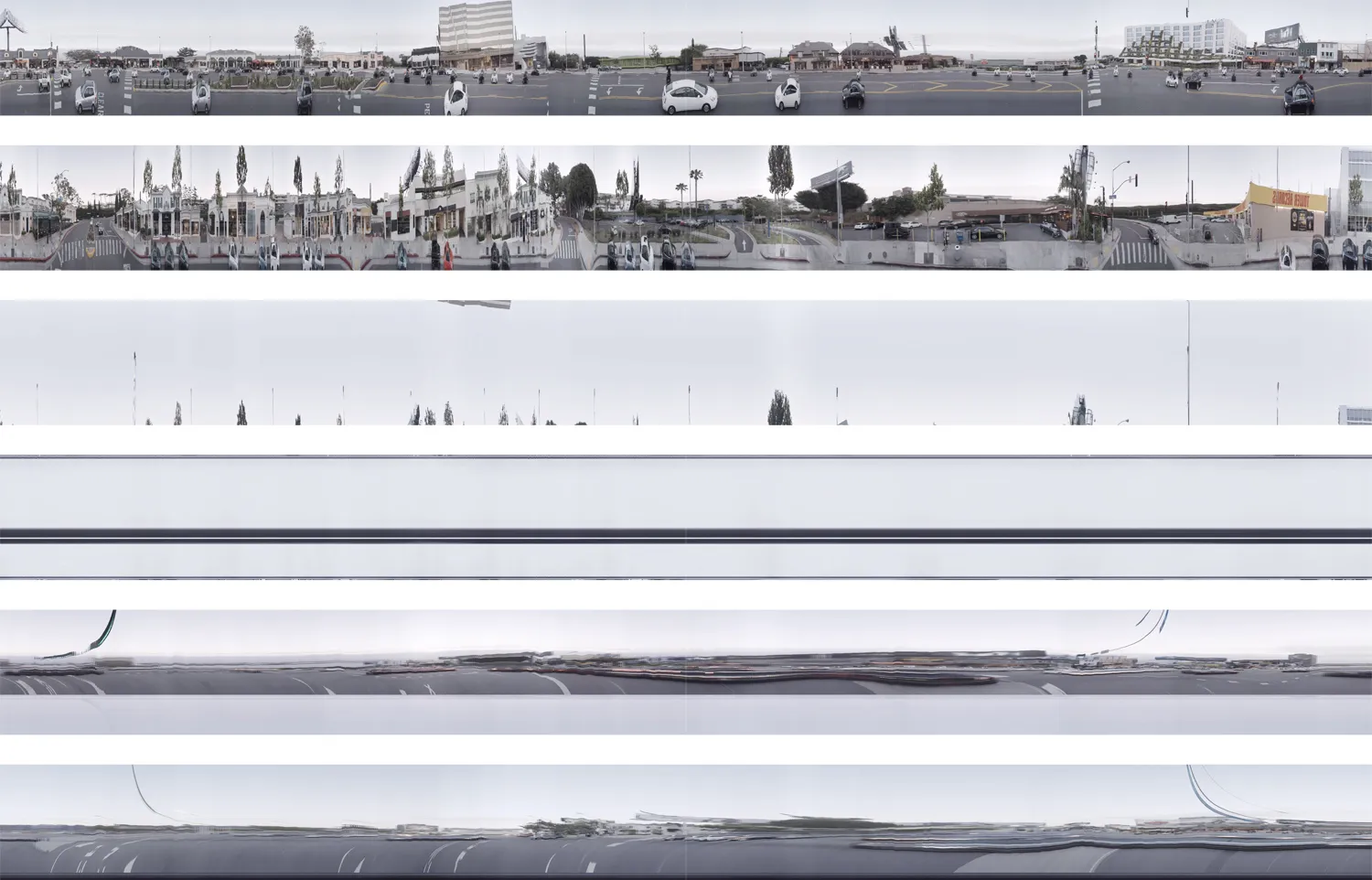

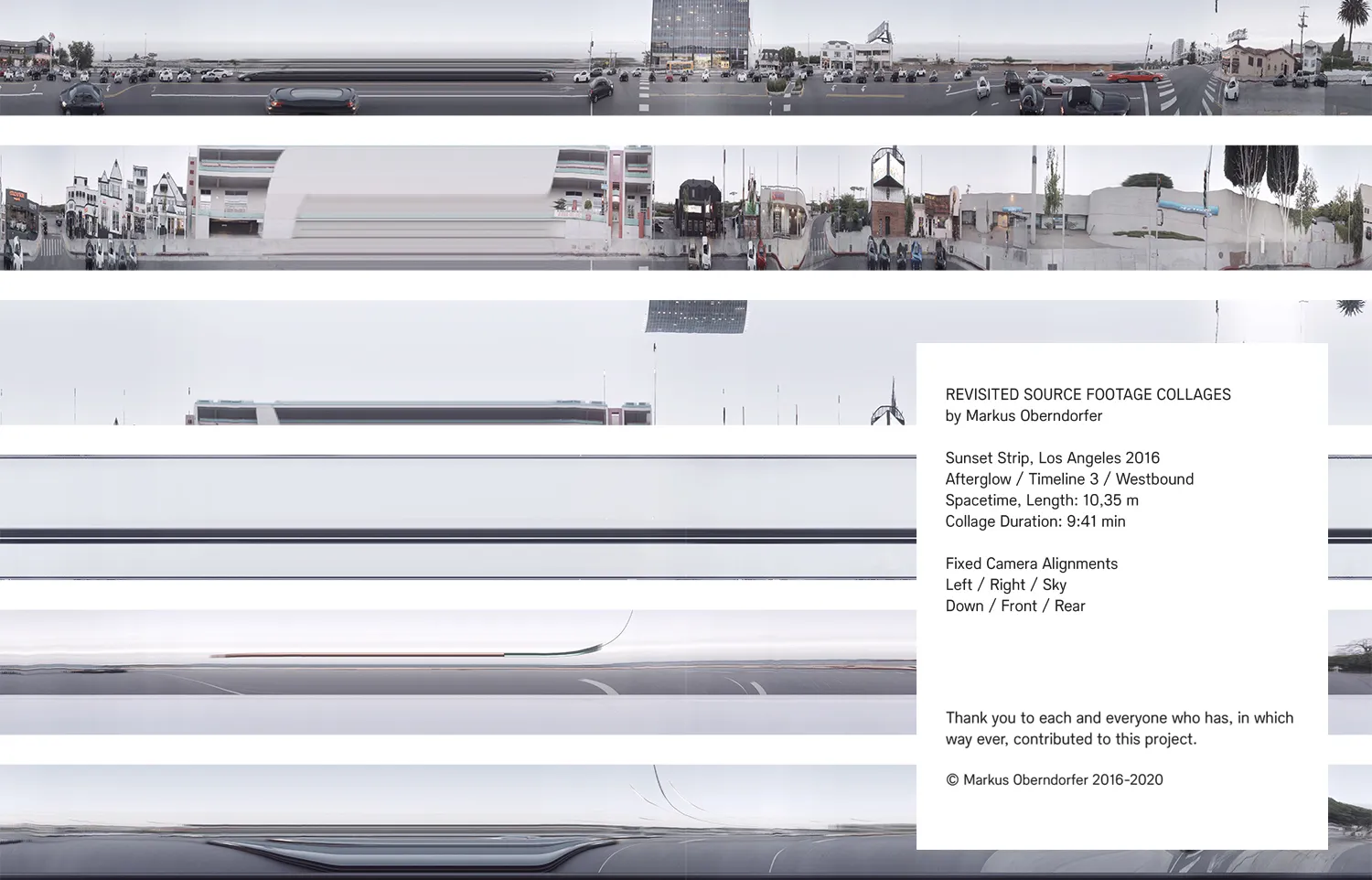
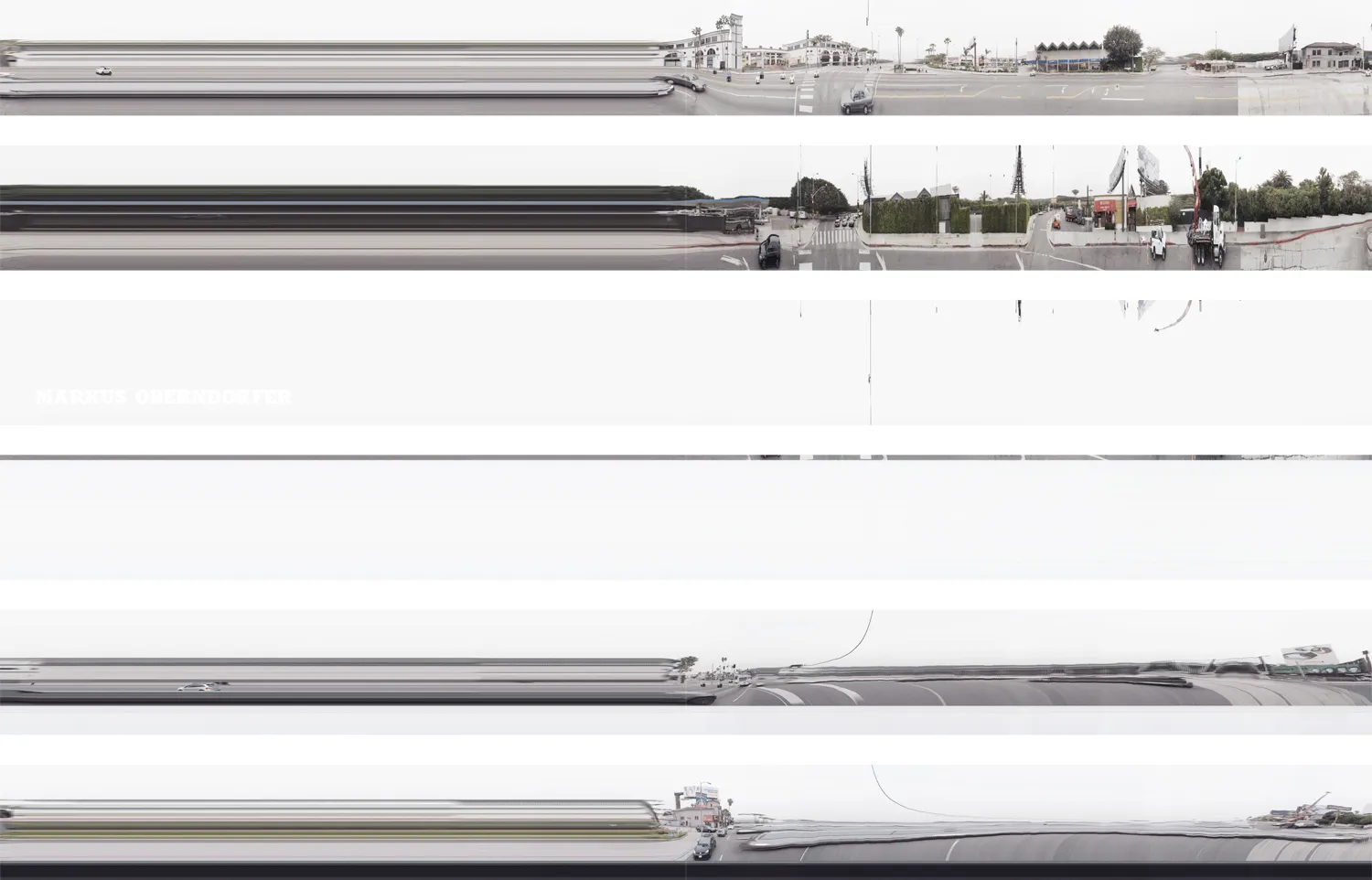
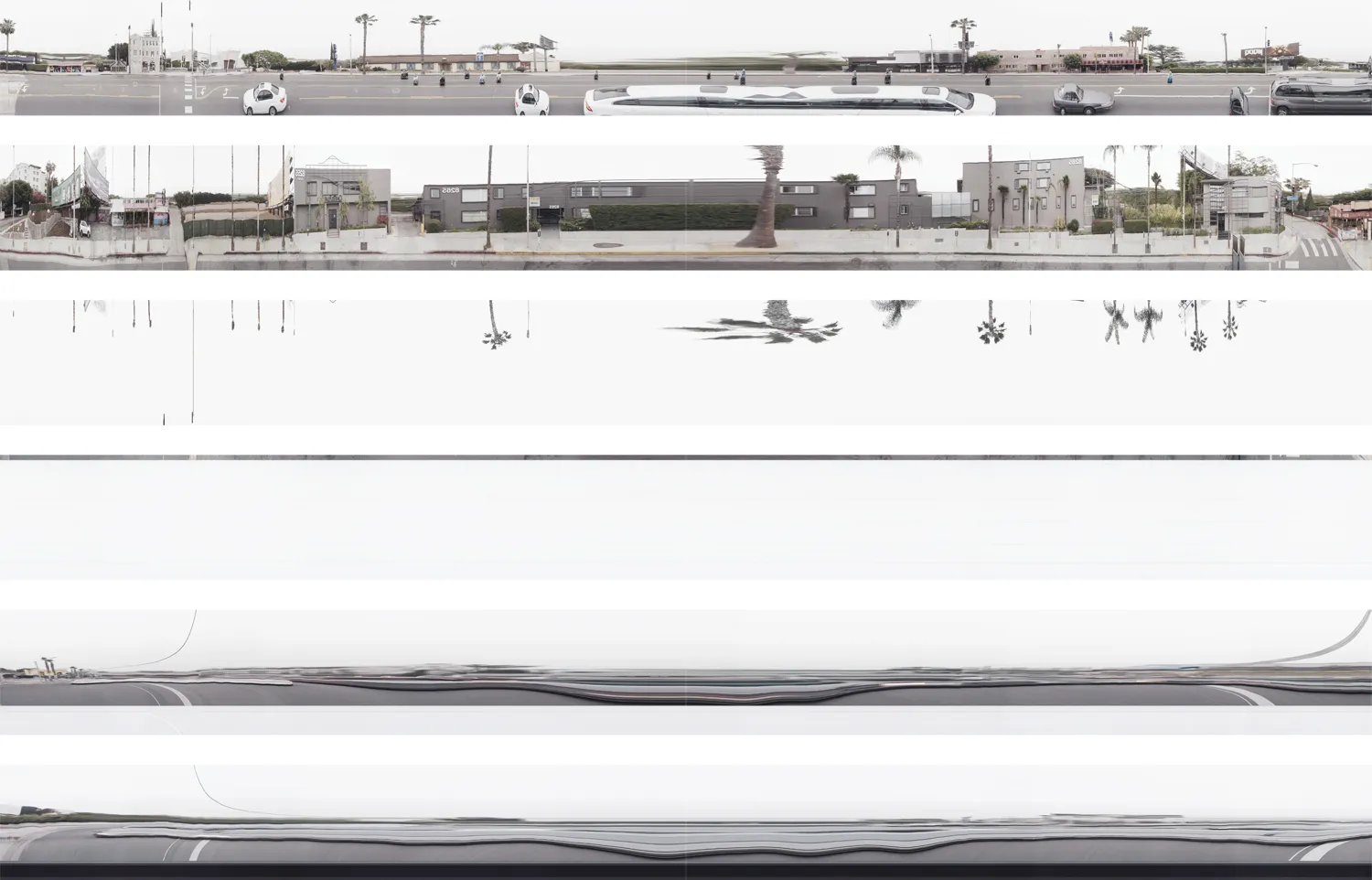
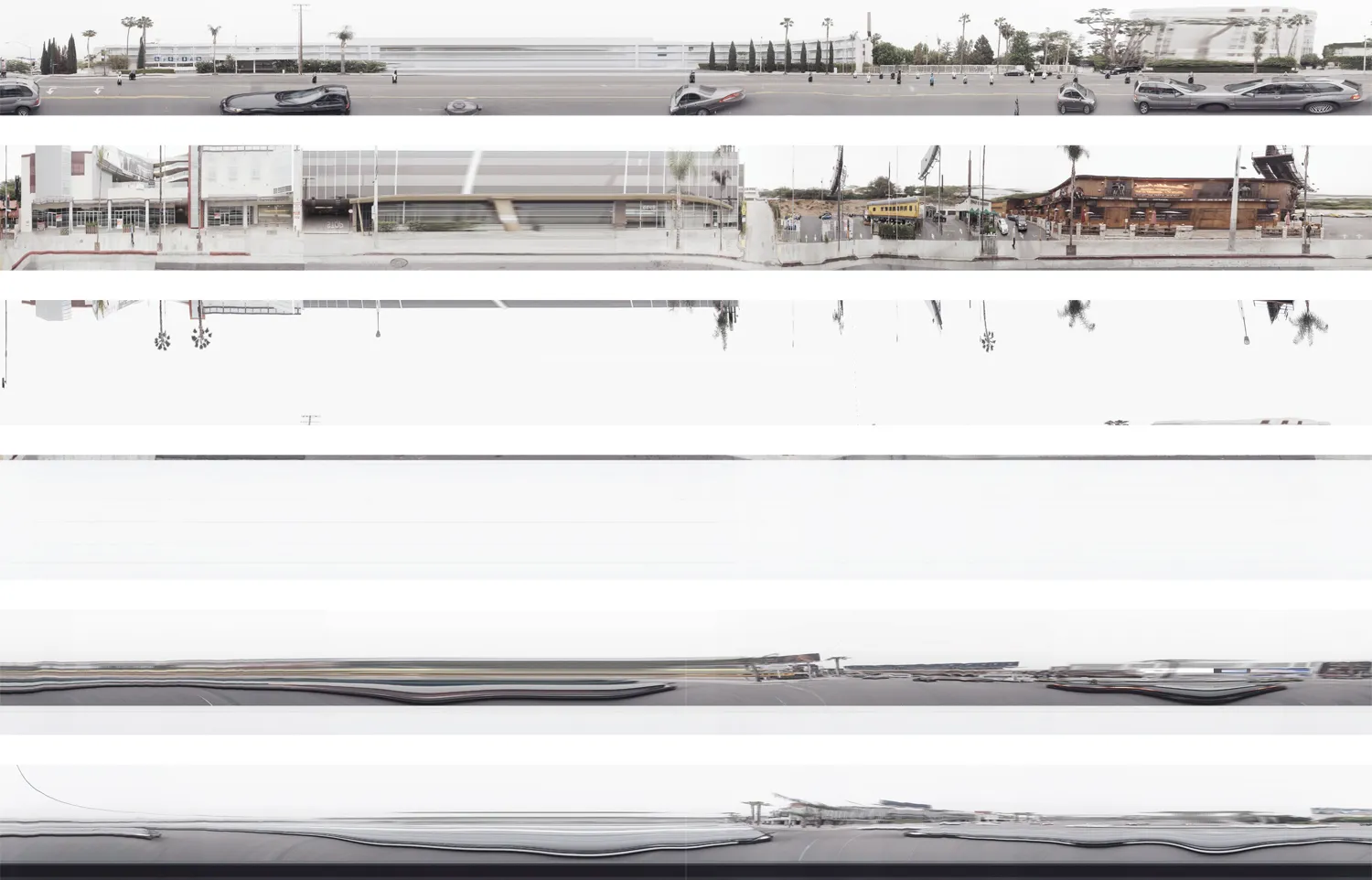
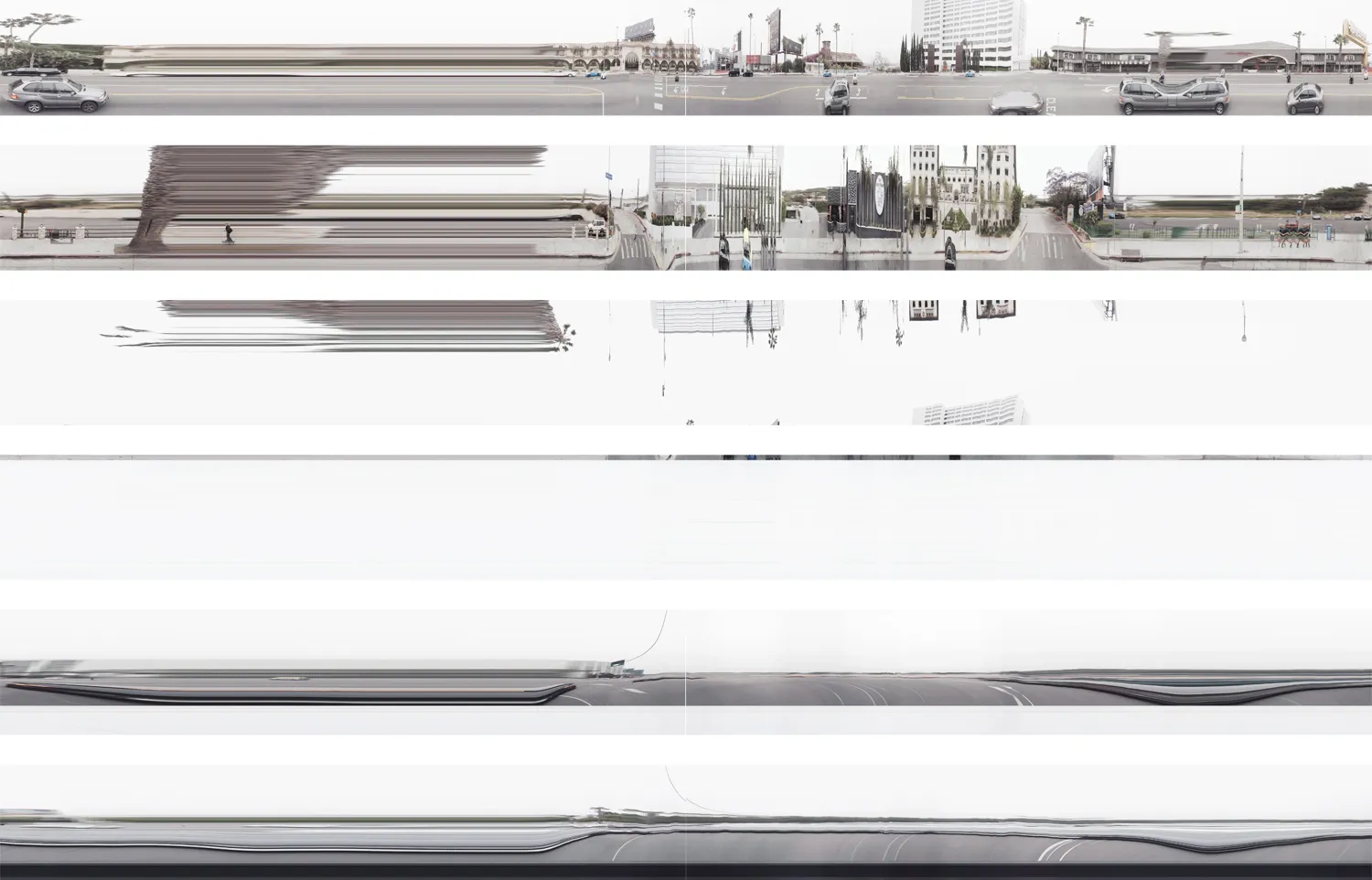
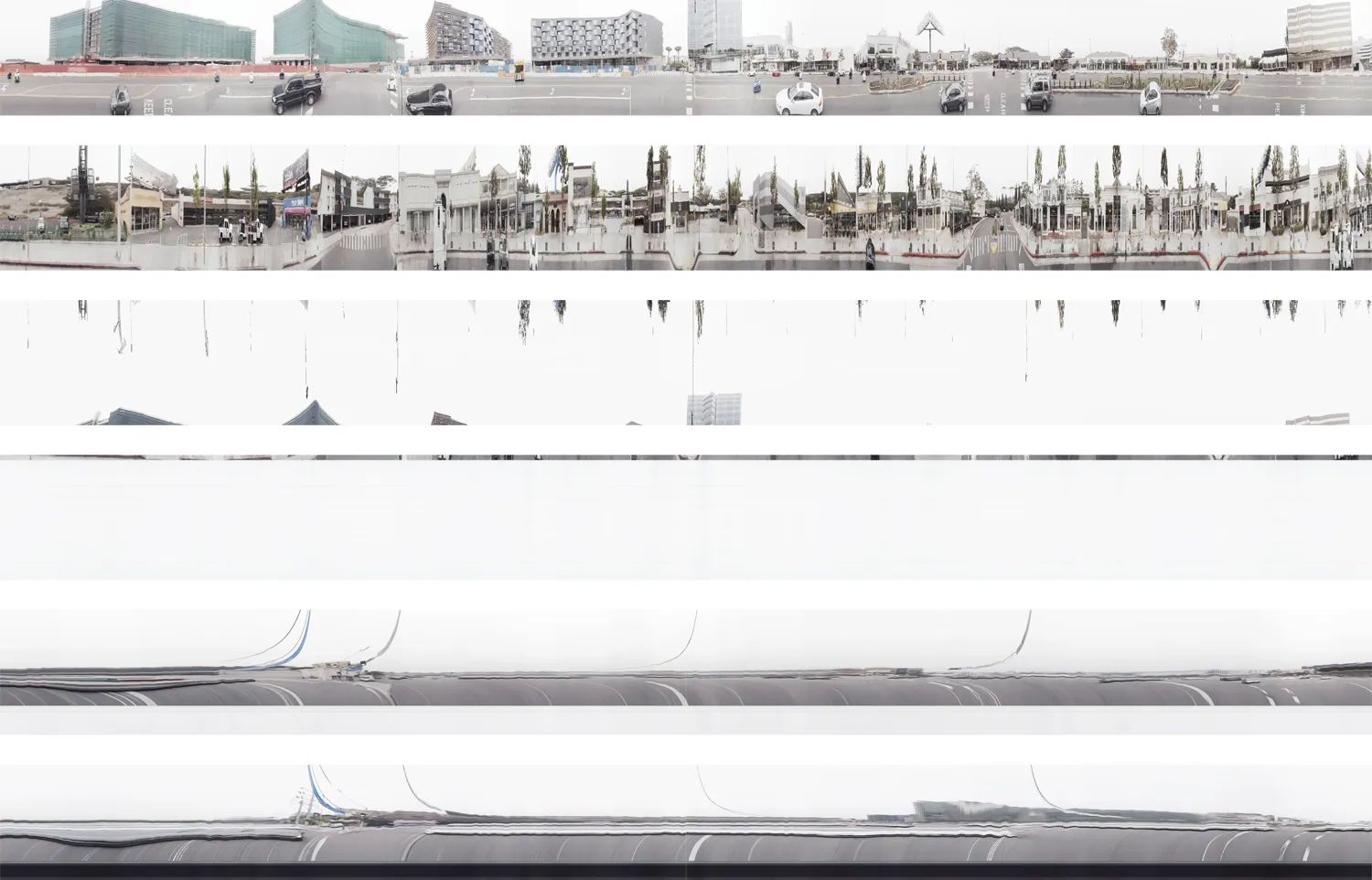
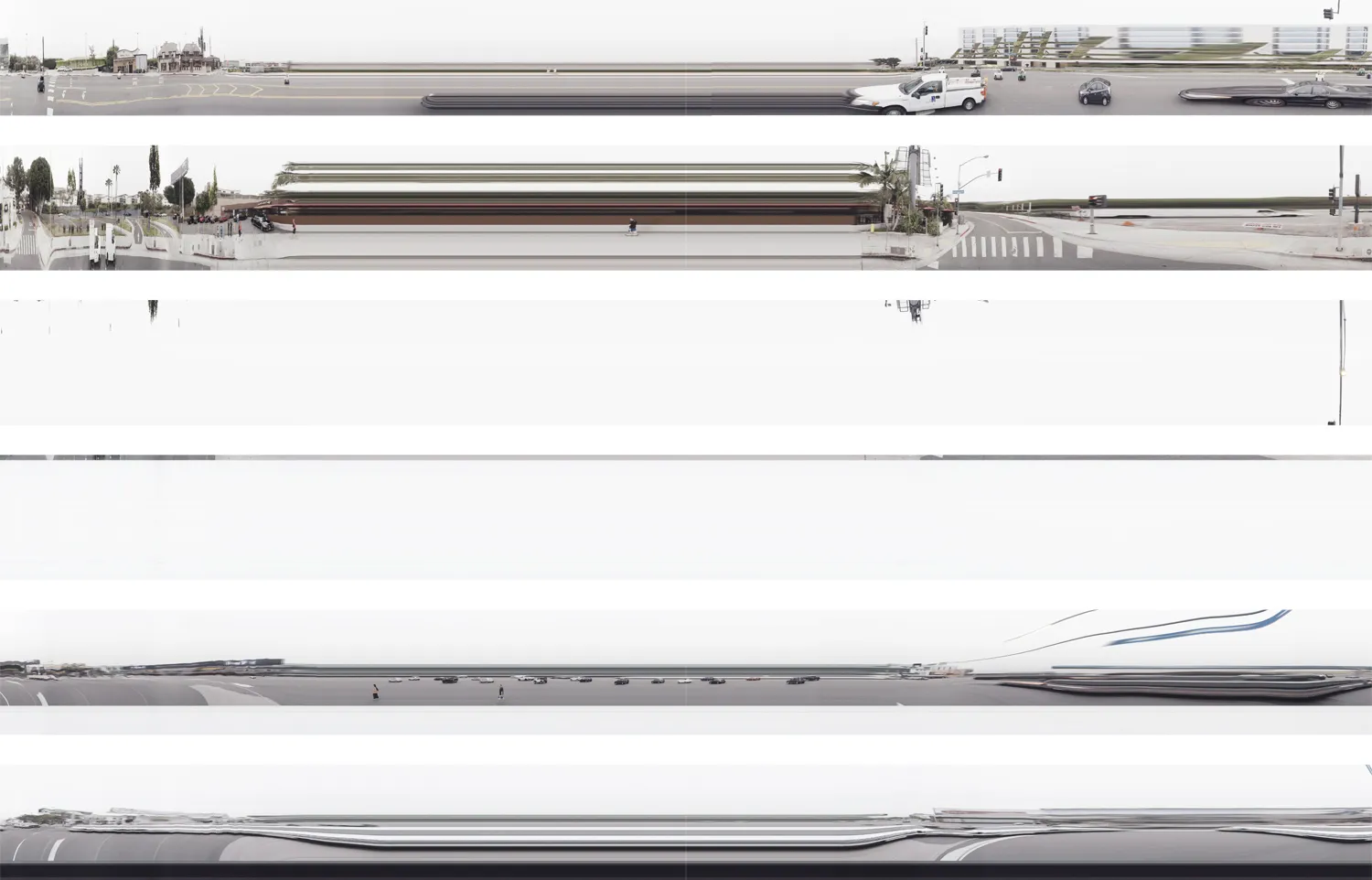
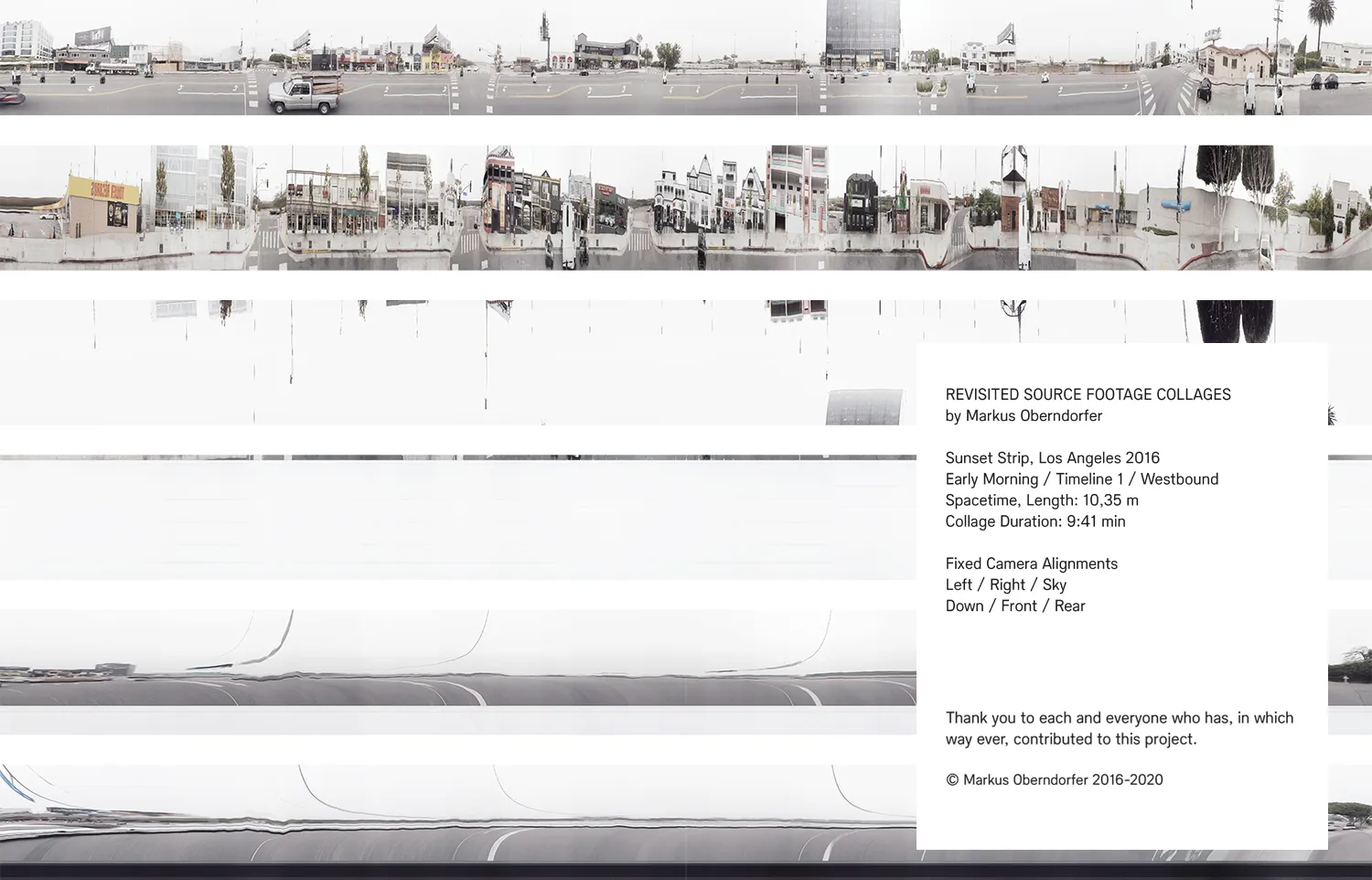

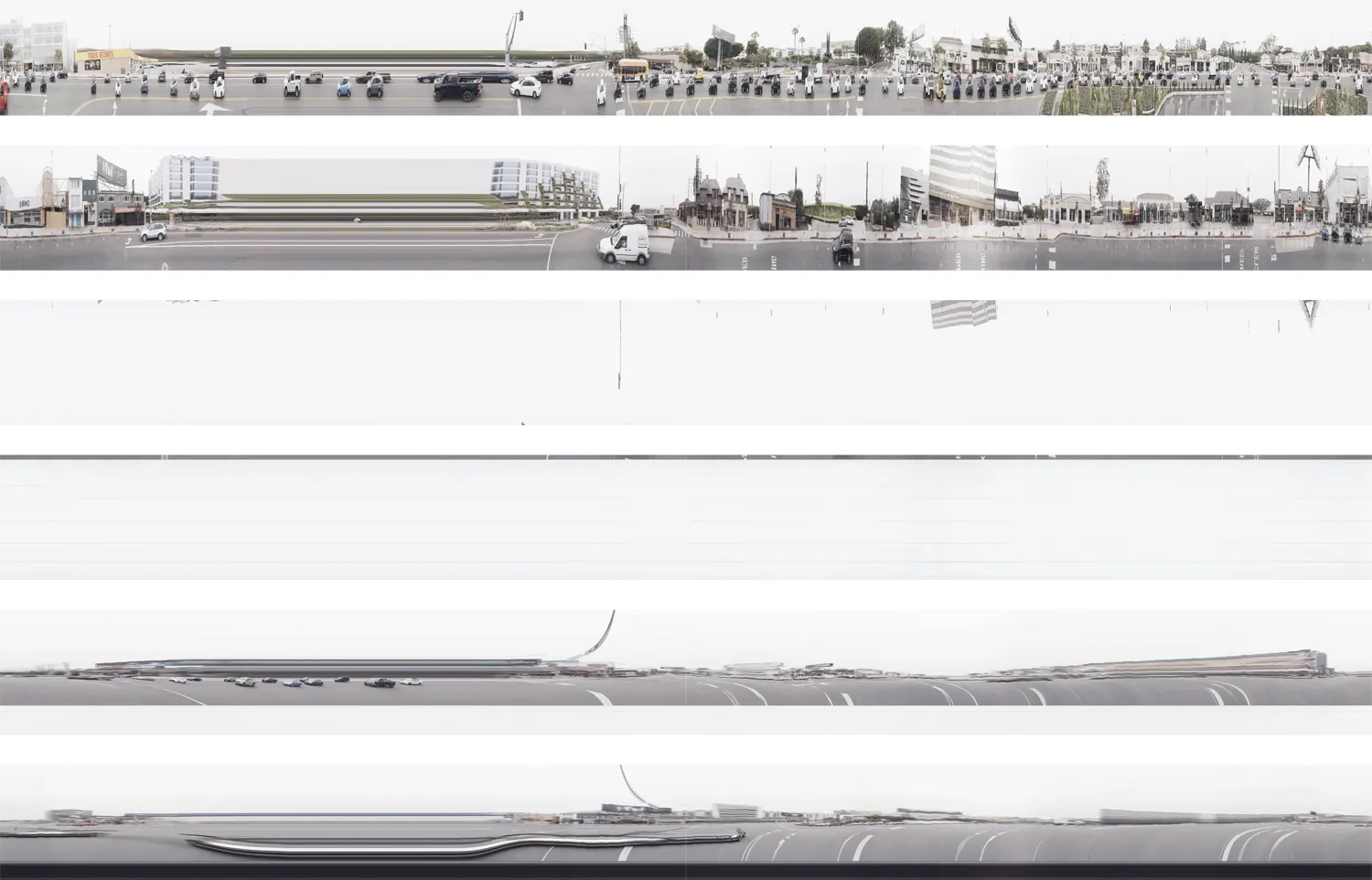
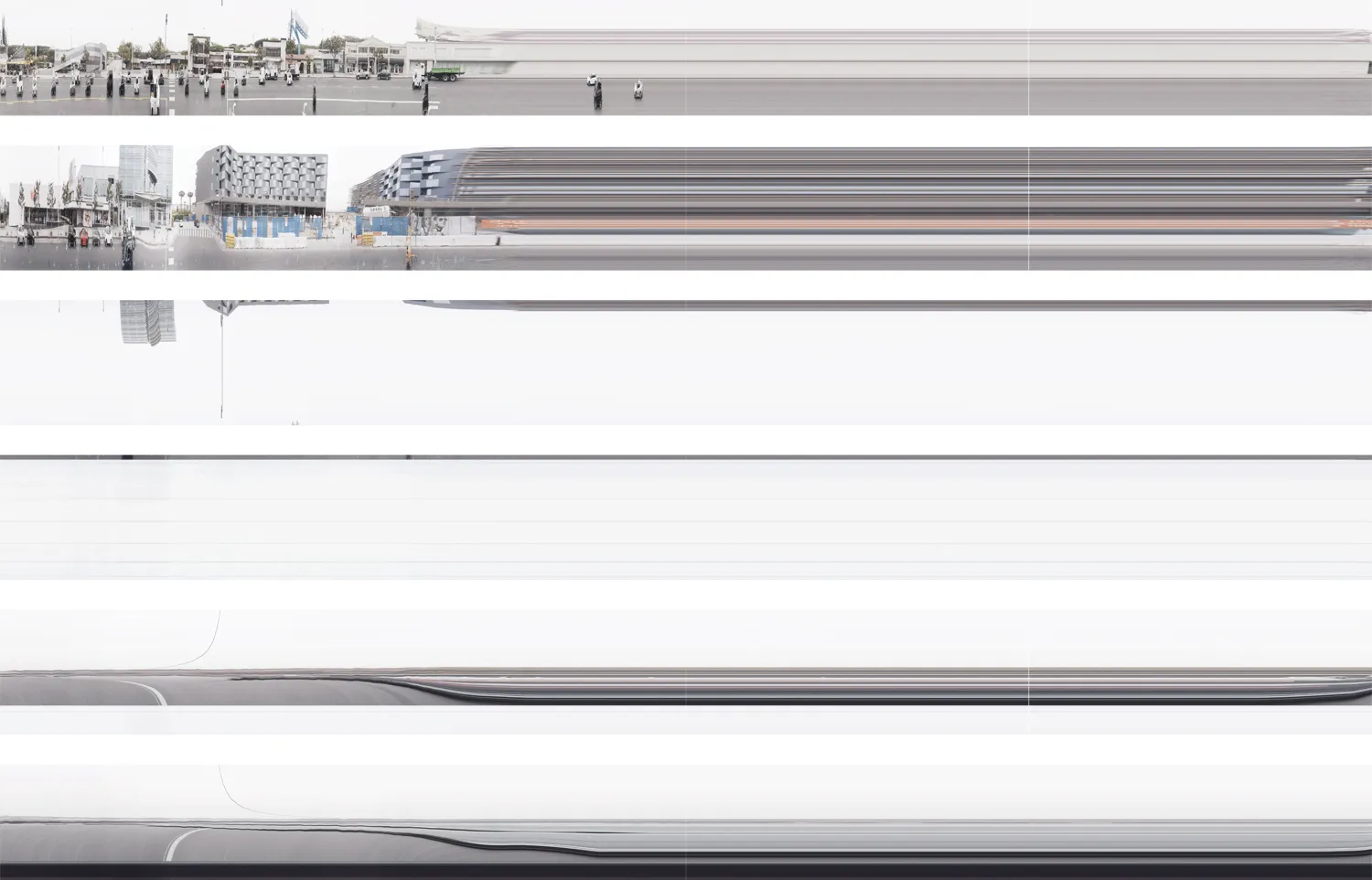
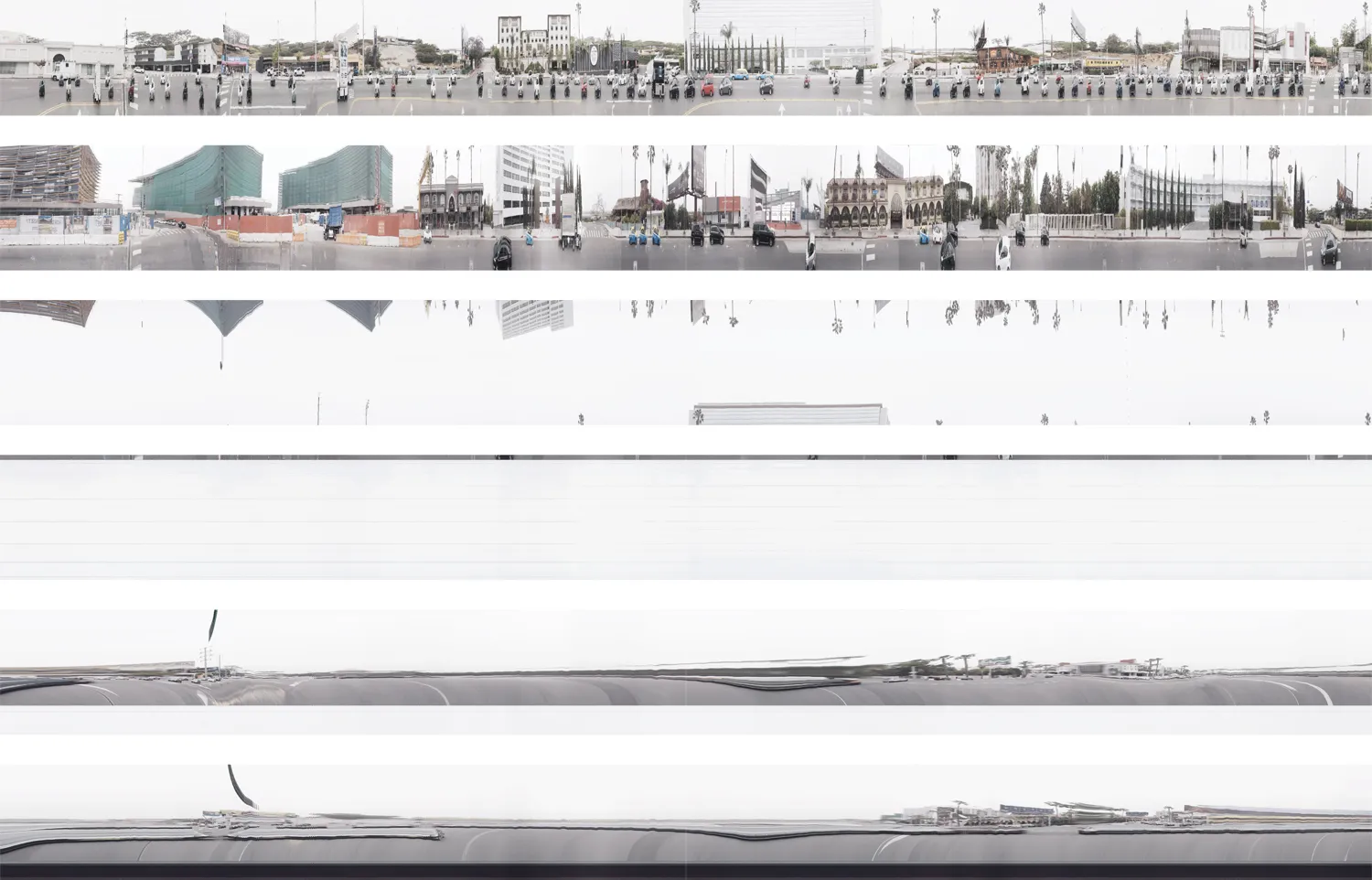
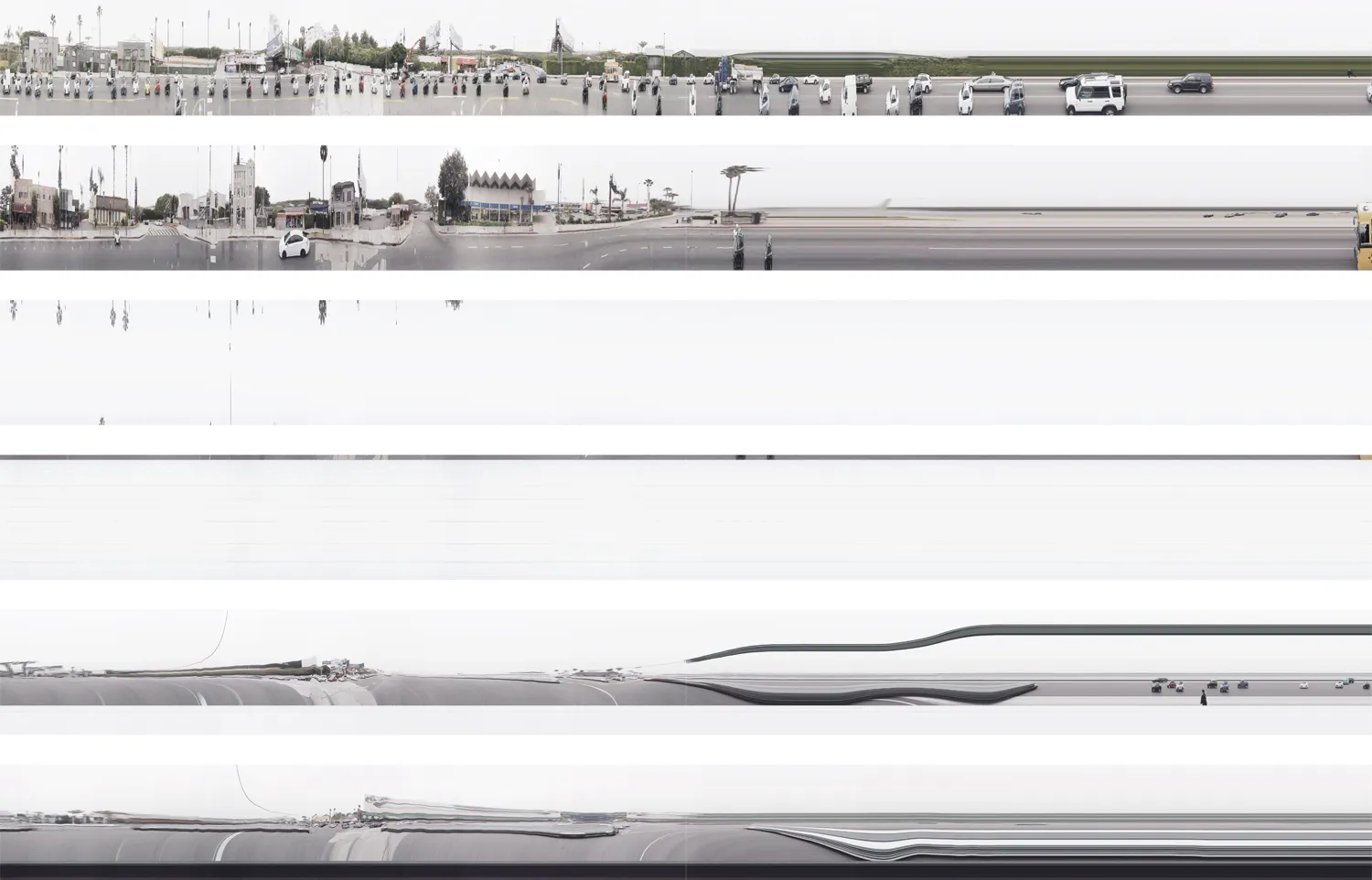
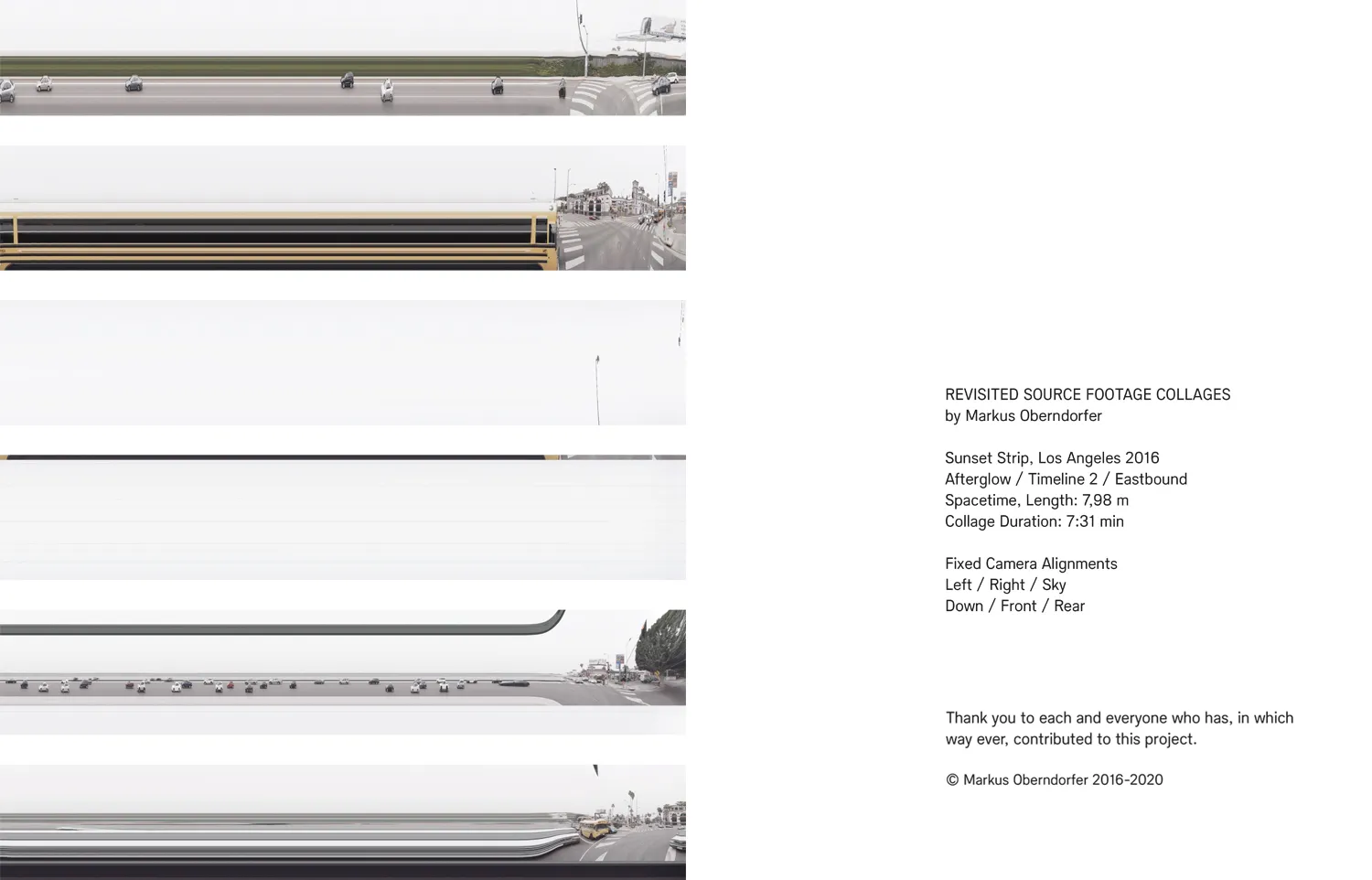
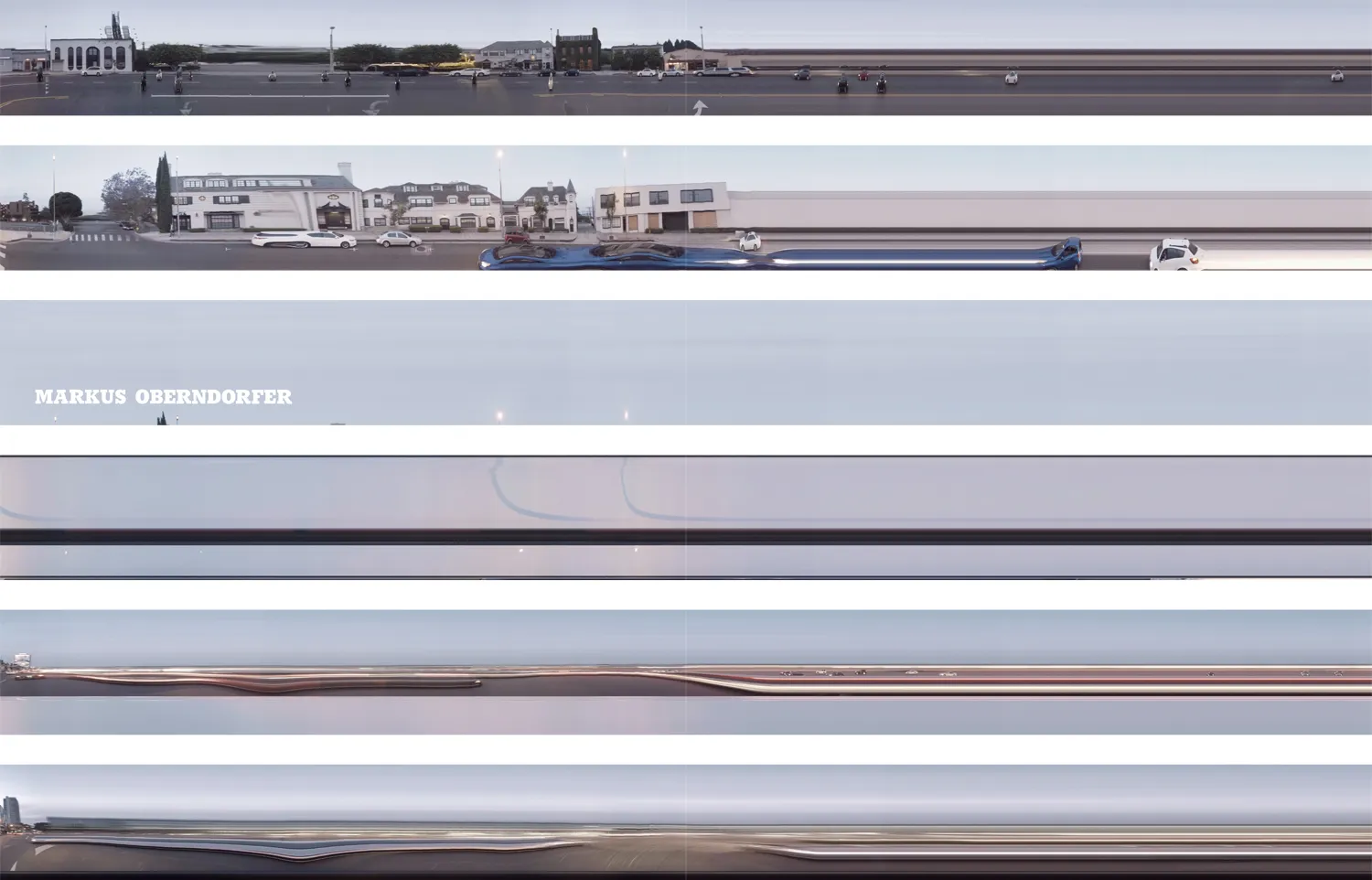
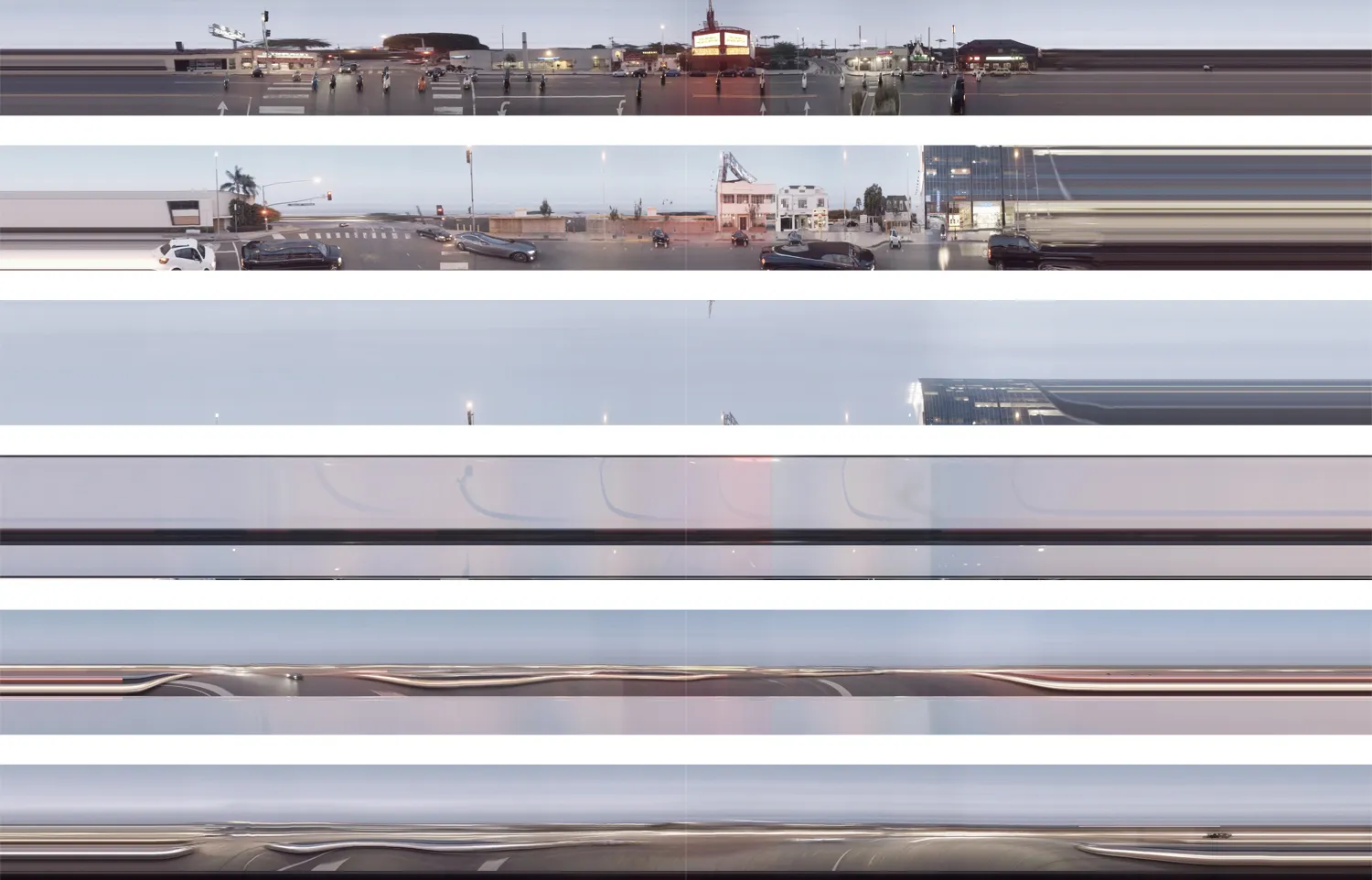
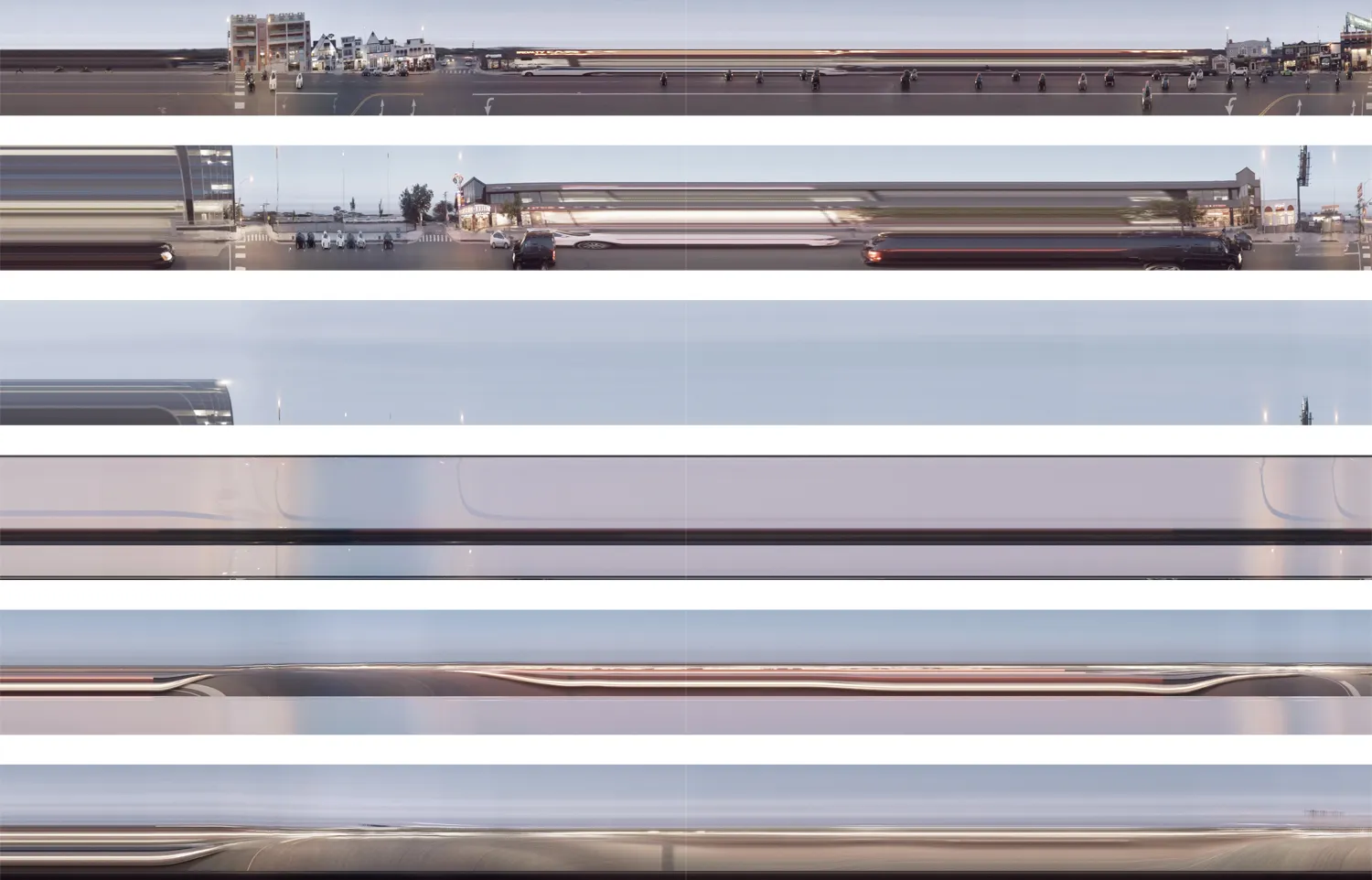
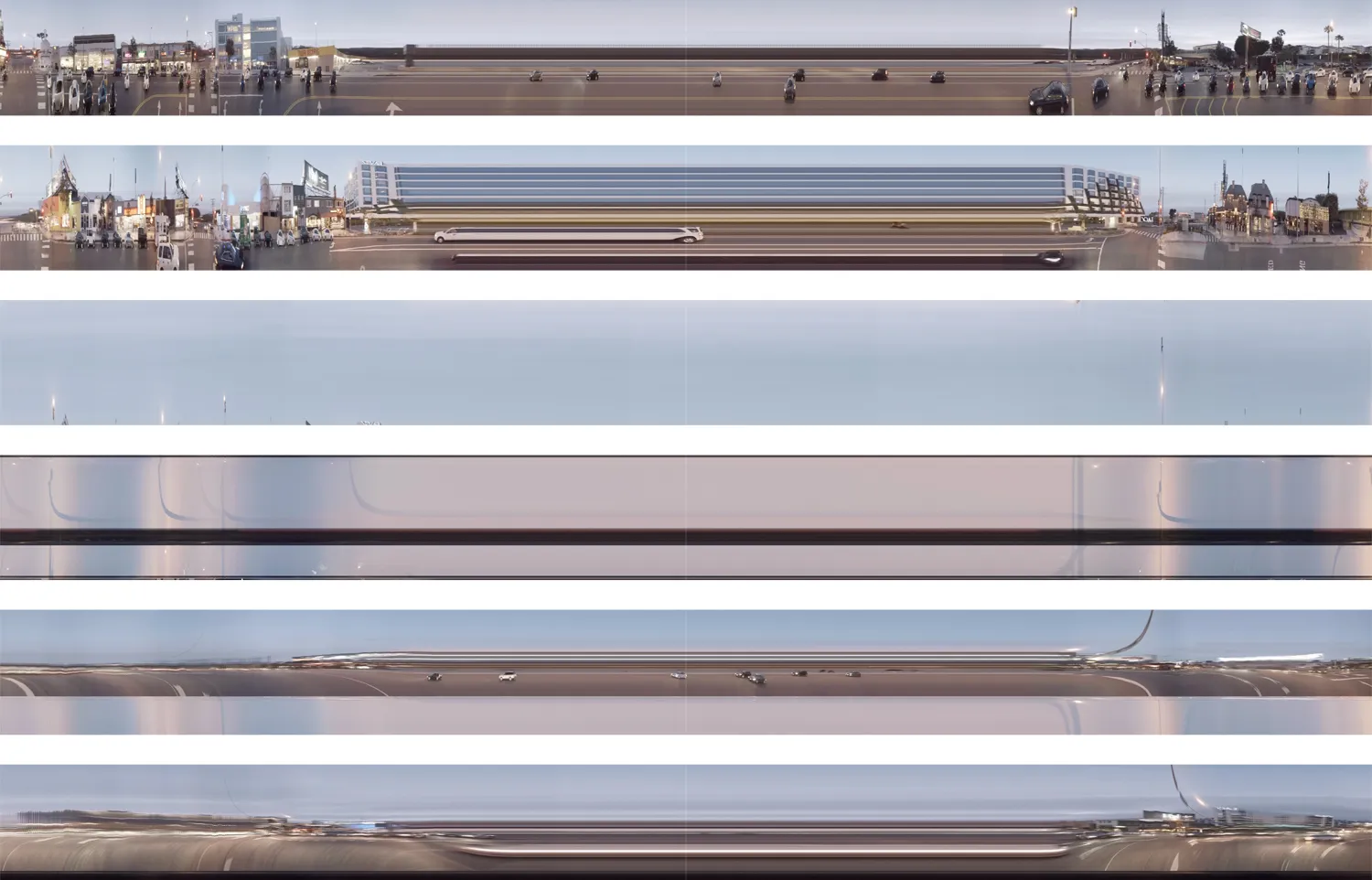
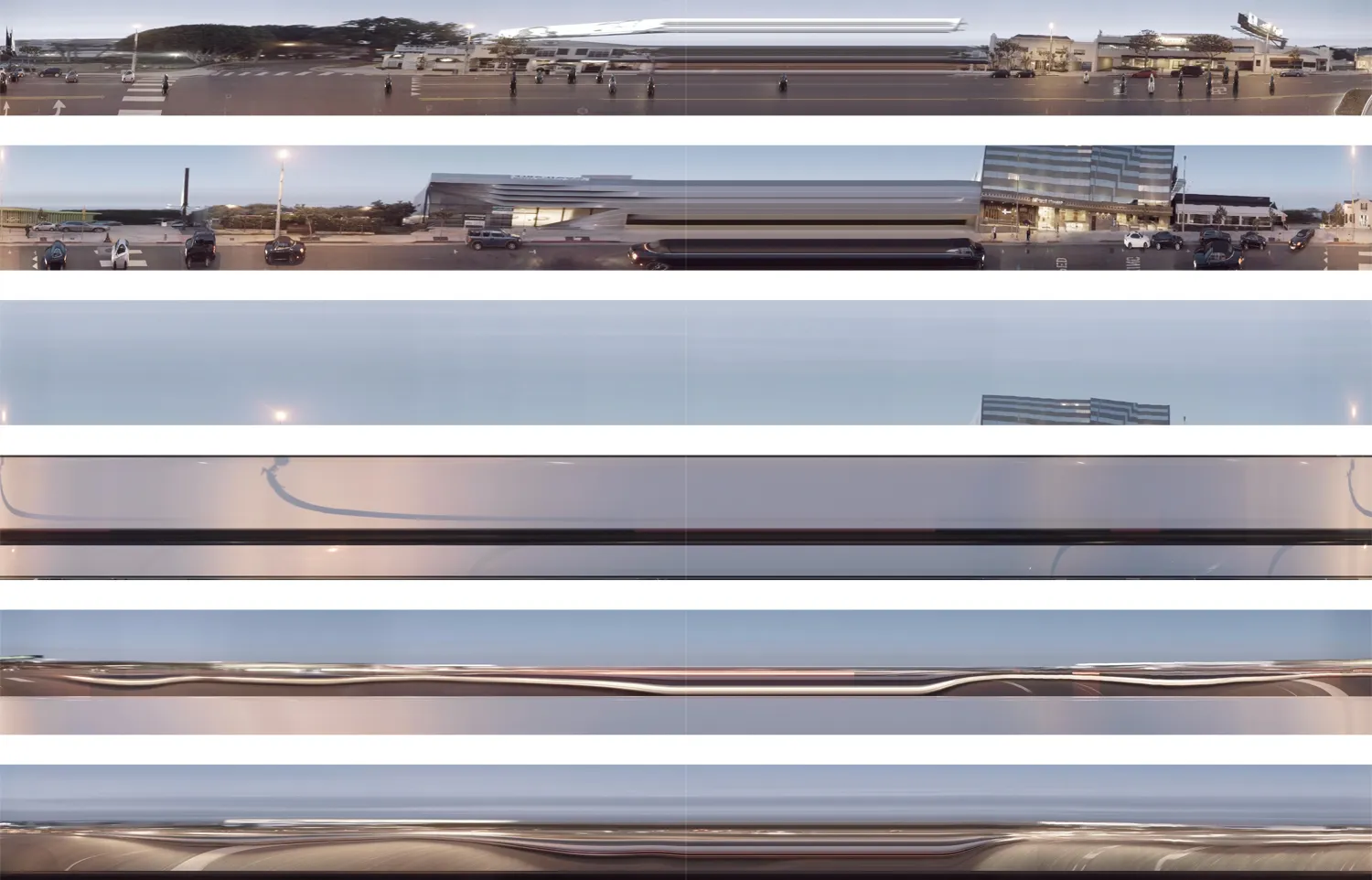
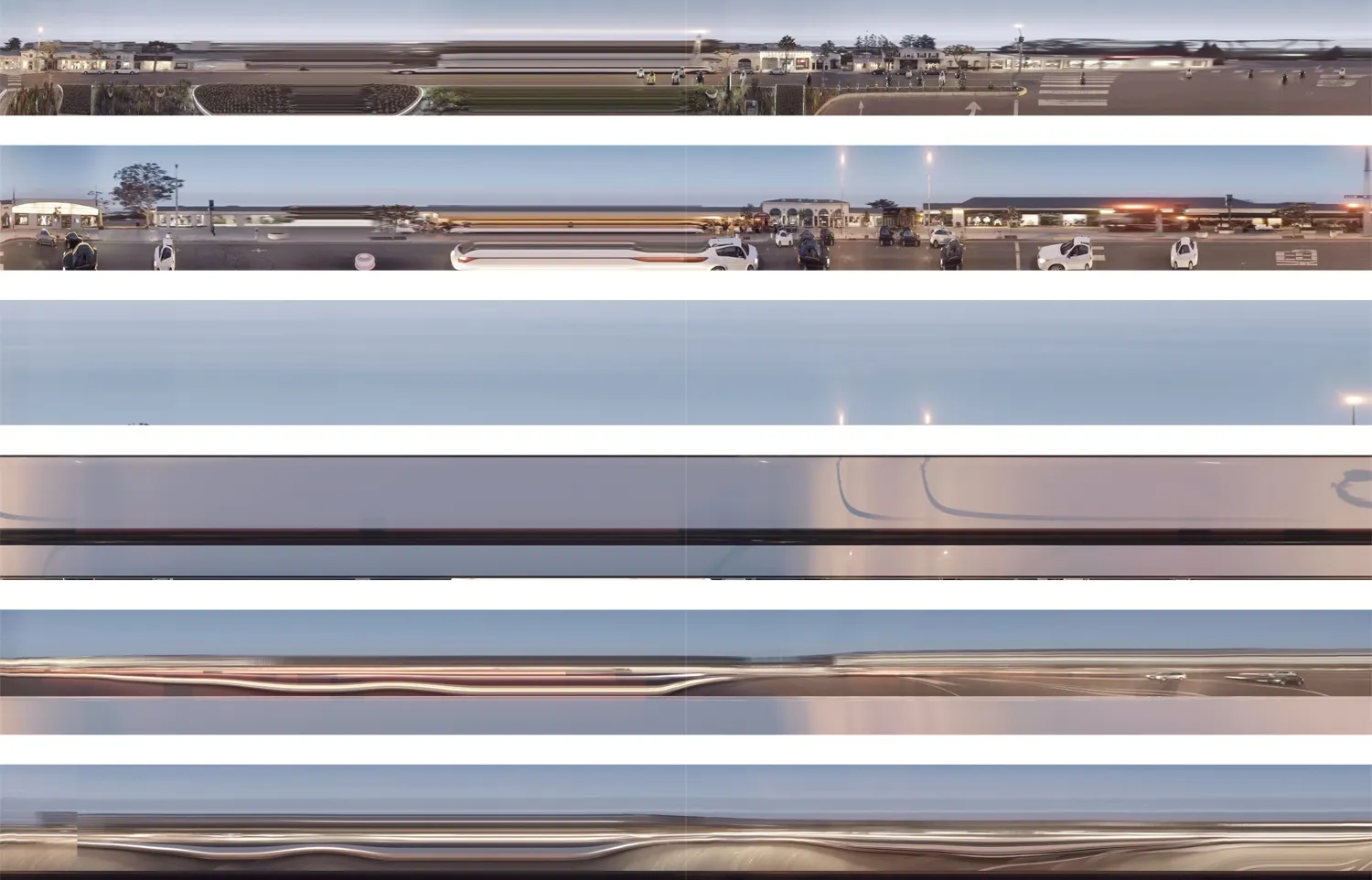

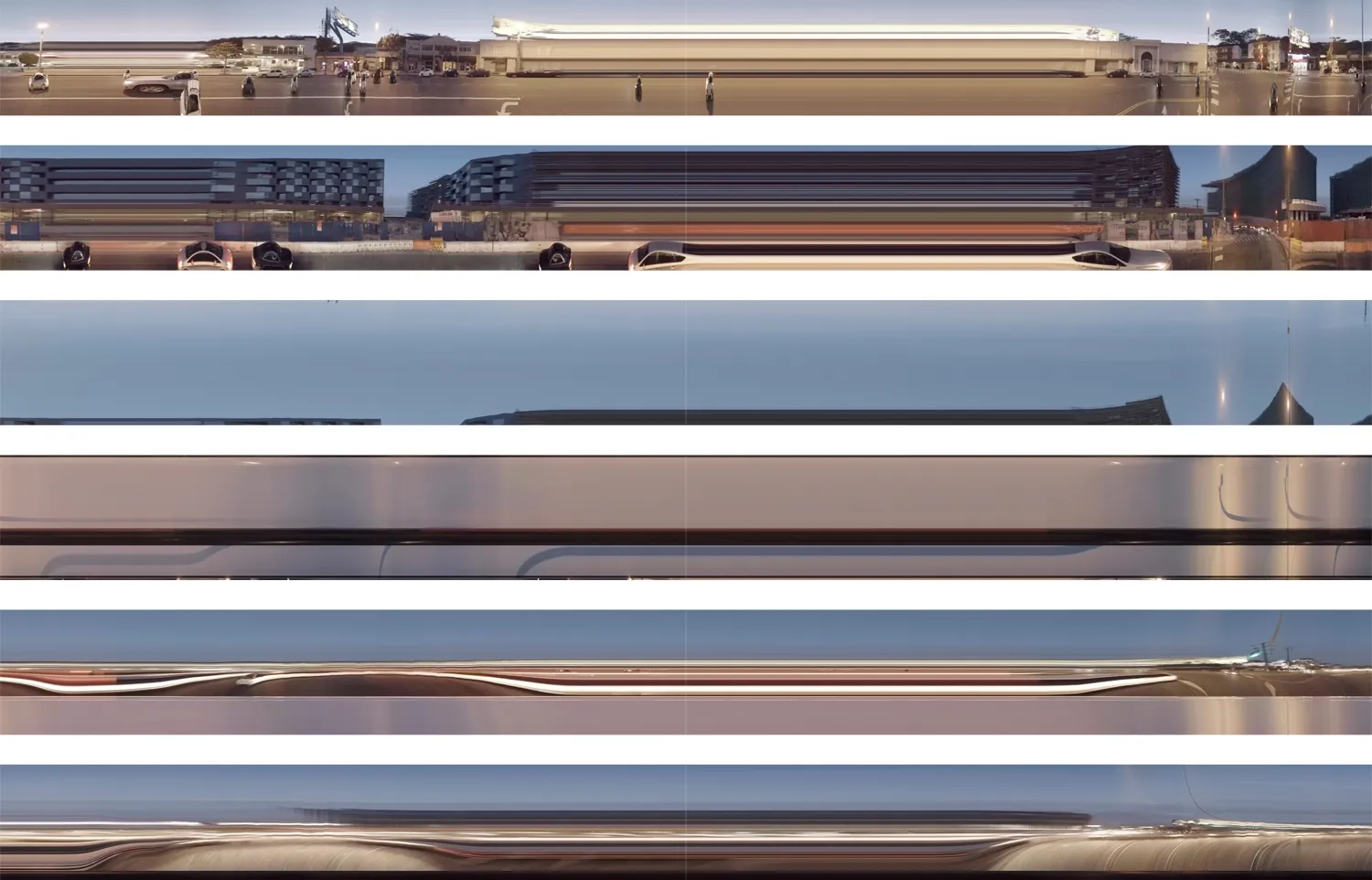
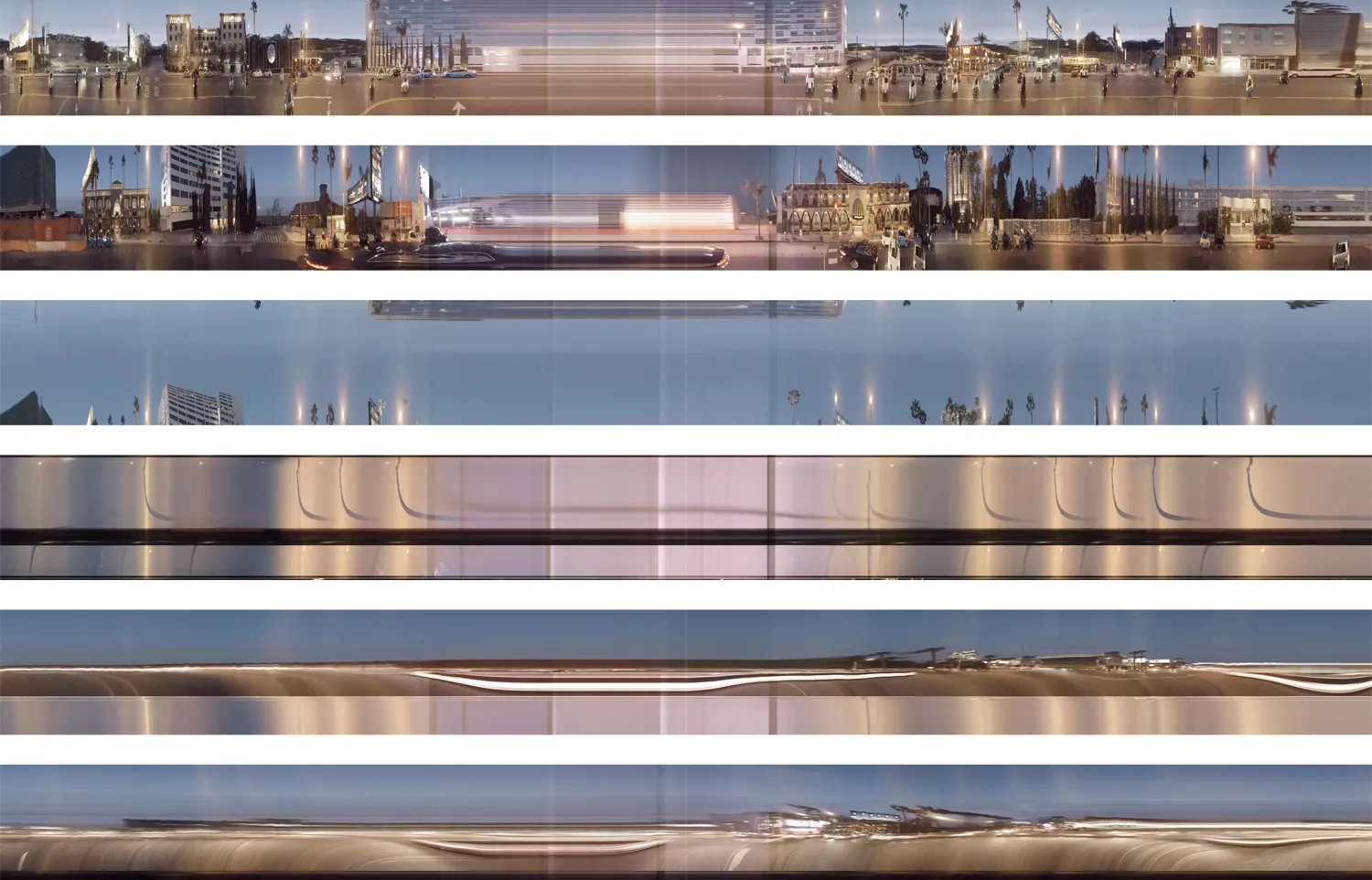
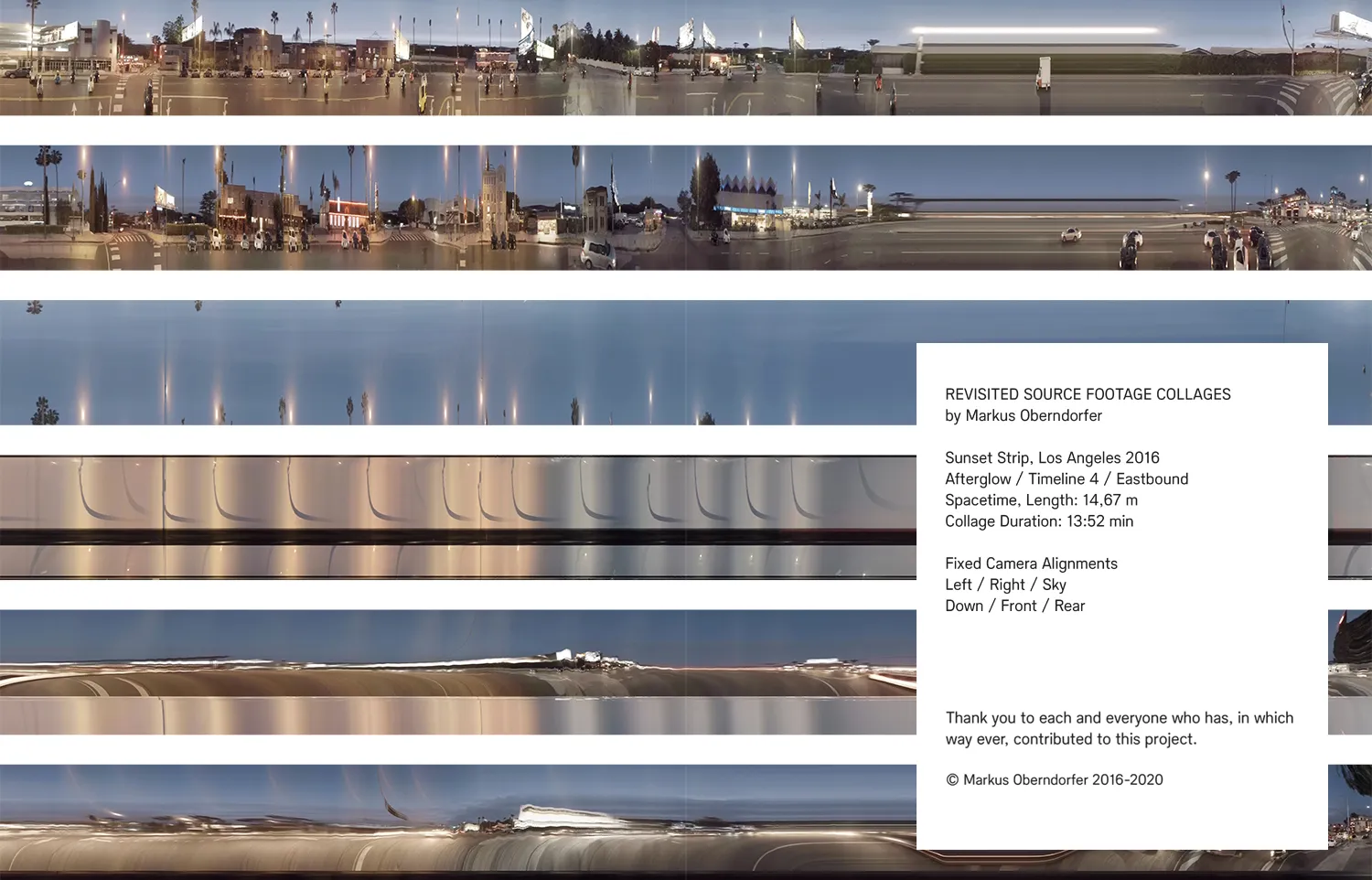
Unlike the collages in Ruscha’s 'Every Building on the Sunset Strip' or my 'REVISITED' storefront plane, these collages visually translate temporal extension into space, rendering everything — buildings, cars, pedestrians — either compressed, normal, or stretched. Always relative to the dynamic movement of the ride, distance from the camera to static objects or individuals with own motion dynamics, and frame rate.
Spacetime Tunnels
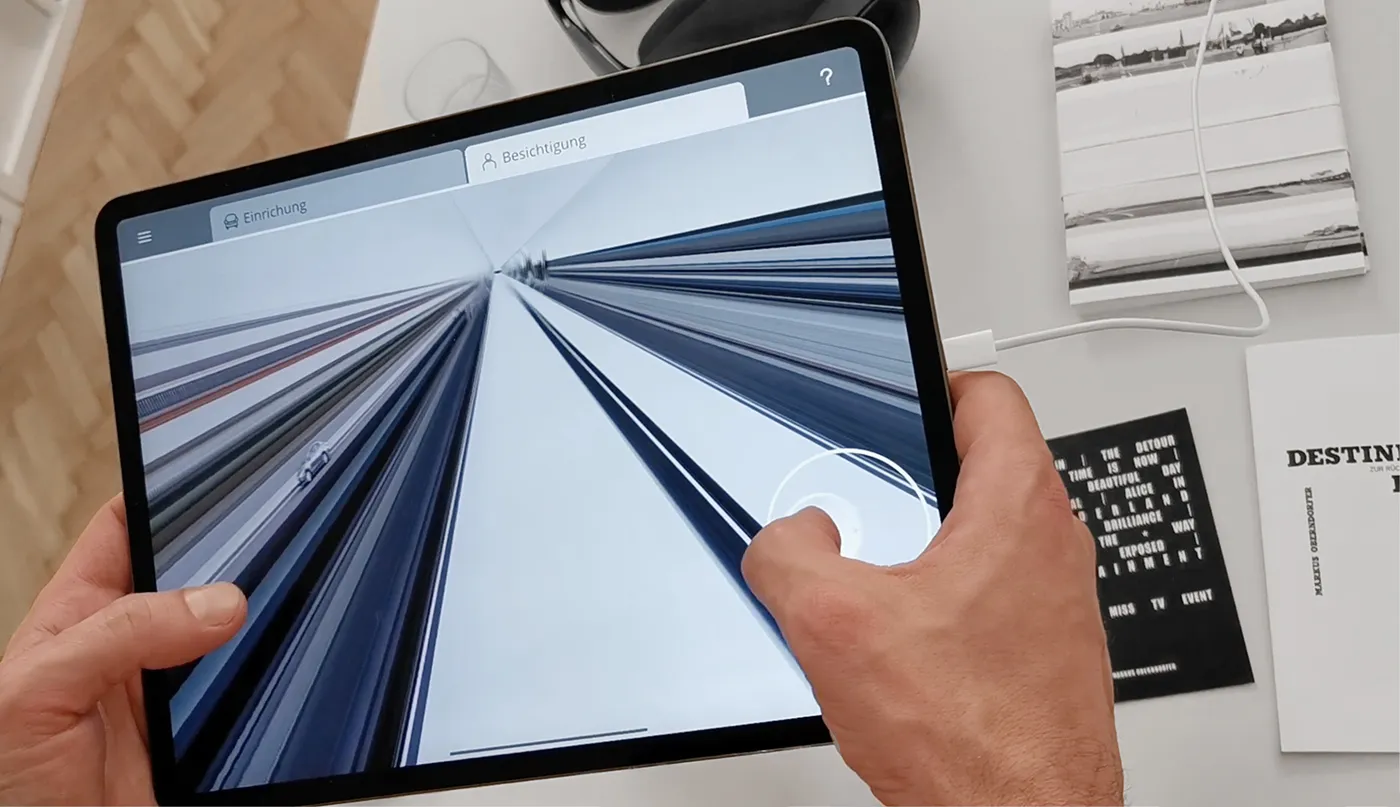
Spacetime tunnels again unite a selection of these separated static translations of dynamic visual space. The degrees of freedom are re-assembled into one digital virtual tunnel. I am still working on an implementation to make this accessible here on the website or via headset. Stay tuned.
Traced Attention
Visually, our experience of the world is shaped by place, space and time. What we perceive emerges through looking, lingering, and omission, continuously reconfigured by rhythm and perspective. In a phenomenological sense, one might recall Dürckheim’s distinction between the Bewegungsaspekt — the 'suchness' of space as movement — and its atmospheric dimension. Experience carries a “vital tone,” a resonance arising between body, motion, and surroundings. In 360° VR, this resonance unfolds as a hybrid experience: physically anchored in one place while perceptually inhabiting another.
As an extension of the main REVISITED installation (2016), this work translates the viewer’s gaze within the 360° environment into a real-time visual trace. Each encounter leaves a record of attention — a residue that reflects how we move through and engage with space, in VR, online, and in everyday life.
Trace your attention in the provided simulation: Use a desktop or laptop. Start the 360° video, click 'Draw plan-sequence' and allow tab sharing. As you explore the 360° environment, your gaze is translated into the panorama below in real time. The recording of the Sunset Strip (May 11th, 2016) unfolds according to where you look – and for how long. The resulting drawing becomes an index of attention: a residue of experience shaped by you, and guided by the rhythm of my ride. Works best with Chrome and only on devices that allow tab sharing. Also supported in Brave and Safari. Still exploring Firefox.

The source region of your capture is defined when you press start. If you scroll the page and not the video, you will interfere with the defined region. You can reset by stopping and starting again.
Spacetime Video Panoramas
In the most complex technique applied to the REVISITED source footage, the time and space axes of the videos were again flipped, - same as in the static spacetime collages - but the footage was simultaneously sliced through its sphere. The top video shows an example of one of the seamless looped endless panoramas in full extent. For more detailed demonstration purposes, all other panoramas (ranging from 9x to 16x 4K resolution) have been scanned from left to right as slide-through; showing one 4k excerpt of the full panorama at a time. They are supposed to be displayed as seamless, endless loops on multiple screens or projectors (see Ars Electronica exhibition video in last section).
The video panoramas depict the Sunset Strip through rhythm, perspective, and time, compressing and stretching space according to these parameters while also translating the perspective as rotation over time. Time becomes a dimension in space, space and perspective become dimensions in time.
REVISITED Audio Solutions
• REVISIT OST - Soundtrack
• 36.0 REVISIT Radio
• Spatial Audio
All culminating in 'Staging The Ordinary' that – in contrast to the main REVISITED installation, which focuses on the visual qualities of each medium – actively incorporates audio.
Revisit OST - Soundtrack
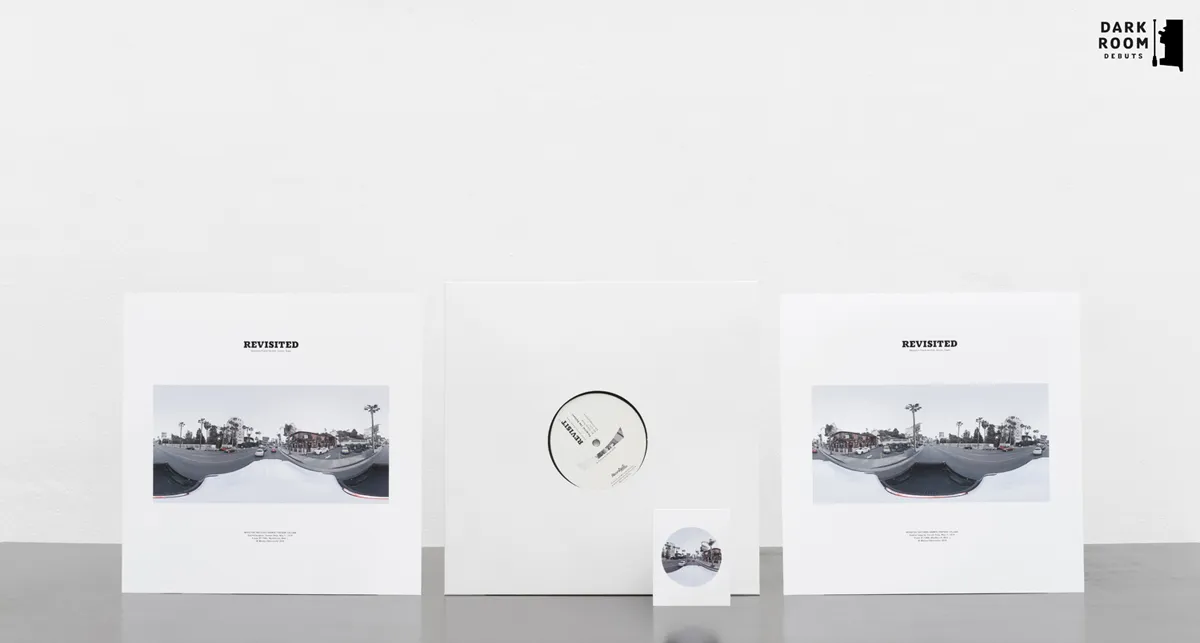
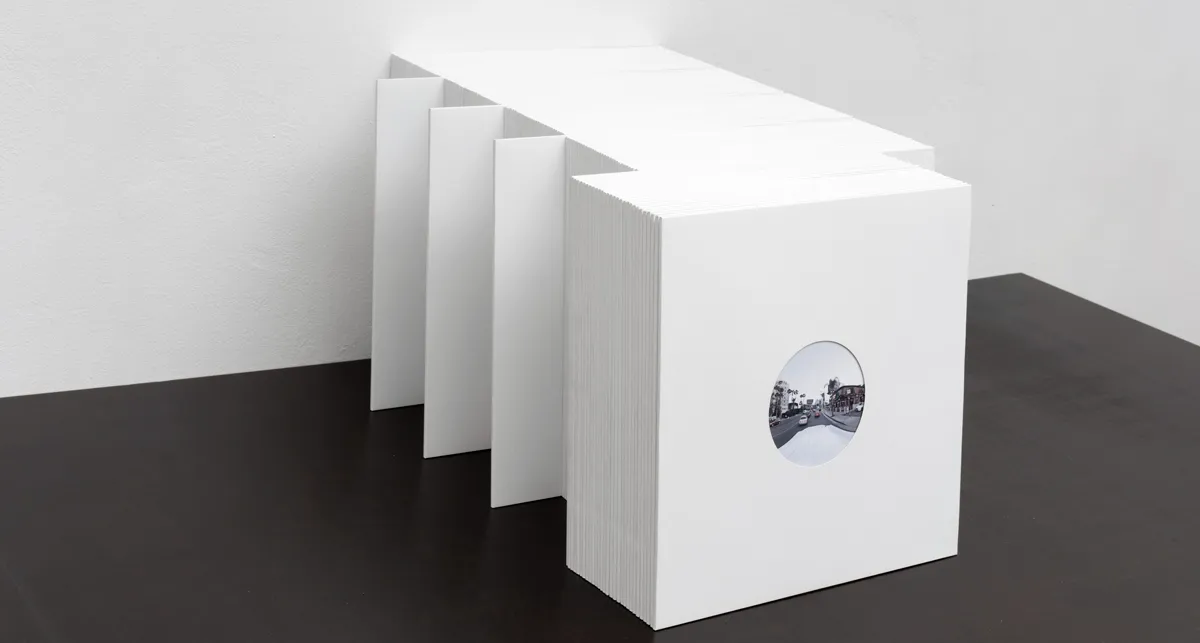

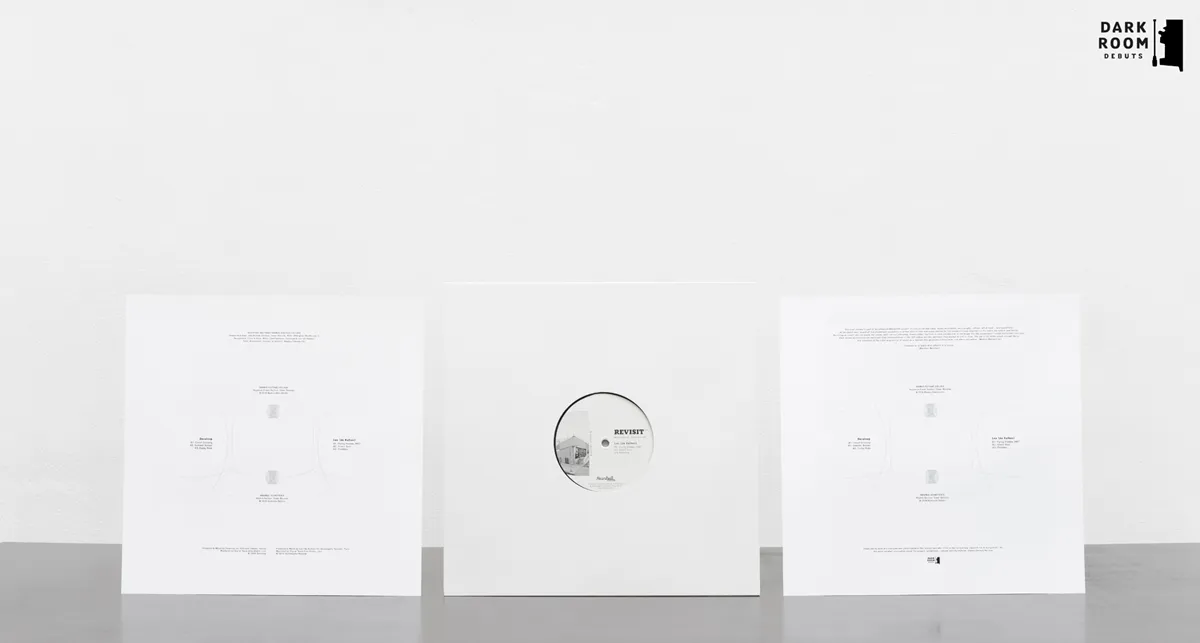
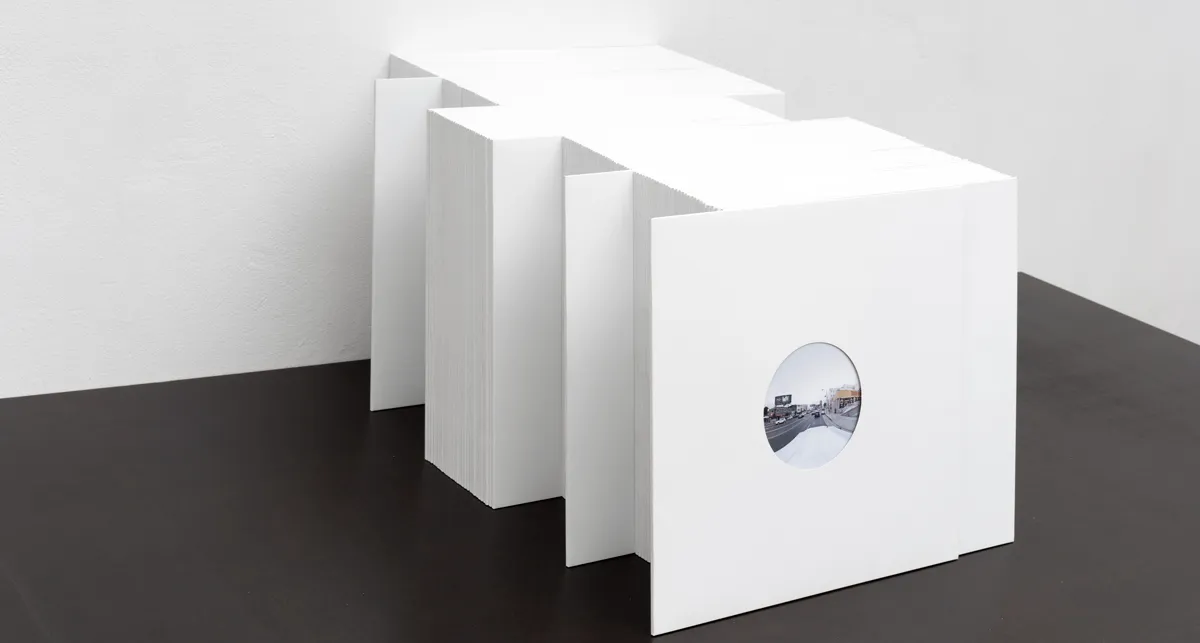
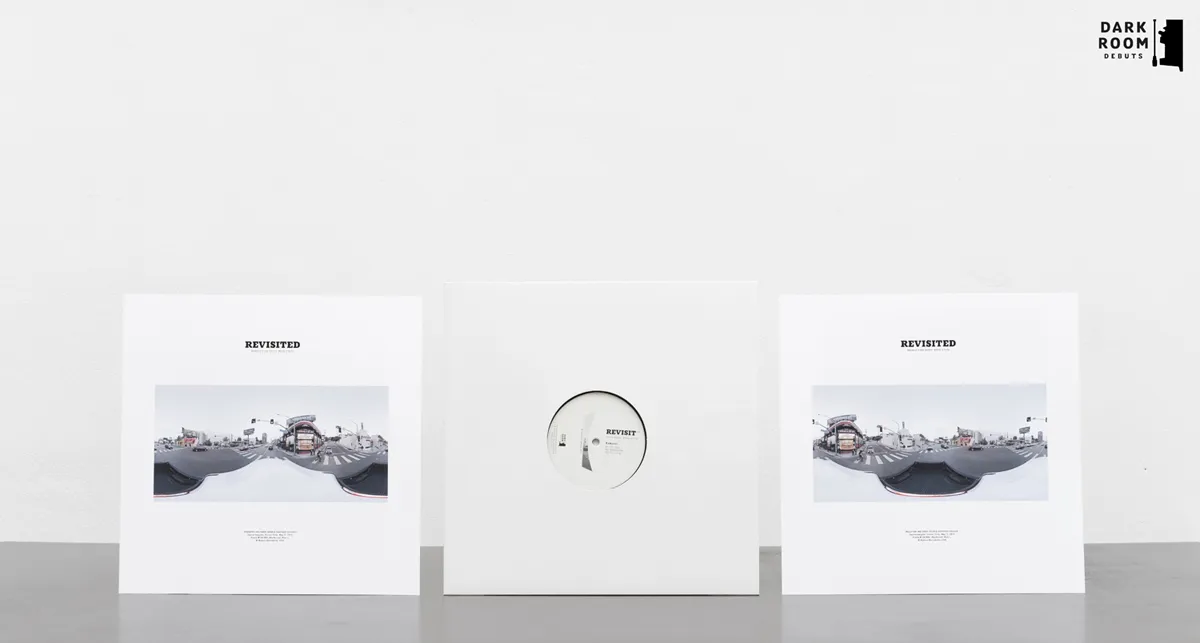
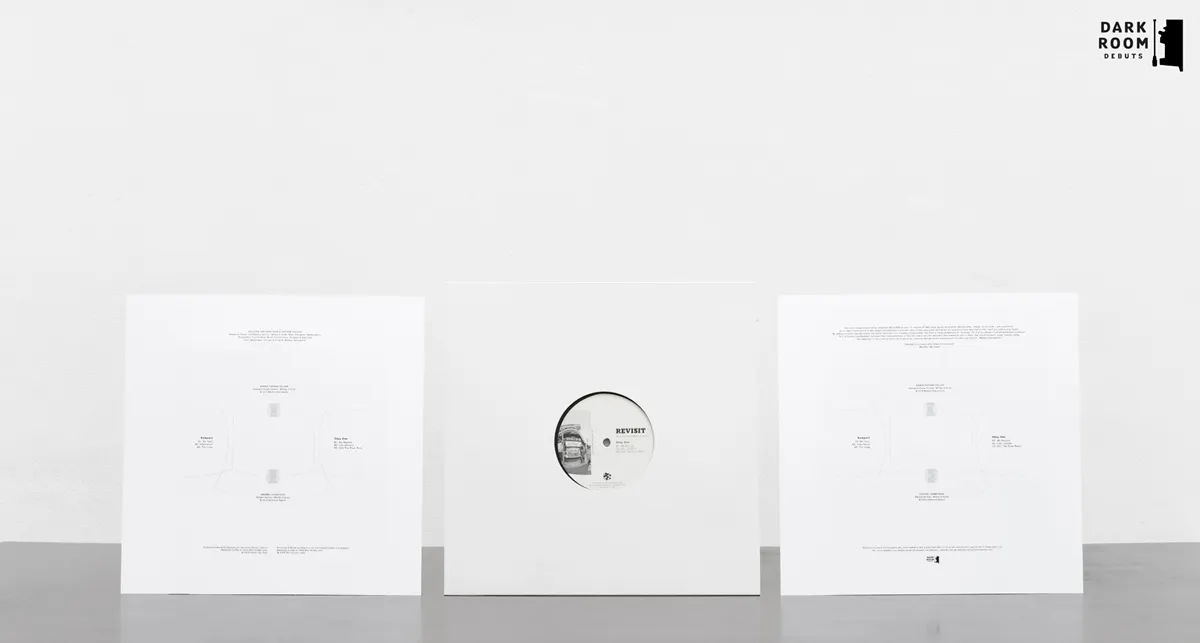

The REVISIT Soundtrack is part of the broader audio framework within my REVISITED project. It is the basis for the REVISIT Radio broadcast, as well as for a vinyl release with a flip-book like collage concept. Each record insert is unique, depicts and represents a specific slice of time and space of the virtual reality tunnel. Imagine it like a sliced space-sausage. By sliding the insert with the equirectangular panorama of a specific moment into the sleeve, the center-label cut-out reveals front or back perspective of that moment, again reflecting upon the projects core concepts. Removing records one by one from what I call an information block, reveals the flip book like sequence in which you move along the sequence frame section. Once you watch the videos, the connection becomes immediately clear. 150 records correspond to 5 seconds of 360° video frames.
For the soundtrack, six producers were invited to draw inspiration from the selected 'Afterglow Westbound' 360° video and give it the atmosphere they wished to evoke. Each artist provided three tracks. In total, the album features 18 tracks and is split into three records named after famous landmarks along the Sunset Strip - visible in the flip book sections mentioned earlier. 'Sunset Tower', 'Tower Records' and 'Whisky A Go-Go'.
The records also include an augmented reality extension. When placing your phone in front of the center-label cut-outs using the Artivive app, you can view the sequence of which you own a slice of, making it a collectively owned art piece.
36.0 Revisit Radio
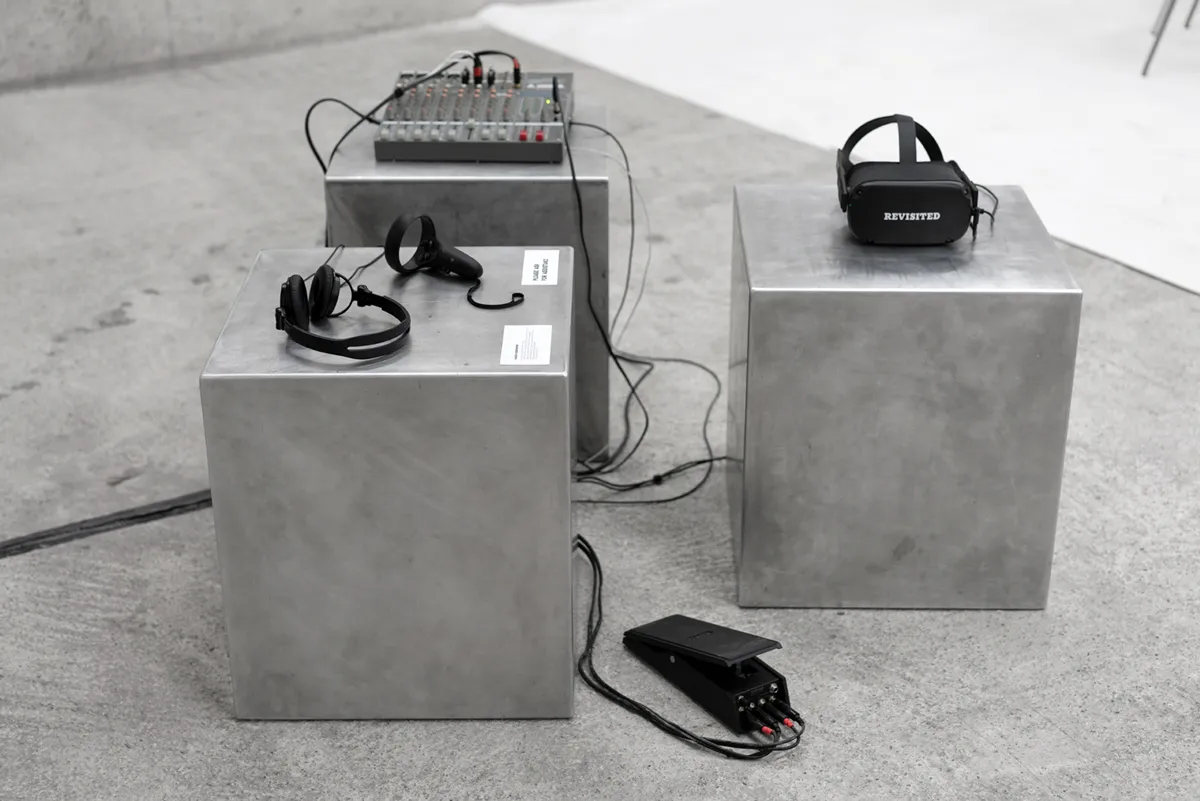
REVISIT RADIO is a fictive radio station. It is broadcasting within the ‚Staging the Ordinary‘ installation experience and can be activated by pushing a volume pedal.
It features all 18 tracks of the REVISIT OST. All content narrated by the radio host (Dj Joe Joe) who is pretending to be in Los Angeles on the day I recorded the 360° videos originates from the video itself. For example, from what can be seen on billboards (time and temperature indicators, upcoming season of Game of Thrones, etc.) or actual weather forecasts. The show also includes artist and track introductions, and so on. Example: 'Hello, you’re listening to 36.0 REVISIT Radio. Its a beautiful evening out here in L.A. with temperatures in the mid 60s and the marine-layer slowly moving in from the Pacific. The forecast for tomorrow: Overcast and some passing clouds in the morning with temperatures between 60 and 71. Afternoon: Clear skies with temperatures climbing to 66 and a maximum of 74 degrees.'
Now does music and narrative influence our gaze? I tried to find out and listened to each track while watching the 360° video. Even though I repeatedly “drove” through the same virtual tunnel, I had the feeling that each track — with its distinct atmosphere — influenced my overall feeling and directed my attention toward different areas within the virtual experience. Narrated content like the announcement of the next season of 'Game Of Thrones' let me search for the billboards announcing it. The one-minute out-takes created with screen-captures reflect the core premise of the work: Spectators becoming co-producers of their own experiences, which unfold individually within the same past moment.
Staging The Ordinary
For this additional installation, I wanted to enrich the virtual experience of one selected 360° video by adding sound and narrated content. In other words, I wanted to stage a possible experience driving along the Sunset Strip on May 11, 2016.
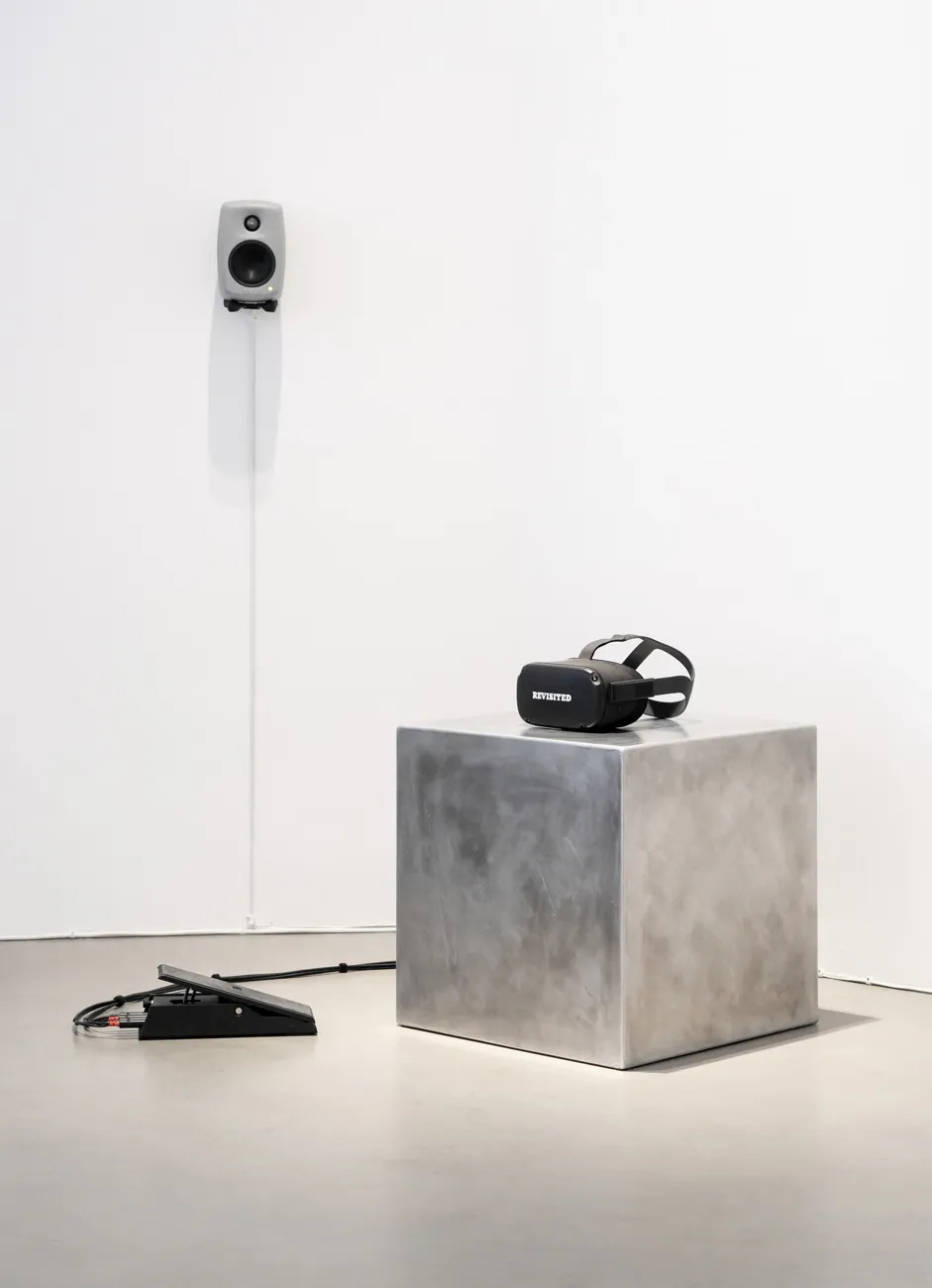
For this purpose, a 3rd order Ambisonics spatial audio environment has been created using an Ambisonics Library, scripted passersby conversations and music snippets. As mentioned above, the REVISIT Radio broadcast can optionally be added to the installation by pressing the volume pedal.
Compared to stereo audio, 3rd order Ambisonics can be best understood by imagining 16 speakers placed around you. Each object you can hear, for example a car or the music in it, is treated as a distinct sound source that is precisely placed, tracked and traced. As a result, each sound reacts dynamically to spectators turning, tilting or shifting their head and with that the VR headset. Objects sound differently depending on the spectators viewpoint or the objects distance, similar to real life. 3rd order Ambisonics trailer on Hear-VR-Now.
As mentioned above, the REVISIT Radio broadcast can optionally be added to the installation by pressing the volume pedal (see image below).

REVISITED Los Santos
The Eclipse Blvd
The Eclipse Boulevard is Rockstars’ interpretation of the Sunset Strip in Los Angeles and situated in Vinewood West of Los Santos. It is known for its landmark architecture, venues and billboard landscape; in the game Grand Theft Auto V, as well as in real life.




The Vinewood Blvd
The Vinewood Boulevard is Rockstars’ interpretation of the Sunset Strip in Los Angeles and situated in Vinewood of Los Santos. It is known for its venues, walk of fame and celebrity culture; in the game Grand Theft Auto V, as well as in real life.




Artist Books - The Eclipse & Vinewood Blvd
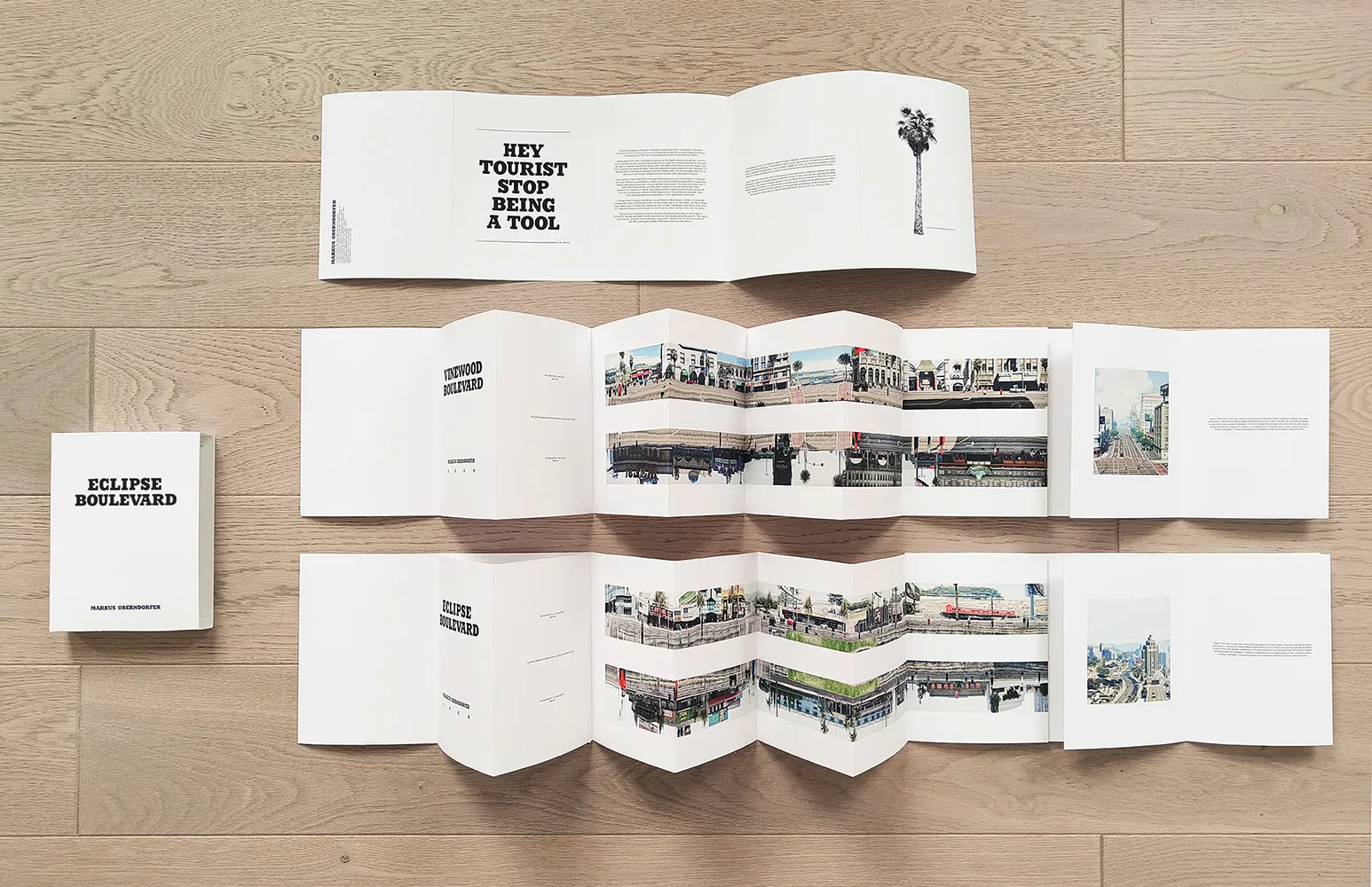
Following the concept of REVISITED, I made two handmade accordion-fold books for each Boulevard. In this case, I used the same 'ride - flip over - ride back' design as Ed Ruscha did in ‘Every Building On The Sunset Strip’ from 1966 and put them both in a box including a fold-out insert with contextual information.
To highlight some of the landmarks and billboards, whose 2016 real life pendants can be discovered in the 360° environments, I also walked across the Eclipse Boulevard and took pictures with GTA Vs in-built Snapmatic camera. Similar to how I would do it in real life.
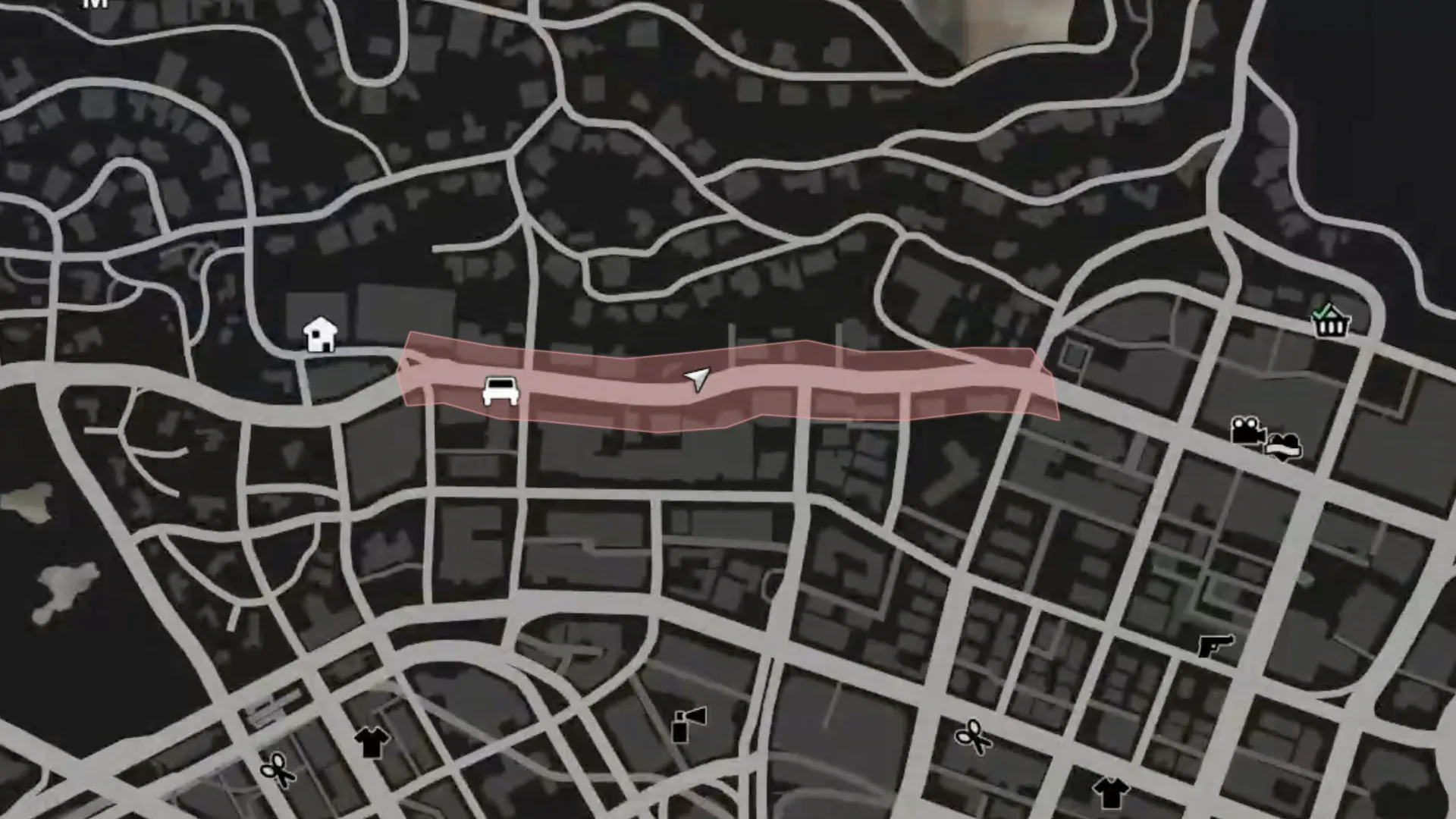
What I observed emerging from moving between all these worlds is, that having explored Los Angeles in real life and the Sunset Strip through my 360° videos, made it surprisingly easy to navigate Los Santos, as many areas immediately felt familiar. After spending a bit of time in Los Santos over the years, returning to Los Angeles in 2024 revealed how strongly the game had reinforced my spatial orientation.
Rockstar’s translation is remarkably precise, capturing not only architectural forms but also overexposing clichés and cultural markers that define these spaces. They carefully blend real-world references with digital design results in an open-world environment that feels both authentic and intuitively navigable. So much for staging the ordinary. ‚No traffic, so cliché!‘
Exhibition Views
Excerpts of REVISITED have been shown in the following exhibitions: Destined To Return, in collaboration with Ars Electronica as part of Bildrecht Parallel Artist Award Runner-Up (2022), Collection Sanziany, Palais Rasumofsky (2019-2022), Out of the Box, Ars Electronica Festival Linz (2019), A Passenger, Salzburger Kunstverein (2018), Musée de Beaux-Arts de Rennes (2018), Geistwert IP Law (2017), Circulation(s) Festival, 104 Paris (2017).
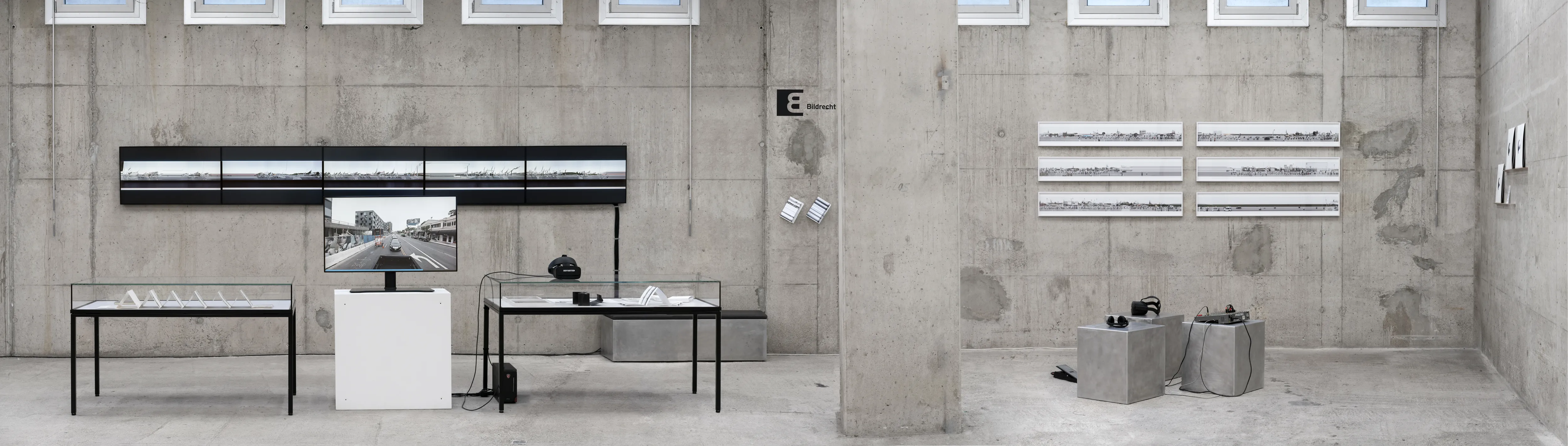
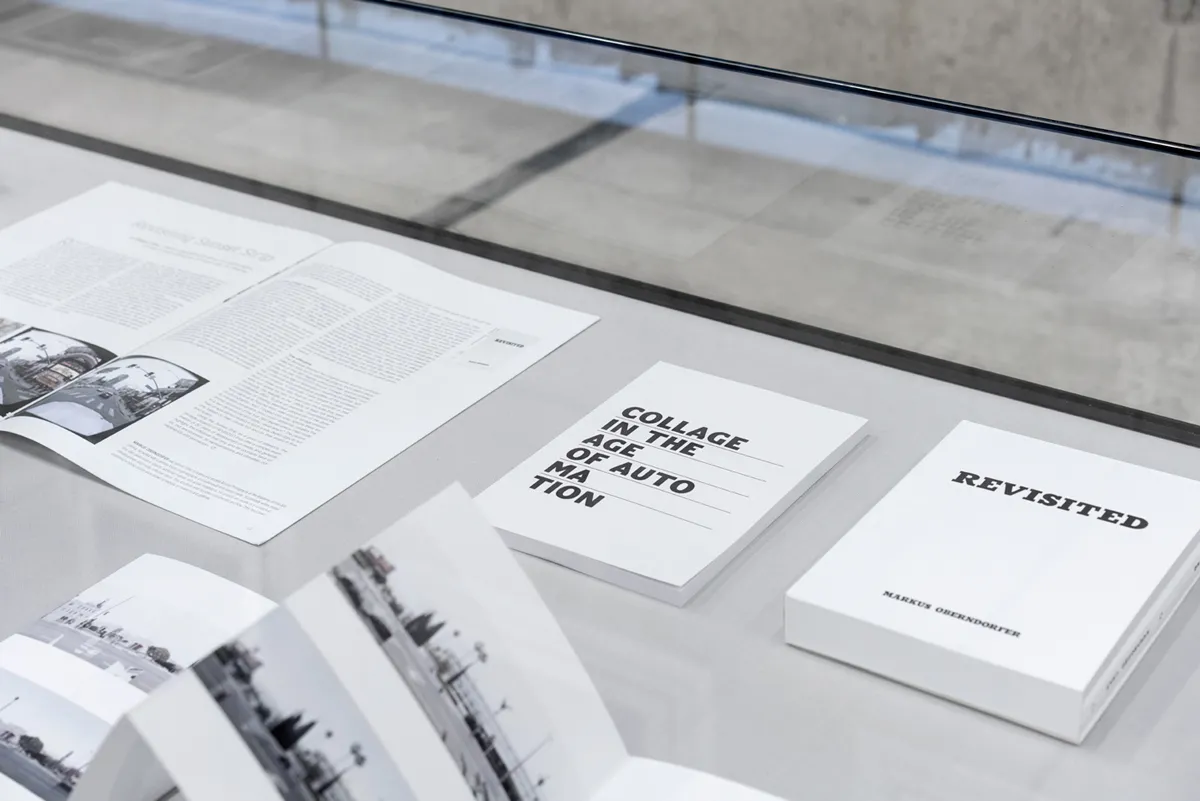
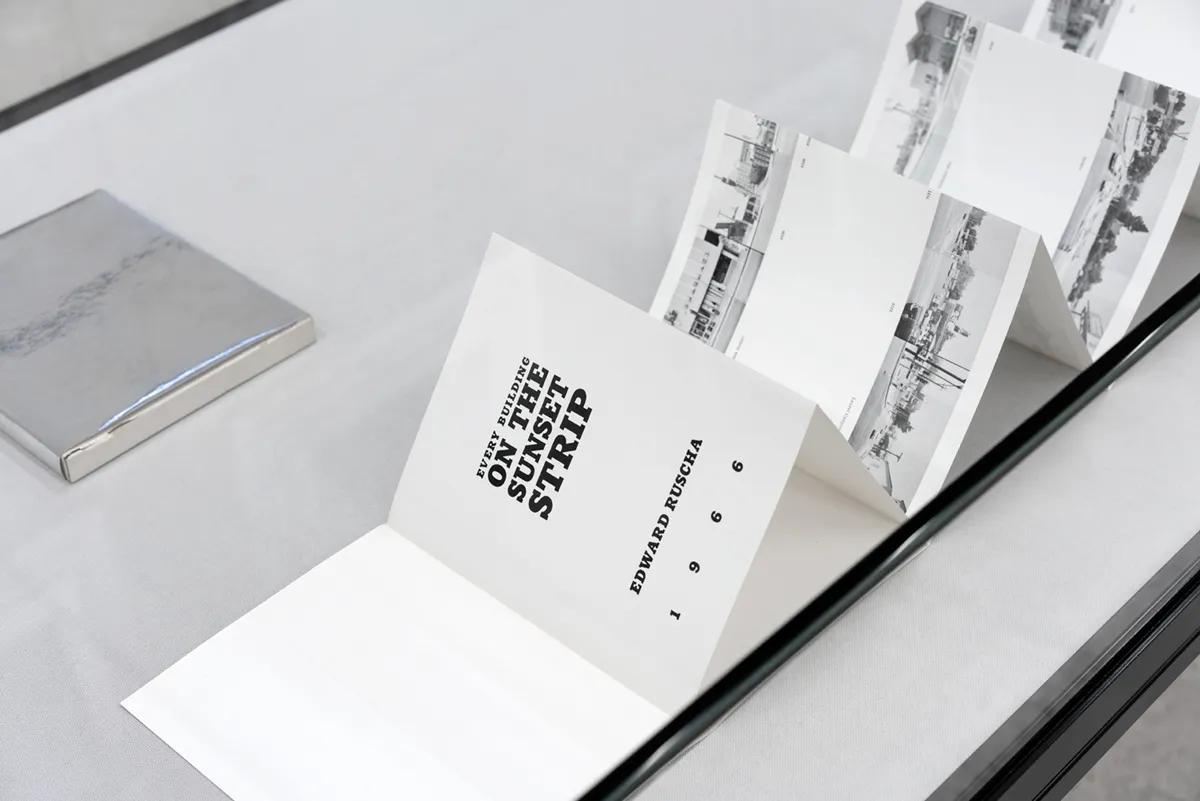
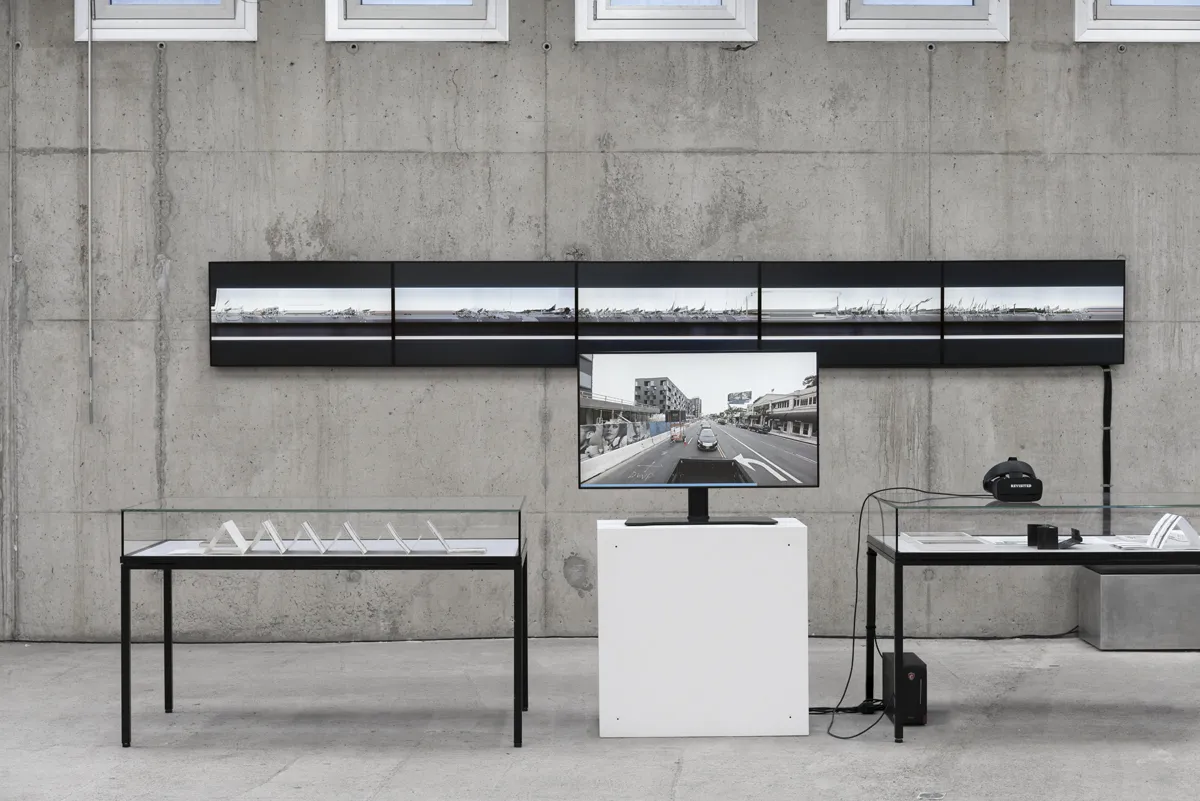

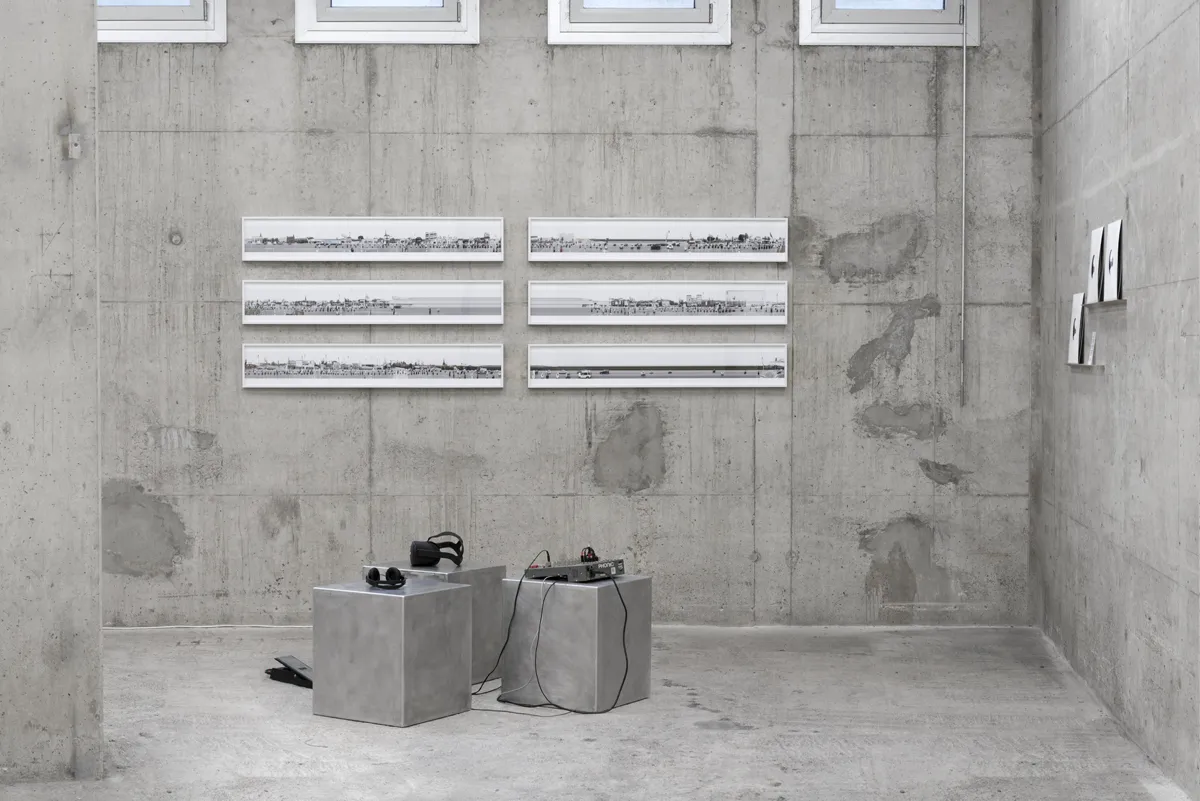
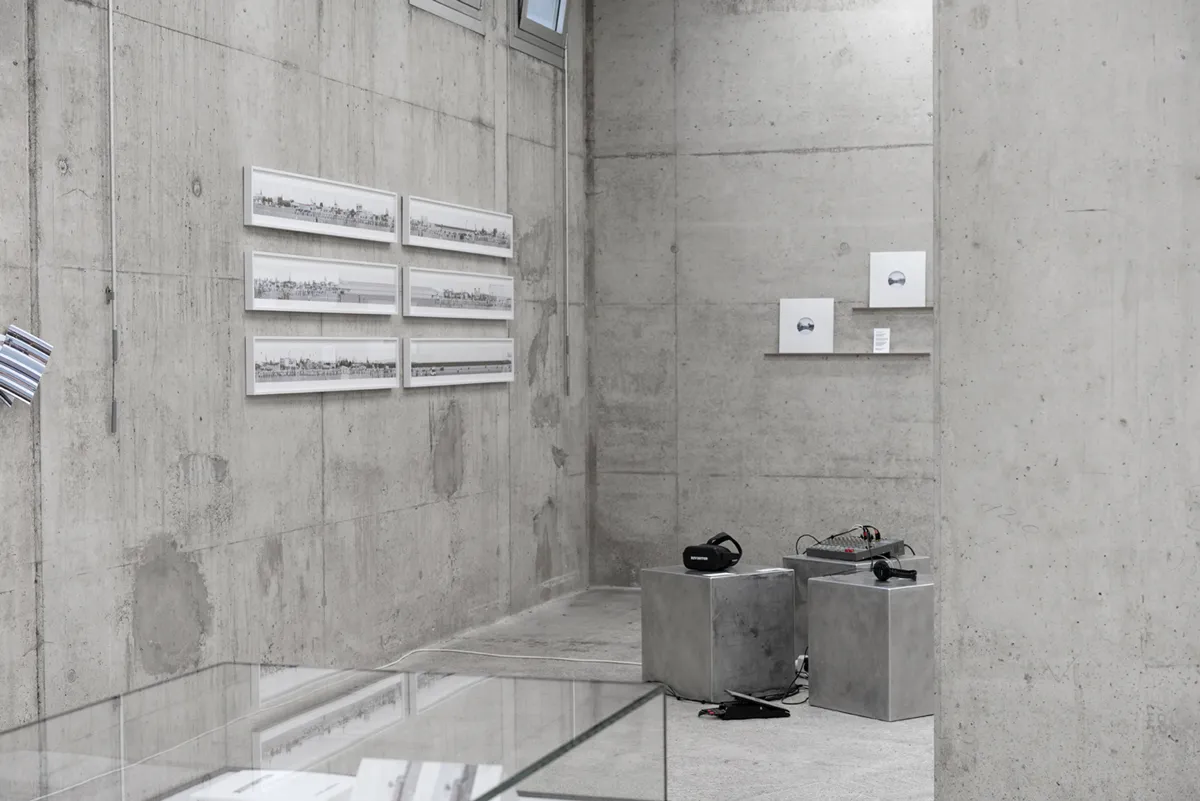

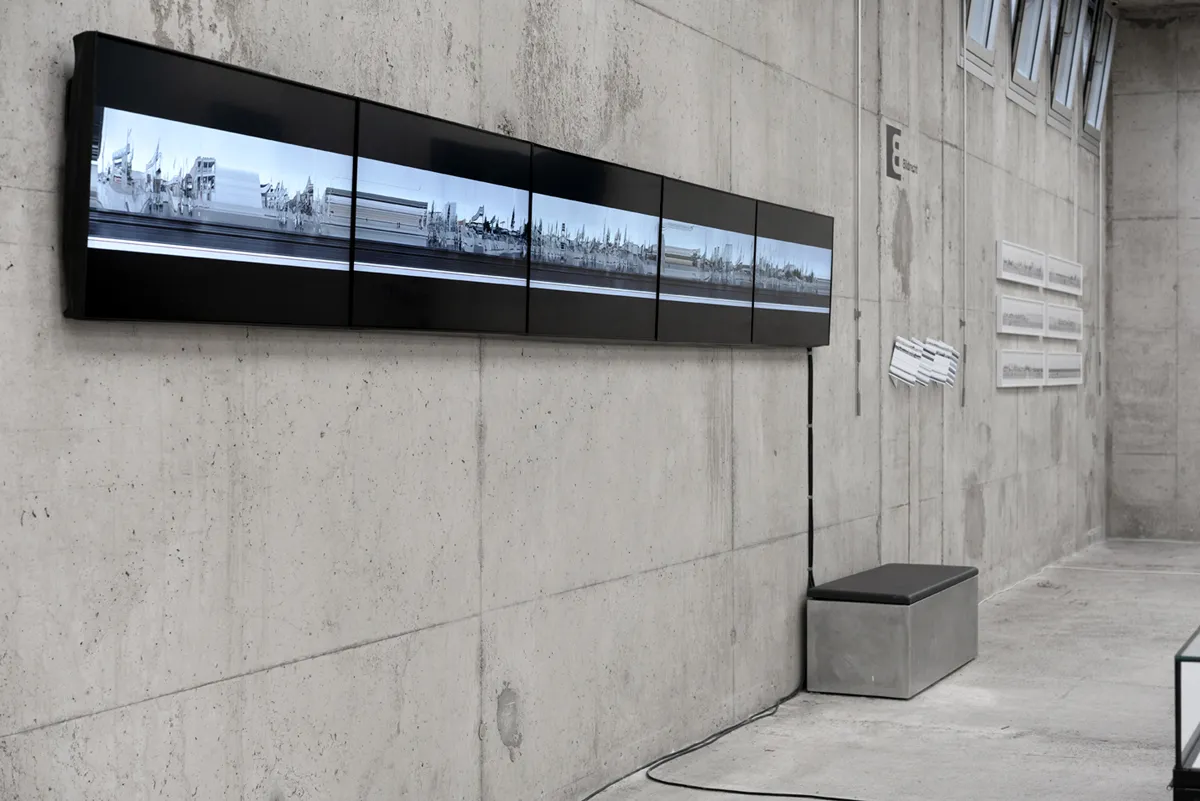
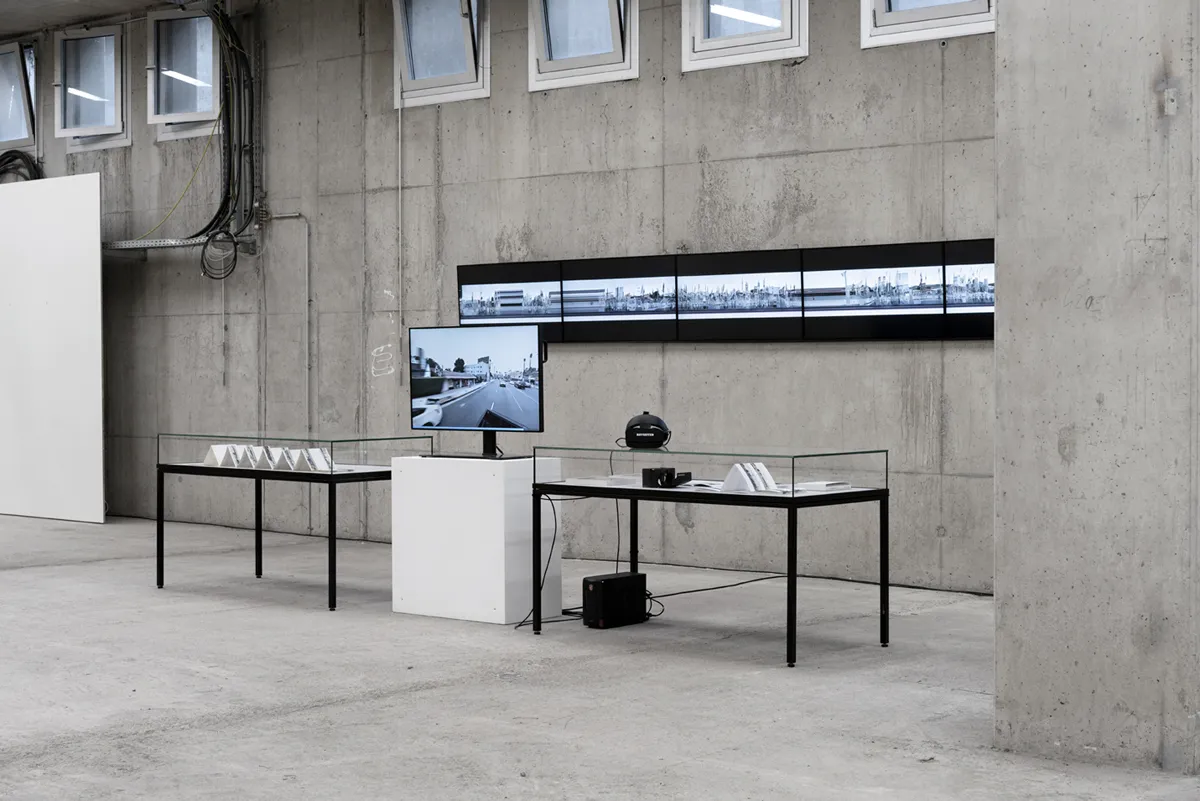
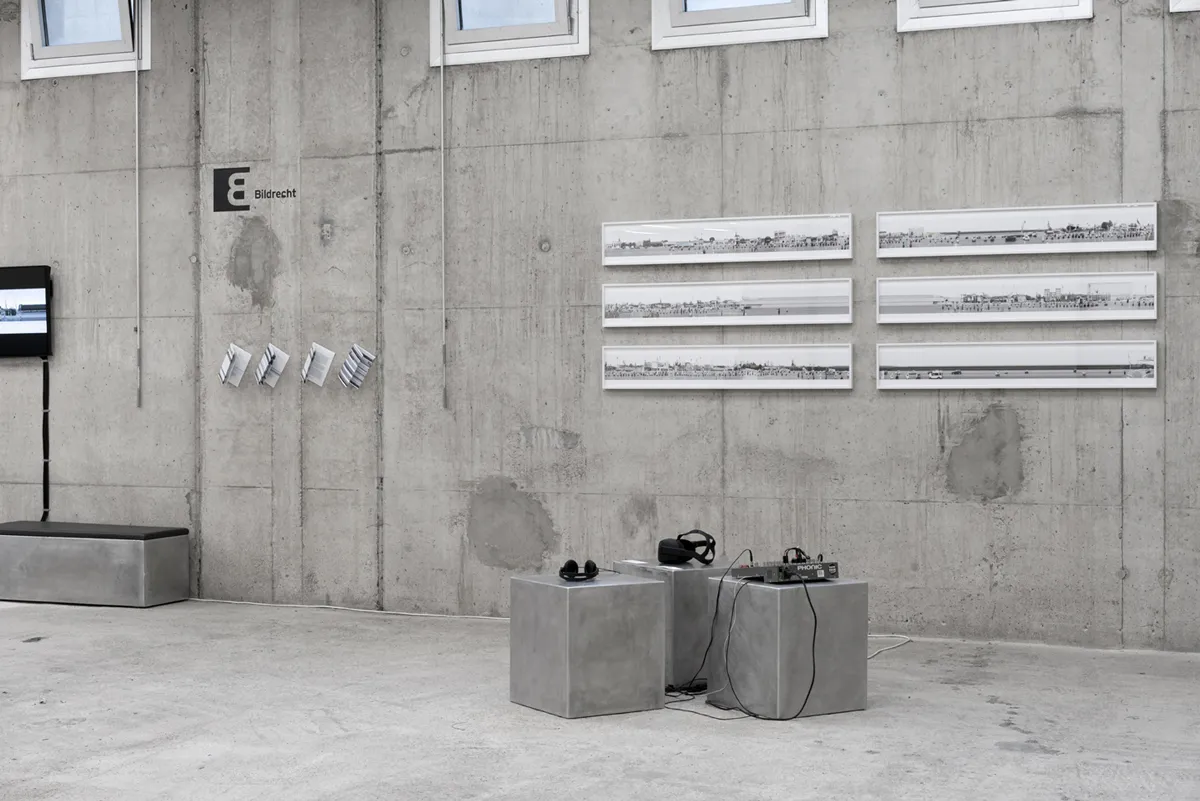

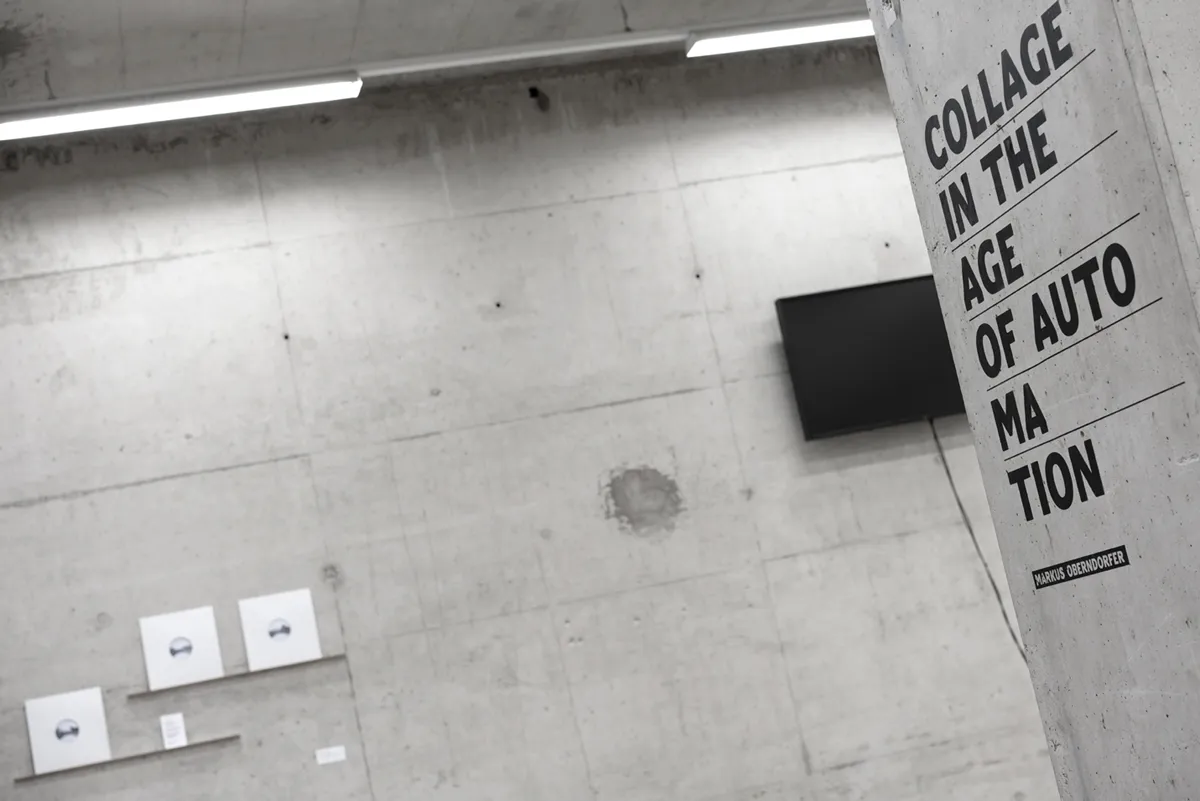
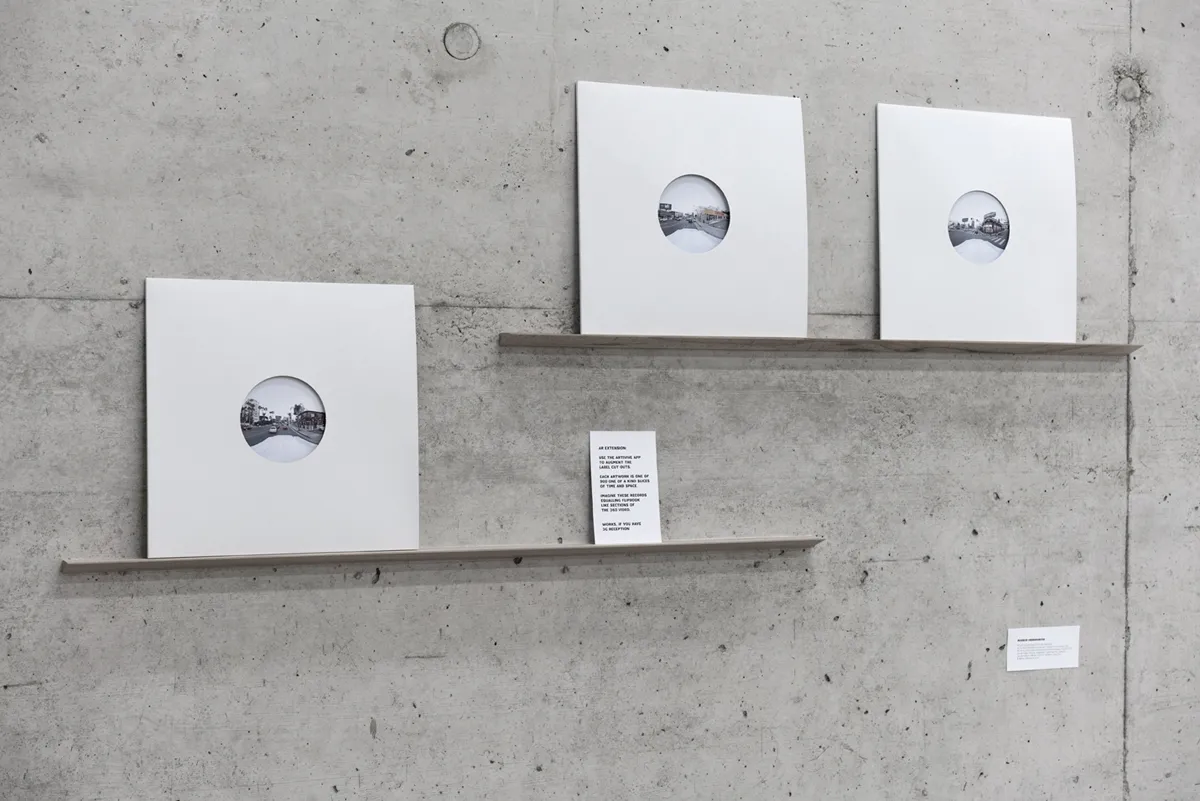
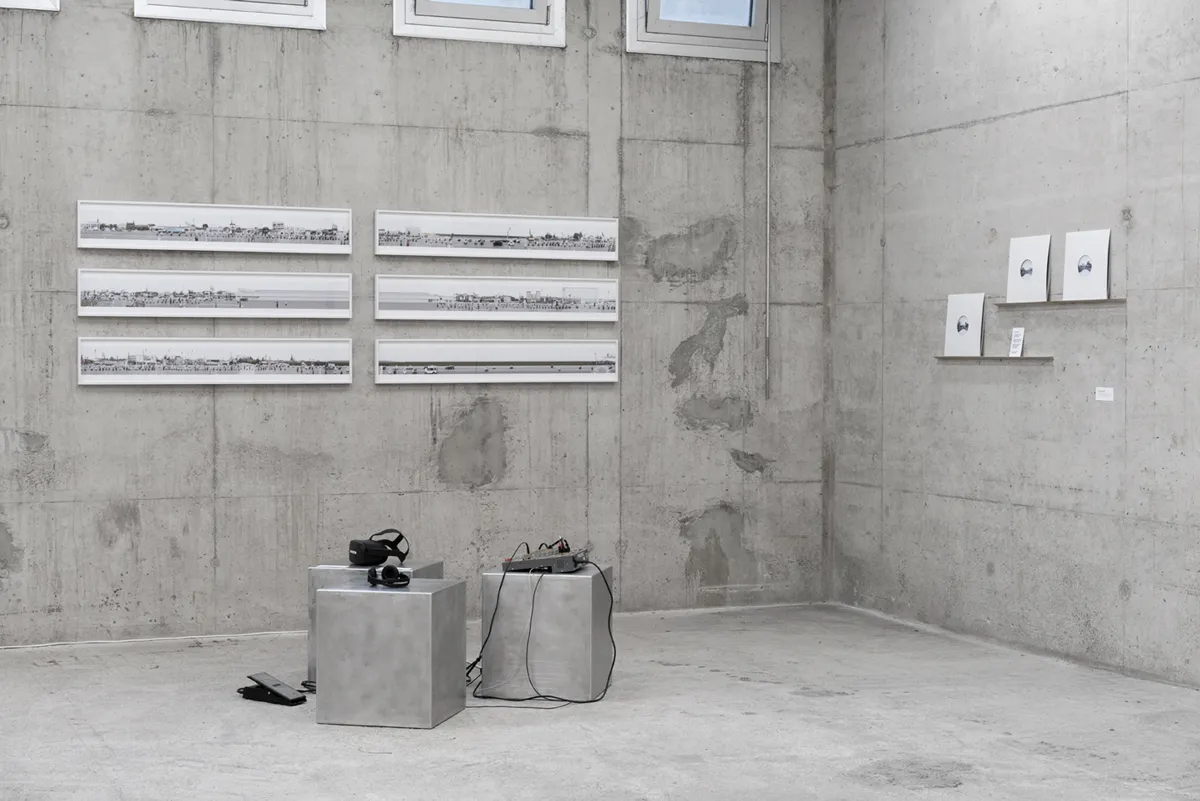
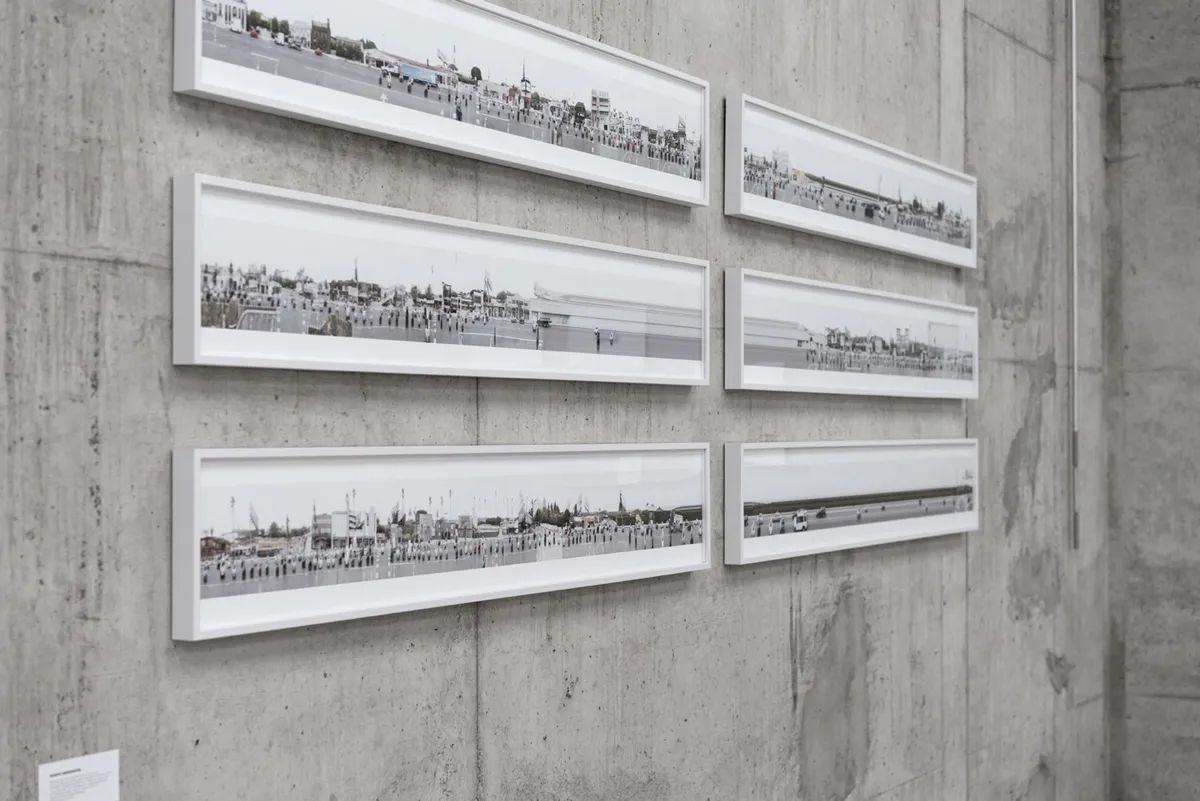
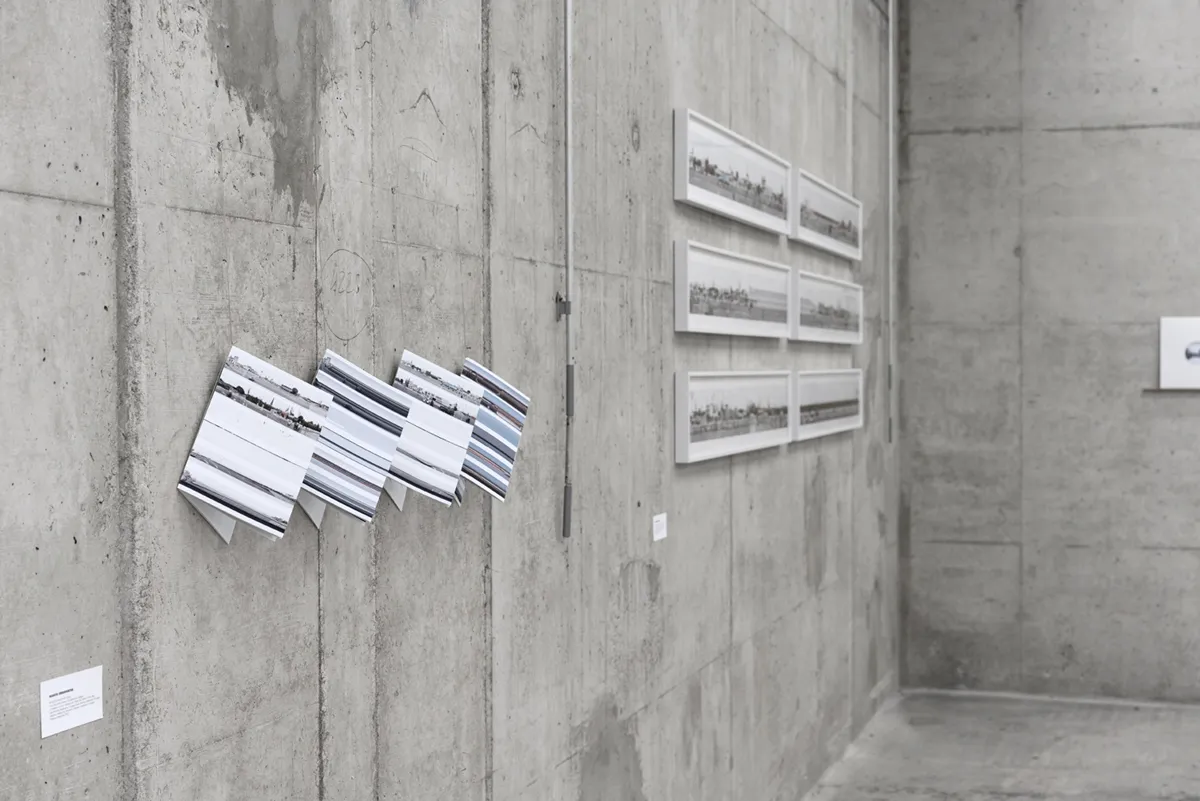
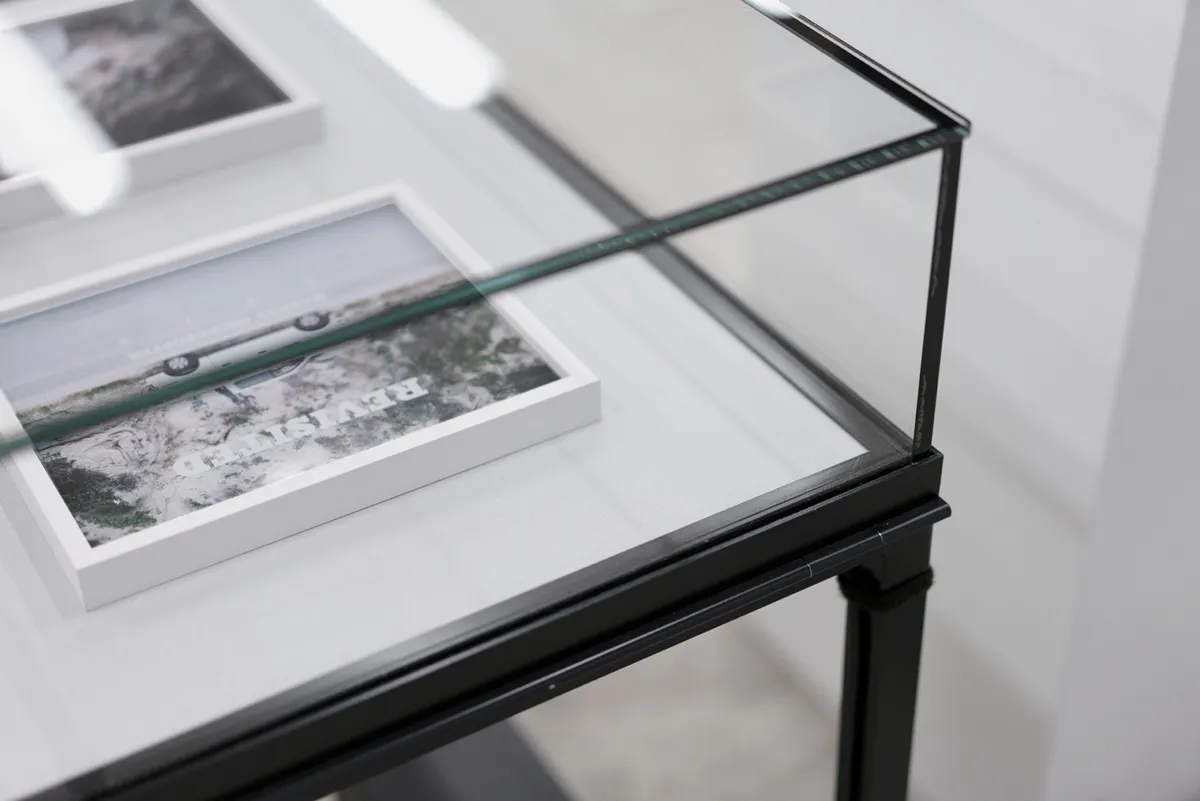
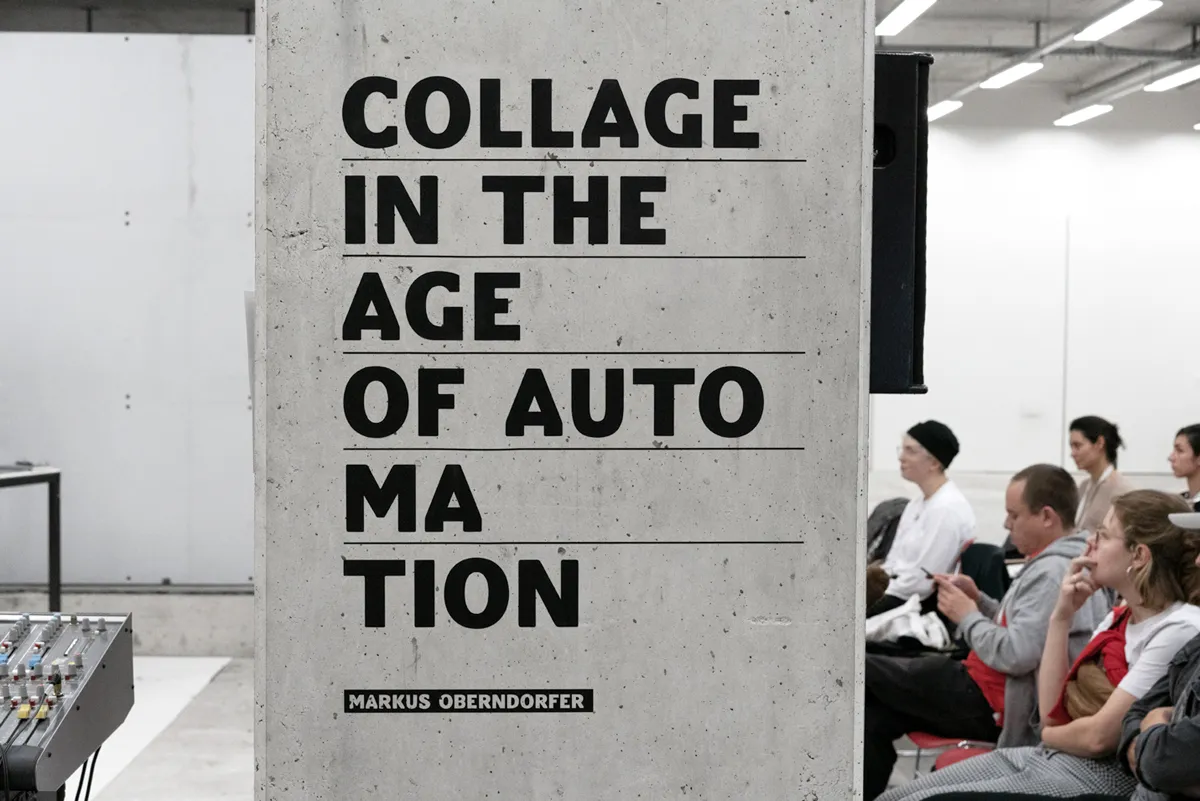
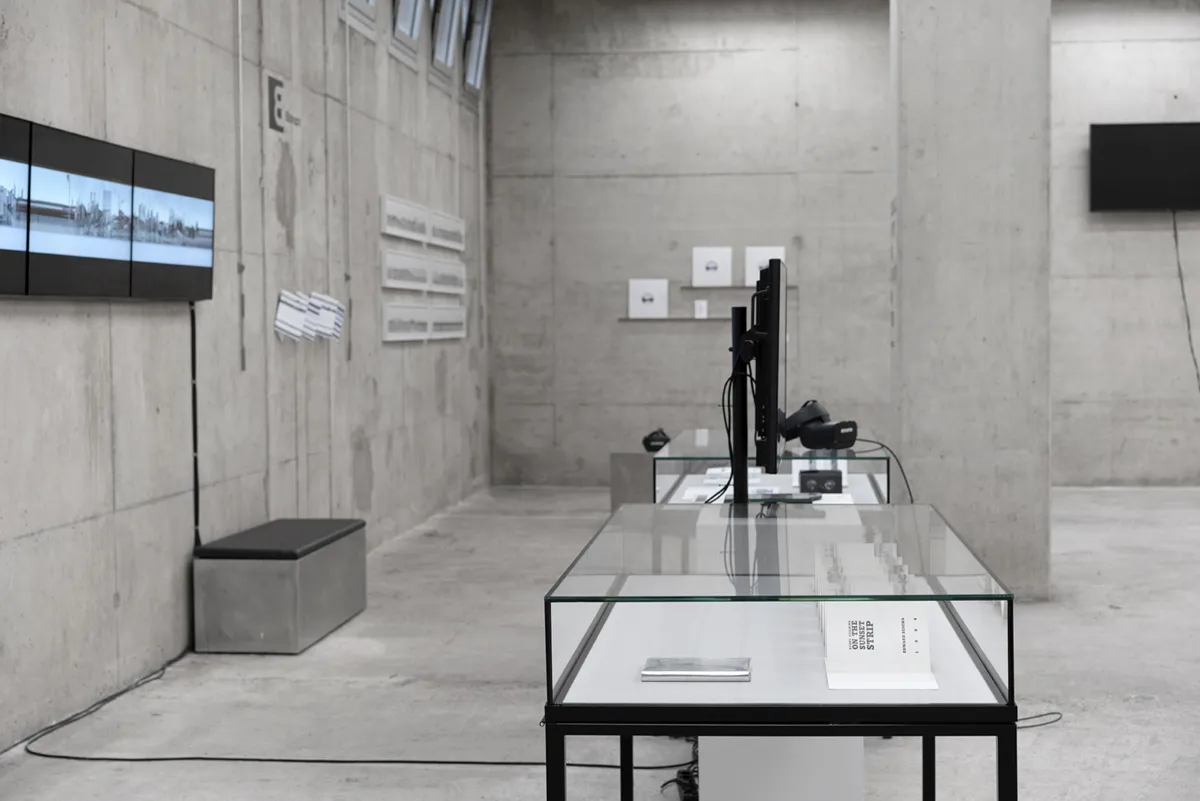
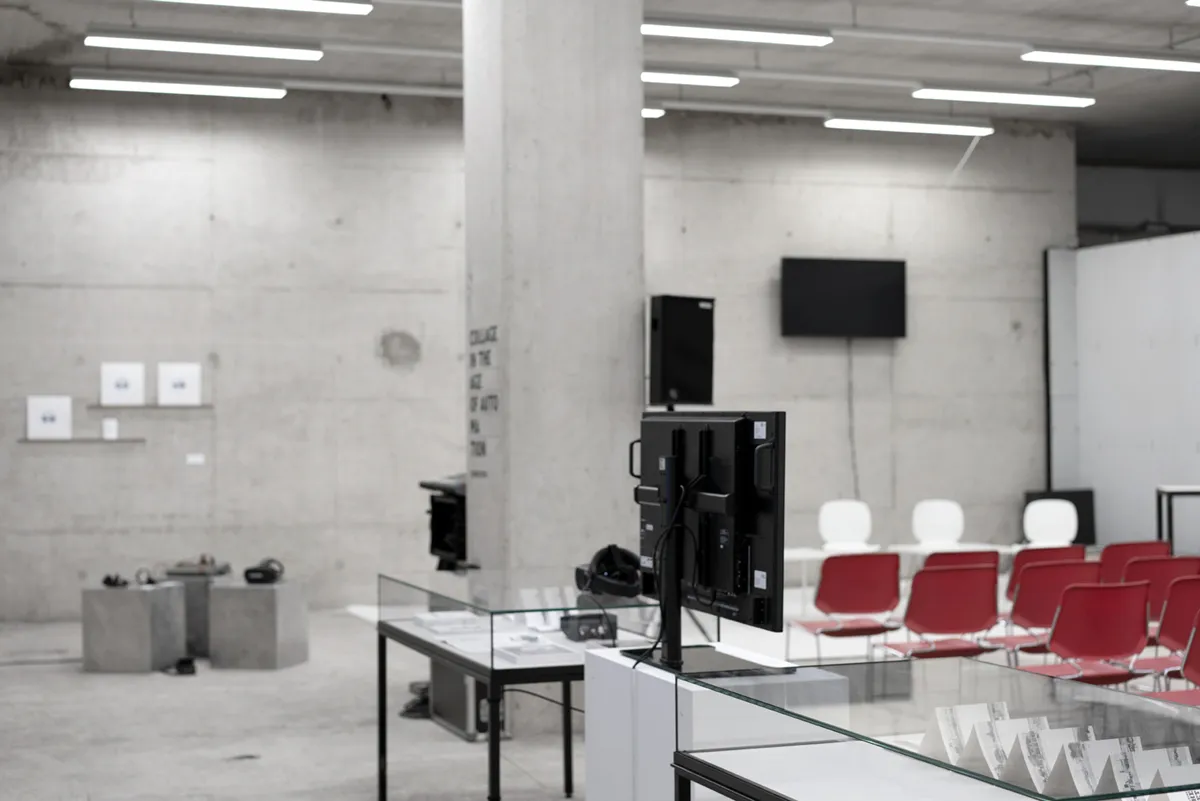
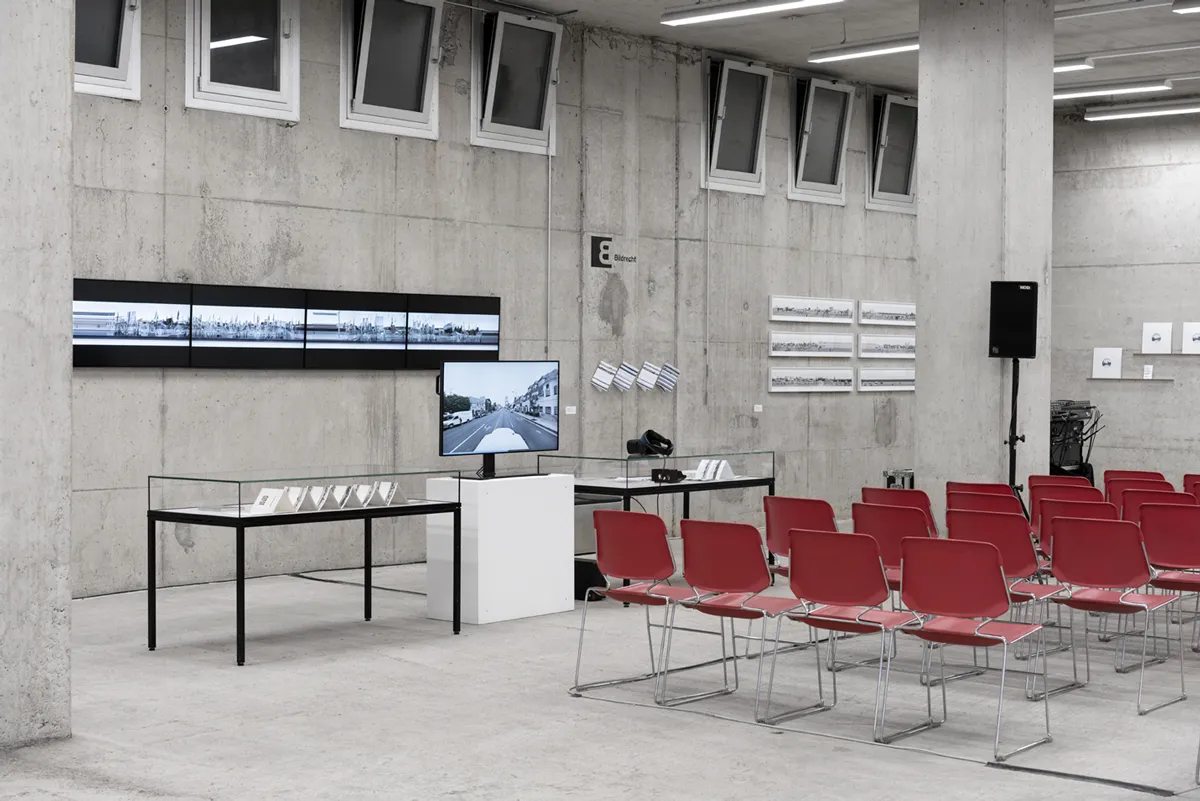

Ars Electronica & Bildrecht put it like this: 'Markus Oberndorfer's multimedia work series REVISIT and his creative explorations are an expression of a complex investigation of our current media landscape and illuminate the massive influence that media, time and its concepts have on us, our life, the world, its representation and ultimately on our experience and perception.'
Making of Revisited
I began this project to pose questions about the temporal, spatial, contextual, and performative dimensions of today’s media landscape and its ongoing development. Spanning more than a decade of my practice, the project now situates itself within a broader conversation about media, memory, and artistic exchange across generations. Through its practices, it examines thresholds across analog and digital, image and space, and the continual transformation of perception into representation, and the ways representation in turn reshapes perception in a feedback loop.
Credits
PROJECT / CONCEPT
Markus Oberndorfer
REVISITED 360° VIDEOS:
Director: Markus Oberndorfer
Producer: Markus Oberndorfer & Vivian Winther
Camera Operator & Editor: Michael Mandl (VRisch)
Color Grading: Michael Mandl & Markus Oberndorfer
STAGING THE ORDINARY:
Spatial Audio: Matthias Kassmannhuber (HearVRNow)
Ambisonics Library: Mychal Herron
Passers-by Script: Matthias Kassmannhuber
Passers-by Voices: William Blueher, Eli Freireich, Kyle Huebbe, Dolly Lewis, Clare Oliver, Sequoya Waring, Jessica Winther, Tyler Winther, Vivian Winther, Bela Baptiste.
REVISITED ARTIST BOOKS & BOXES:
Design & Layout, Print, Folding, Publishing: Markus Oberndorfer
Edition: Handmade (very limited)
REVISITED SOURCE FOOTAGE COLLAGES:
Footage Preparation & Stitching: Markus Oberndorfer
Book Collages (manually stitched): Markus Oberndorfer
Print Collages (manually stitched & scripted): Markus Oberndorfer
Print Collages scripting: Berserka
Color Grading & print: Markus Oberndorfer
Spacetime Video Collage & Editing: Markus Oberndorfer
Eclipse & Vinewood Blvd Collage: Markus Oberndorfer
Spacetime Tunnel 3D Arrangement: VRisch
REVISIT OST:
DROOM-01: Sunset Tower: Parental & Sirlensalot
DROOM-02: Tower Records: Devaloop & Lex (de Kalhex)
DROOM-03: Whisky A Go Go: Kompact & Dday One
All tracks mastered by Flip
© Markus Oberndorfer 2018
© All Featured Artists 2018
© Darkroom Debuts 2018
© Akromégalie Records 2018
© The Content Label 2018
REVISIT RADIO:
Producer: Markus Oberndorfer
Radio Script: Markus Oberndorfer
Radio Host: Joseph Bailey (aka JoJo)
Music: see REVISIT OST credits
Editing: Markus Oberndorfer
FONT DESIGN:
Gylphs: Markus Oberndorfer
Supervision: Nik Thönen
MAKING OF:
Director: Tyler Winther
Producer: M. Oberndorfer, Vivian Winther
Camera & Edit: Tyler Winther
Music: Le Makizar, Lex (de Kalhex), ...
GENERAL CREDITS:
With the help of Vivian & Tyler Winther, Michael Mandl, Sira-Zoé Schmid, VRisch, rotaug, Thomas & Martina Egger, and the partial financial support of the Ministry of Austria for Arts and Culture.
© Markus Oberndorfer 2015 - 2026